Architectural rendering services turn 2D drawings, CAD models, and design intent into photorealistic or stylized images, animations, and walkthroughs that clients can actually understand. These services range from single hero stills to full marketing packages, delivered either by an in-house team or an outsourced studio depending on volume, deadline, and the level of visual polish a project demands.
Choosing the right architectural rendering services is now a competitive advantage rather than a finishing touch. A clear render closes approvals faster, shortens sales cycles for developers, and reduces the back-and-forth that drains design hours. This guide breaks down what these services include, the main render types, how studios price work, and the practical signals that separate a reliable rendering company from one that will miss your deadline.
What do architectural rendering services include?
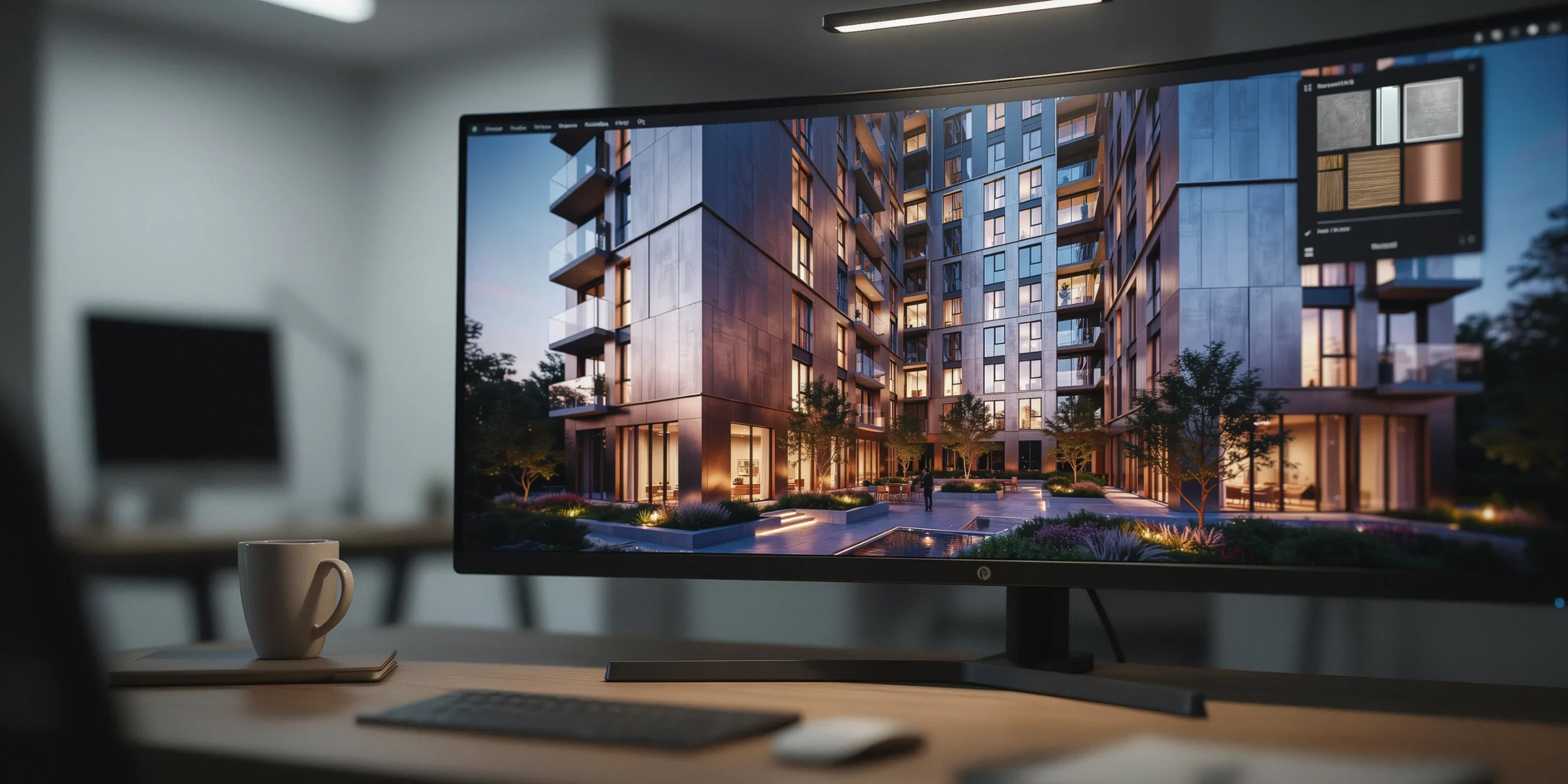
Architectural rendering services include modeling or model cleanup, material and lighting setup, scene composition, and the production of final stills, animations, or interactive walkthroughs. Most providers also offer revisions, post-production color grading, and format delivery tailored to print, web, or competition boards. The scope varies, so the deliverable list matters more than the marketing language on a studio’s homepage.
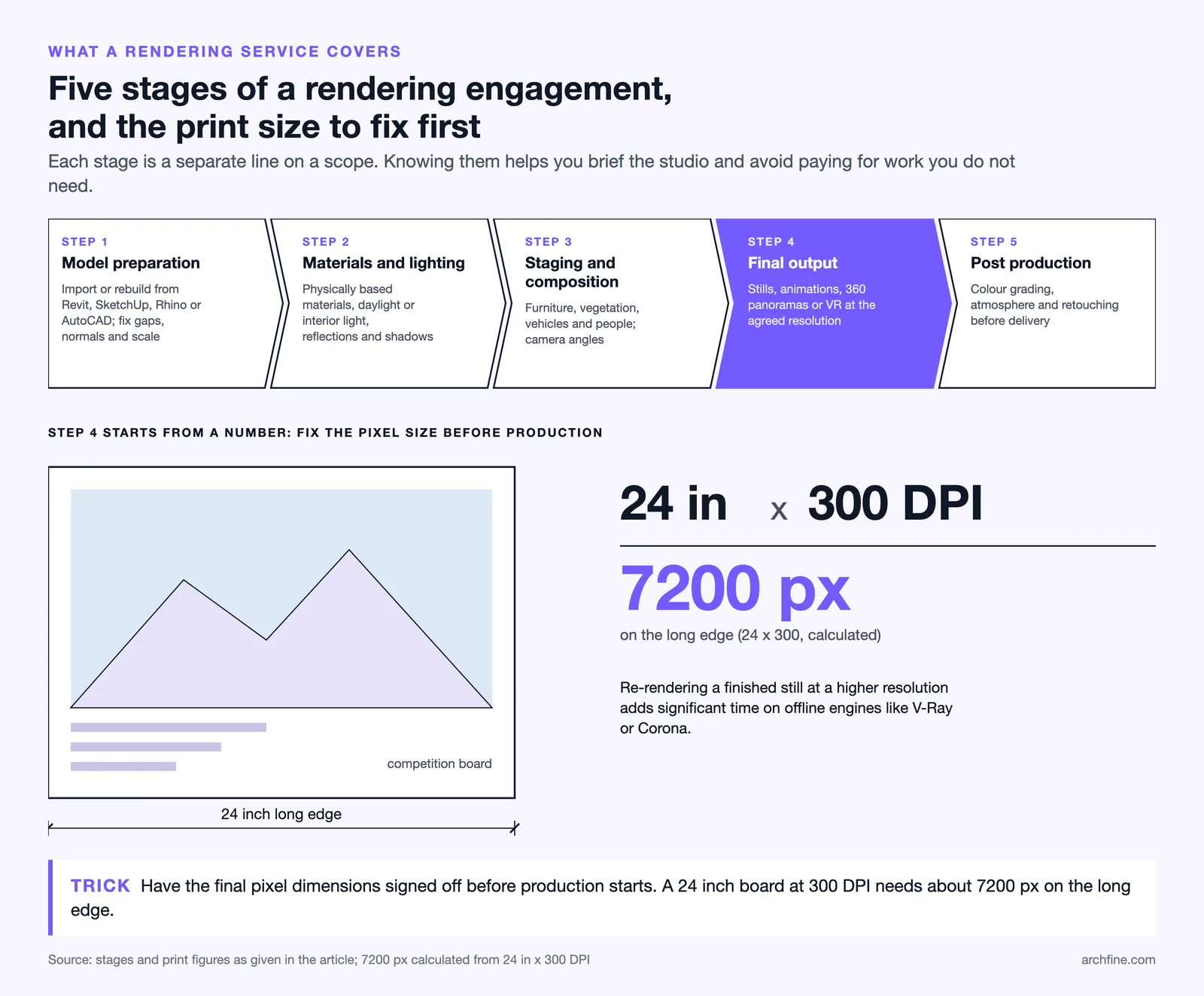
A typical engagement with 3D rendering services covers several distinct stages. Understanding each one helps you scope a brief and avoid paying for work you do not need.
- Model preparation: importing or rebuilding geometry from Revit, SketchUp, Rhino, or AutoCAD, then fixing gaps, normals, and scale issues.
- Materials and lighting: assigning physically based materials, setting up daylight or interior lighting, and tuning reflections and shadows.
- Staging and composition: adding furniture, vegetation, vehicles, and people, then framing camera angles that sell the design.
- Final output: rendering stills, animations, 360 panoramas, or VR walkthroughs at the agreed resolution.
- Post-production: color grading, atmospheric effects, and retouching in tools such as Photoshop before final delivery.
📐 Technical Note
For print deliverables, request renders at 300 DPI and confirm the final pixel dimensions before production starts. A 24-inch competition board at 300 DPI needs roughly 7200 pixels on the long edge, and re-rendering a finished still at a higher resolution can add significant time on offline engines like V-Ray or Corona.
Main types of 3D rendering services
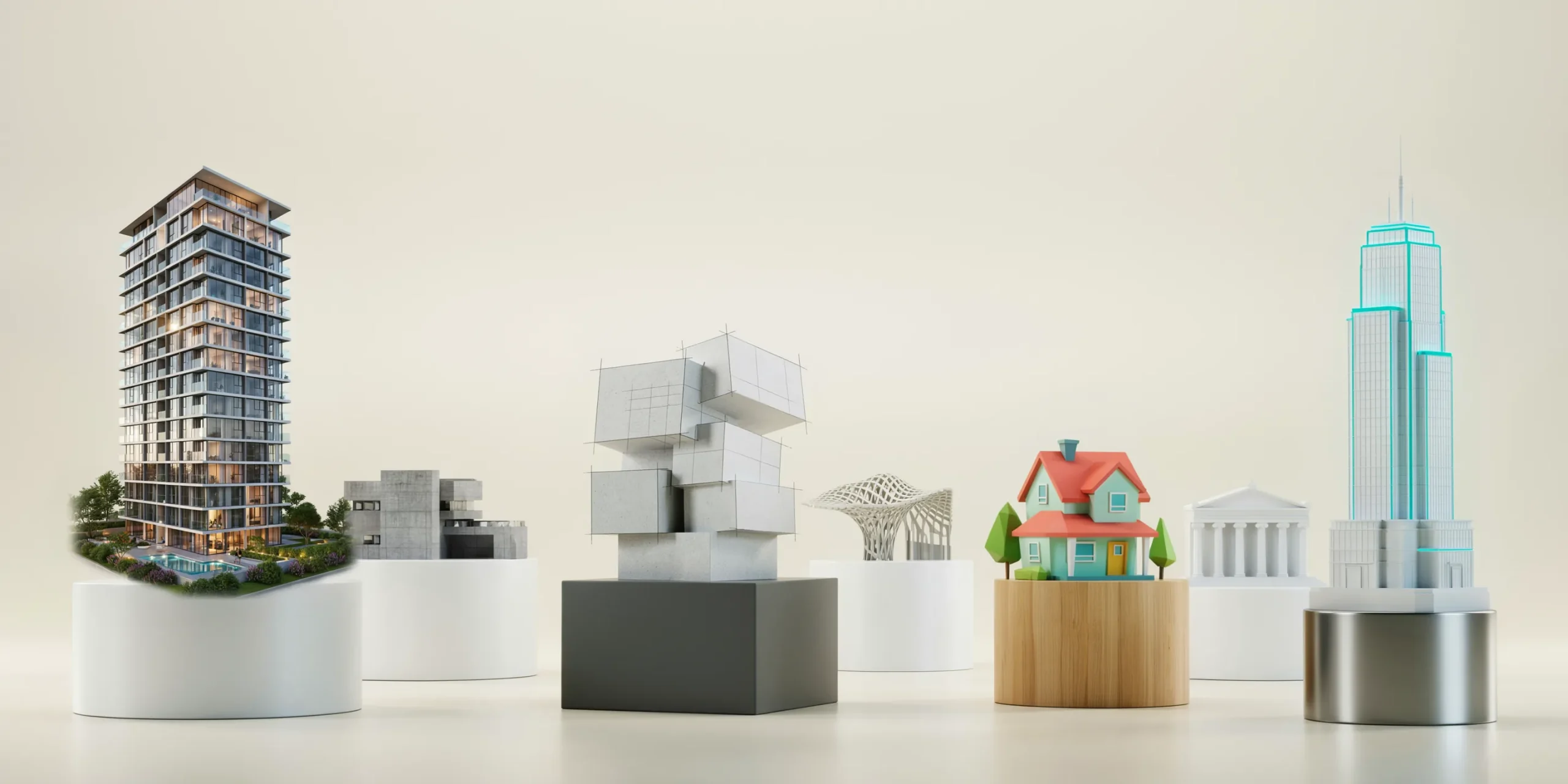
Architectural visualization services split into a handful of deliverable types, each suited to a different project phase. Picking the right one keeps your budget aligned with the actual decision the render needs to support, whether that is a design review, a planning submission, or a sales launch.
Exterior and interior stills
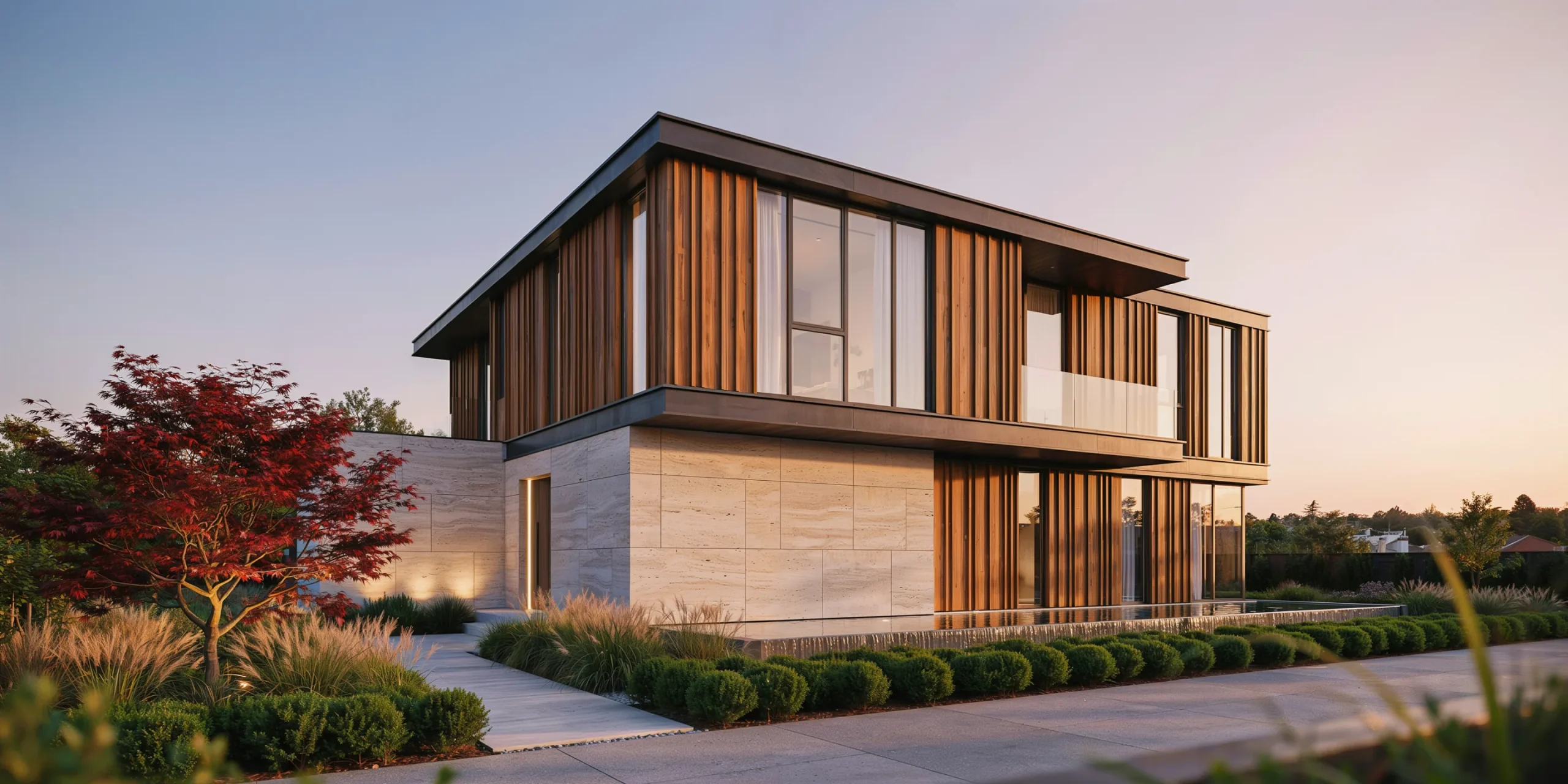
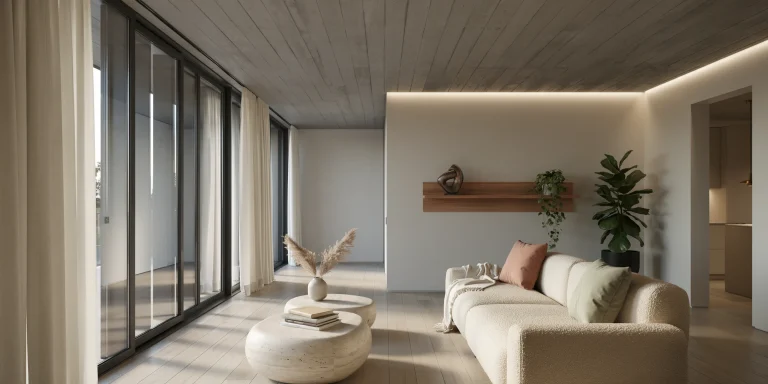
Static hero images remain the most requested deliverable. Exterior stills show massing, facade materials, and context, while interior stills focus on spatial quality, finishes, and natural light. These are the workhorses of real estate marketing and planning packages because a single strong image communicates more than a folder of plans.
Animations and walkthroughs
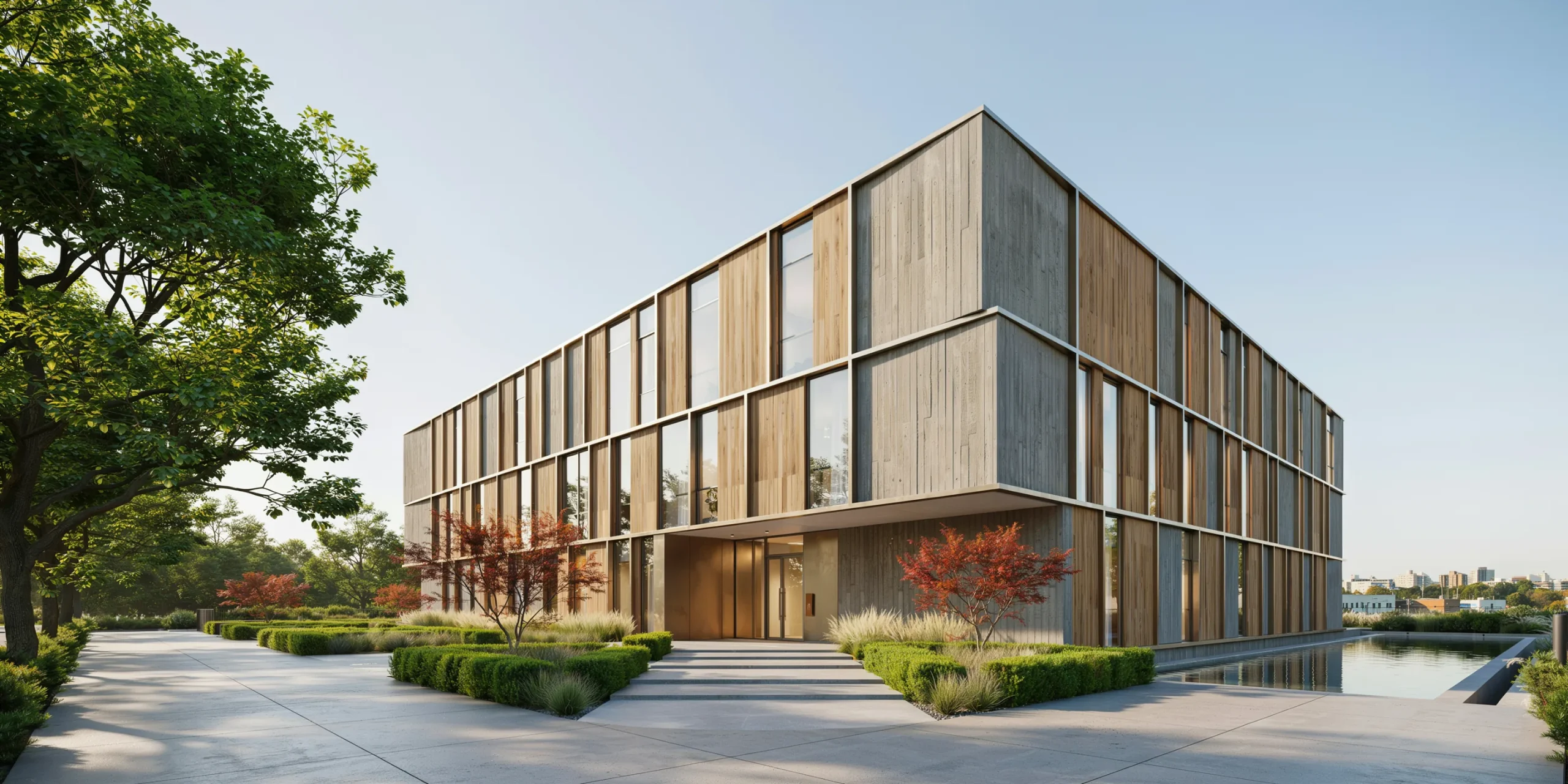
Animated flythroughs and walkthroughs guide a viewer through a building over time. They are more expensive than stills because every second of footage is dozens of rendered frames, but they are powerful for large developments and investor presentations. Real-time engines have made interactive walkthroughs far more accessible, which changes the cost equation, as noted below.
Real-time and VR experiences
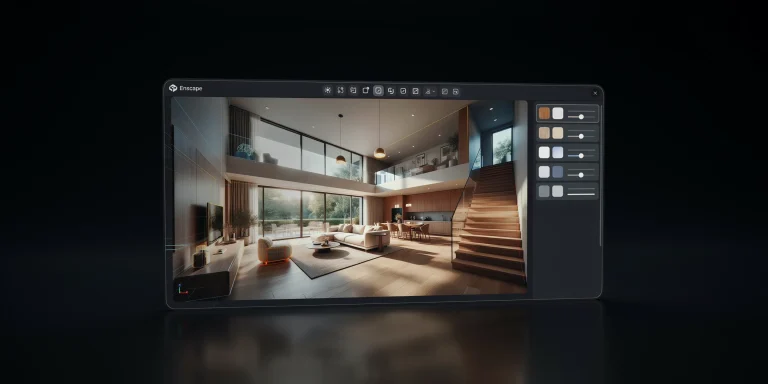
Real-time engines such as Enscape, Twinmotion, and D5 Render let clients explore a model live, change materials on the fly, or step into virtual reality. Enscape by Chaos runs as a plugin inside Revit, SketchUp, Rhino, Archicad, and Vectorworks, so the visualization stays synced with the design model. Twinmotion, built on Unreal Engine 5, adds a path tracer for higher physical accuracy when a still needs offline-grade lighting.
AI-assisted concept renders
AI rendering tools now generate fast concept visuals directly from sketches, screenshots, or CAD exports. They are not a replacement for production-grade archviz, but they compress early iteration dramatically. If you want to test this approach, our walkthrough on how to use AI to render architecture covers platform choice, input prep, and prompting, and our guide to Rhino AI rendering shows how to skip long render times on complex models.
💡 Pro Tip
When briefing a rendering company, separate “decision” renders from “sales” renders. Early design reviews rarely need photoreal hero quality, so a fast real-time pass keeps iteration cheap. Reserve your offline render budget for the two or three final images that actually go in front of a client or the planning authority.
Should you outsource rendering or keep it in-house?
Outsource rendering when project volume is uneven, deadlines spike, or you need a level of photorealism your team cannot hit reliably. Keep it in-house when rendering is constant, iteration speed matters more than polish, and tight design coordination outweighs raw image quality. Many firms run a hybrid: real-time renders internally for design feedback, and an outsourced studio for final hero images.
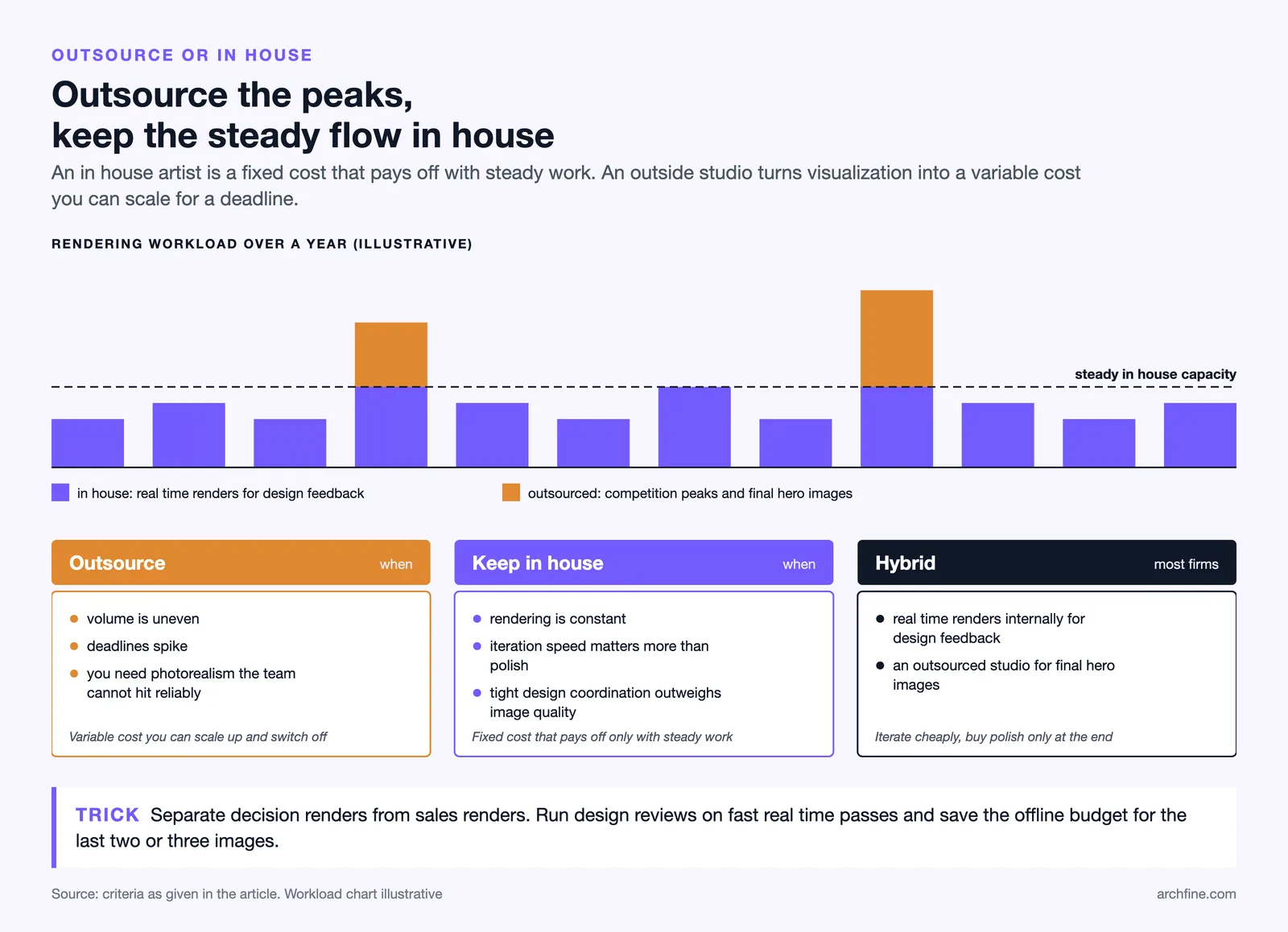
The decision comes down to economics and control. An in-house artist is a fixed cost that pays off only with steady work, while an outsourced rendering company converts visualization into a variable cost you can scale up for a competition deadline and switch off afterward.
⚖️ Pros & Cons at a Glance
✔️ Outsourcing pros: scalable cost, access to specialist skill, no software or render-farm overhead, faster turnaround at peak.
✖️ Outsourcing cons: less real-time design control, communication lag across time zones, model handoff friction, per-revision costs that add up.
⚠️ Common Mistake to Avoid
Handing a studio a half-finished model with no reference imagery and expecting them to read your intent. Vague briefs cause the most expensive revisions. Lock down camera angles, mood references, time of day, and material callouts before the studio touches the file, and the first draft will land far closer to what you pictured.
How much do architectural rendering services cost?
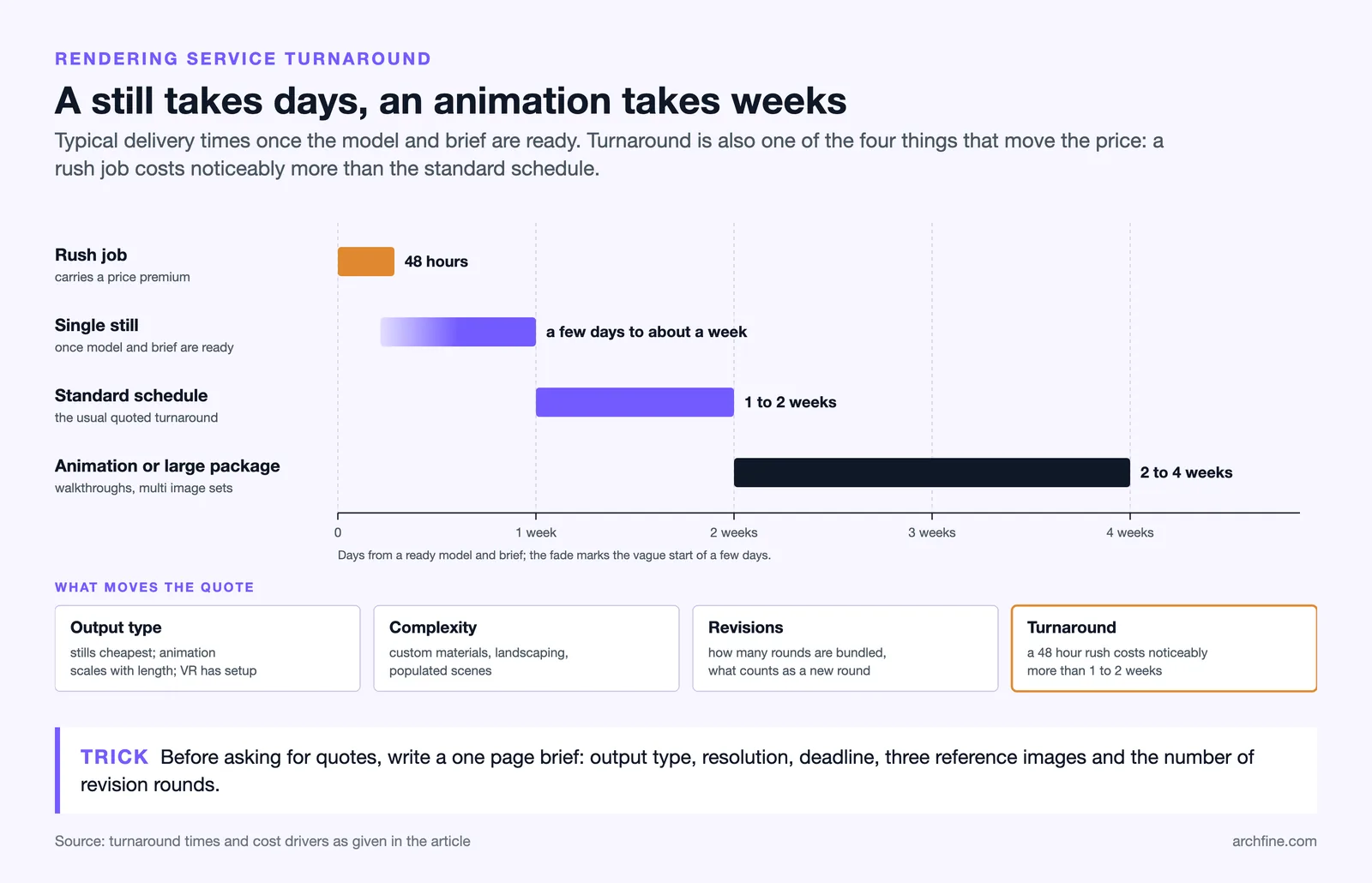
Architectural rendering services are usually priced per image, per animation second, or per project, and the final figure depends on complexity, resolution, revision rounds, and turnaround speed. A simple interior still costs far less than a fully staged exterior at dusk with custom landscaping, and rush jobs carry a premium. Understanding the cost drivers lets you shape a brief that fits the budget.
🔢 Quick Numbers
The factors that move render pricing most are resolution and output type, scene complexity and staging, the number of revision rounds included, and the deadline. A studio that quotes a flat per-image rate without asking about these is either inexperienced or padding the price to cover unknowns.
- Output type: stills are cheapest, animations scale with length, and VR or interactive experiences carry setup overhead.
- Complexity: custom materials, detailed landscaping, and populated scenes all add modeling and render time.
- Revisions: confirm how many rounds are bundled and what counts as a new round versus a tweak.
- Turnaround: a 48-hour rush can cost noticeably more than a standard one to two week schedule.
How to choose a rendering company
Choose a rendering company by judging portfolio consistency, deliverable clarity, and communication discipline rather than the lowest quote. Look for a body of work in your building type, a written scope that lists exactly what you receive, and a revision process you can live with. The cheapest studio is rarely the cheapest outcome once revision fees and missed deadlines are counted.
Before signing, run through a short checklist. Does the portfolio show the same quality across many projects, or one lucky hero shot? Do they handle your modeling format natively? Is the revision policy specific? And do they understand the difference between a stylized concept image and a photoreal final, a distinction we cover in our breakdown of photorealistic vs stylized renders.
🏗️ Real-World Example
Hybrid studio pipelines (2026): Many archviz teams now iterate in a real-time engine like D5 Render, which runs on Unreal Engine with hardware-accelerated ray tracing and DLSS, then finish hero stills in an offline renderer such as V-Ray or a high quality real-time tool like Lumion for maximum control. The result is faster client feedback without sacrificing the polish of the final marketing image.
If your input is CAD-based, confirm the studio can work from your drawings directly. Our guide to AutoCAD AI rendering shows how 2D drawings become photorealistic visuals, and you can find more tutorials in the architectural visualization tutorials section.
Frequently Asked Questions
How long do architectural rendering services take?
A single still typically takes a few days to about a week once the model and brief are ready, while animations and large packages run two to four weeks. Real-time and AI workflows can deliver concept-level visuals in minutes, but production-grade final images still need time for staging, lighting, and revision rounds.
What files do I need to provide a rendering studio?
Provide your 3D model (Revit, SketchUp, Rhino, or 3ds Max), or clean 2D drawings if no model exists, plus reference images for mood, material callouts, and preferred camera angles. The more context you supply up front, the closer the first draft lands and the fewer paid revisions you incur.
Are AI renders good enough to replace professional rendering services?
AI renders excel at fast concept exploration and early client buy-in, but they currently lack the precision control that high-stakes marketing and planning images demand. The strongest workflow uses AI for speed in early phases and professional 3D rendering services for the final deliverables that must be exact.
What is the difference between rendering and architectural visualization services?
Rendering is the act of producing an image from a 3D model, while architectural visualization services is the broader discipline that includes modeling, staging, animation, VR, and the strategy behind how a design is communicated. Rendering is one step inside the larger visualization service.
Your Next Step: Before you request a single quote, write a one-page brief that names the output type, resolution, deadline, three reference images, and the exact number of revisions you expect. That single document will get you sharper quotes and a first draft far closer to your vision than any back-and-forth email thread.