A freelance architect wins projects by combining sharp business strategy with lean operations. Instead of competing with large firms on staff size or office space, solo practitioners succeed by reducing overhead, pricing services accurately, and using modern tools like AI rendering to deliver high-quality work faster and cheaper than traditional workflows allow.

Going solo in architecture is one of the most rewarding career moves you can make. It is also one of the riskiest. You control your schedule, pick your clients, and keep the profits. But you also carry every cost, chase every lead, and absorb every slow month on your own. According to the American Institute of Architects (AIA), sole practices make up roughly 30% of all AIA member firms. That number keeps growing as architects discover that independence does not require a large team or a downtown office.
The difference between freelance architects who thrive and those who burn out usually comes down to two things: how they win projects and how they manage overhead. This guide covers both. Every tactic below is practical, specific, and tested by architects running real solo practices.
Why Overhead Kills Freelance Architecture Practices
Overhead is every dollar you spend that is not directly tied to billable project work. For a freelance architect, that includes software subscriptions, insurance, marketing, accounting, office rent, hardware, and the hours you spend on administration instead of design. According to data compiled by Monograph, most architecture firms target an overhead rate between 1.5 and 1.75 times total direct labor. Anything above 1.75 is a warning sign. For solo practitioners without the revenue base of a larger firm, even small overhead expenses eat into margins fast.
The biggest overhead trap for freelancers is not rent or software. It is time. Every hour you spend formatting proposals, chasing invoices, or troubleshooting your rendering pipeline is an hour you cannot bill. When you are the only person in the business, unbillable time is your most expensive cost.
The Hidden Costs Most Solo Architects Overlook
Many freelance architects track obvious expenses like software licenses and insurance premiums but miss the less visible costs. Professional liability insurance alone can run $2,000 to $5,000 per year for a solo practice. Add continuing education fees, professional memberships, marketing costs, and tax preparation, and you can easily reach $10,000 to $15,000 in annual overhead before you even open your design software.
⚠️ Common Mistake to Avoid
Many freelance architects calculate their billing rate by simply adding a markup to their desired salary. This ignores overhead entirely. If your overhead rate is 1.6 and you want to earn $80,000 per year, your true break-even cost is roughly $100 per hour, not the $50 to $60 many solo architects charge. Underpricing is the fastest way to work hard and still lose money.
Then there are the soft costs: the half-day lost to a client who cancels, the weekend spent redoing a presentation because the renders did not look good enough, the month where no new leads came in because you were too busy delivering to market yourself. These gaps are where freelance practices quietly bleed profit.
How to Structure Your Freelance Architecture Business for Profit
Before chasing new clients, get your financial foundation right. A profitable freelance architect runs the business as a business, not as a side effect of doing design work. That means setting a billing rate based on real numbers, tracking every project’s profitability, and knowing your break-even point before you sign a single contract.

Set Your Billing Rate Using Real Numbers
Start with your target annual income. Add your total projected overhead for the year. Divide that sum by your realistic billable hours (most solo architects can bill 60% to 70% of their working hours; the rest goes to administration, marketing, and business development). The result is your minimum hourly rate. According to OpenAsset’s compilation of architecture industry statistics, architect fees typically range between $100 and $250 per hour, with the variation depending on specialization, location, and experience level.
🔢 Quick Numbers
- The average annual pay for a freelance architect in the U.S. is $128,756 (ZipRecruiter, 2026)
- Net profit margins for small independent architecture practices range from 8% to 12% (BusinessDojo, 2025)
- The median Net Revenue per full-time employee across 180 architecture firms is $152,264 (Monograph Benchmarks Report)
If those margins look thin, they are. That is exactly why controlling overhead matters so much. A freelance architect who cuts $500 per month in unnecessary costs adds $6,000 straight to the bottom line, which, on a typical solo practice revenue, can be the difference between a profitable year and a break-even one.
9 Strategies to Win More Architecture Projects
Winning projects as a freelance architect is not about outspending the competition. It is about being faster, more focused, and more visible to the right clients. Here are nine strategies that work for solo practices.
1. Build a Portfolio That Sells, Not Just Shows
Your portfolio is your most powerful sales tool. Most architect portfolios make the same mistake: they present projects chronologically or by typology without telling the client what the work achieved. A better approach is to organize your portfolio around the results your clients care about. Did you help a restaurant open three weeks ahead of schedule? Did you design a renovation that increased a property’s appraised value by 25%? Lead with those outcomes.
Include high-quality architectural renders that show realistic lighting, materials, and context. Clients respond to visuals they can feel. A polished render of an unbuilt concept can be just as persuasive as a photograph of a completed building, especially if you are pitching to clients who need help imagining the end result.
2. Use AI Rendering to Cut Production Costs
One of the largest overhead items for freelance architects is visualization. Traditional rendering workflows using V-Ray, Lumion, or outsourced rendering studios can cost hundreds of dollars and multiple days per image. AI rendering tools like ArchFine compress that process into seconds and a fraction of the cost, letting you produce photorealistic or stylized renders from sketches, CAD drawings, or 3D screenshots without a dedicated rendering pipeline.
💡 Pro Tip
Use AI renders during your initial client meetings to show two or three design directions in real time. When a client sees their rough brief transformed into a visual concept on the spot, you skip the “go away and come back in two weeks” cycle that causes many leads to go cold. Speed of response is one of the biggest advantages a solo architect has over a larger firm.
For a freelance architect, the savings are significant. Instead of spending $300 or more per outsourced render, you can generate multiple options for a few dollars and iterate instantly based on client feedback. That means faster approvals, shorter project timelines, and more capacity to take on additional work.

3. Specialize in a Profitable Niche
Generalist architects compete on price. Specialists compete on expertise. If you try to serve every client type (residential, commercial, hospitality, healthcare), you end up marketing to everyone and attracting no one. Instead, pick a niche where you have real experience and where the project fees justify the effort. Custom residential renovations, small commercial fit-outs, hospitality interiors, and adaptive reuse projects are all strong niches for freelance architects.
Specialization also reduces overhead because you reuse knowledge, templates, and supplier relationships across projects. Your fifth kitchen renovation is faster and more profitable than your first because you already know the material suppliers, code requirements, and common client concerns.
4. Master the Client Discovery Call
The first conversation with a potential client determines whether the project moves forward. Most architects treat discovery calls as information-gathering sessions. Better to treat them as diagnostic conversations. Ask about the client’s goals, budget range, timeline, and decision-making process. Listen more than you talk. The client should leave the call feeling understood, not sold to.
End every discovery call with a clear next step: a brief written summary of what you discussed, a timeline for your proposal, or a follow-up meeting date. Clients who feel momentum after the first call are far more likely to hire you.
5. Create a Referral System That Works
Referrals are the highest-converting lead source for solo architects. The challenge is that most architects wait passively for referrals instead of building a system. After every completed project, ask satisfied clients for a brief testimonial and permission to share it. Then ask directly: “Do you know anyone else who might be planning a similar project?” A simple question at the right moment generates more leads than months of social media posting.
Build relationships with complementary professionals who serve the same client base: real estate agents, interior designers, contractors, and structural engineers. These are not competitors. They are referral partners who regularly encounter clients who need an architect but do not know one.
6. Publish Your Expertise Online
Writing articles, posting project case studies, or sharing practical design tips on LinkedIn positions you as an authority in your niche. You do not need to post every day. One well-written article per month that answers a question your ideal clients are asking (“How much does a loft conversion cost?”, “What permits do I need for a commercial renovation?”) builds long-term visibility and trust.
Architects who consistently publish niche content report that inbound leads eventually replace outbound prospecting entirely. The content works while you sleep, attracting clients who already trust your expertise before they pick up the phone. This approach works especially well when paired with strong project visuals. The same visual storytelling principles used by top firms apply to your content marketing at a smaller scale.
7. Respond Faster Than Your Competition
Speed wins projects. When a potential client reaches out to three architects, the one who responds first with a thoughtful reply has a significant advantage. Research by EntreArchitect, a resource community for small firm architects, consistently shows that responsiveness is one of the top factors clients cite when choosing an architect. Aim to respond to every new inquiry within four hours during business days.
💡 Pro Tip
Create a saved email template for initial inquiries that covers your services, typical process, and next steps. Customize the first two sentences for each client, then send the rest as-is. This lets you respond in minutes without sacrificing a personal touch. A fast, professional response signals that you run a tight operation, which is exactly what clients want from a solo practitioner.
8. Offer Fixed-Fee Proposals
Hourly billing creates anxiety for clients because they never know what the final cost will be. Fixed-fee proposals remove that uncertainty and make your services easier to compare against competitors. To price fixed-fee work accurately, track your time on past projects by phase (schematic design, design development, construction documents, construction administration) so you know how many hours each phase actually takes.
Structure your proposals with clearly defined deliverables for each phase. This protects you from scope creep while giving the client a transparent view of what they are paying for. If the scope changes, you issue a change order with a clear additional fee. Clients respect this approach because it is fair and predictable.
9. Collaborate Instead of Competing
Solo does not mean isolated. Some of the most successful freelance architects regularly collaborate with other independents on larger projects. If a project is too big for one person, partner with a fellow freelancer rather than turning the work away. You keep the client relationship, split the workload, and deliver a result that neither of you could achieve alone.
Collaboration also applies to outsourcing specific tasks. Hiring a freelance structural engineer for calculations, a specification writer for complex projects, or using AI tools for rapid visualization lets you punch above your weight class without carrying permanent overhead.
How Much Can a Freelance Architect Actually Earn?
Income varies widely depending on location, specialization, and business acumen. ZipRecruiter data from 2026 shows that freelance architects in the United States earn an average of $128,756 per year, with the top earners reaching $180,000 or more. The range spans from around $46,500 at the low end to over $200,000 at the top, reflecting the enormous gap between architects who treat freelancing as occasional side work and those who run it as a focused business.
The key variable is not talent. It is pricing and utilization. A freelance architect billing at $150 per hour with 1,200 billable hours per year generates $180,000 in gross revenue. After overhead of $25,000 to $40,000, your pre-tax earnings, which include your own pay, land between $140,000 and $155,000. Compare that with the U.S. median architect salary of $99,280 (May 2025) reported by the Bureau of Labor Statistics, and the financial case for freelancing becomes clear, provided you run the numbers properly.
What Tools Do Freelance Architects Need to Reduce Overhead?
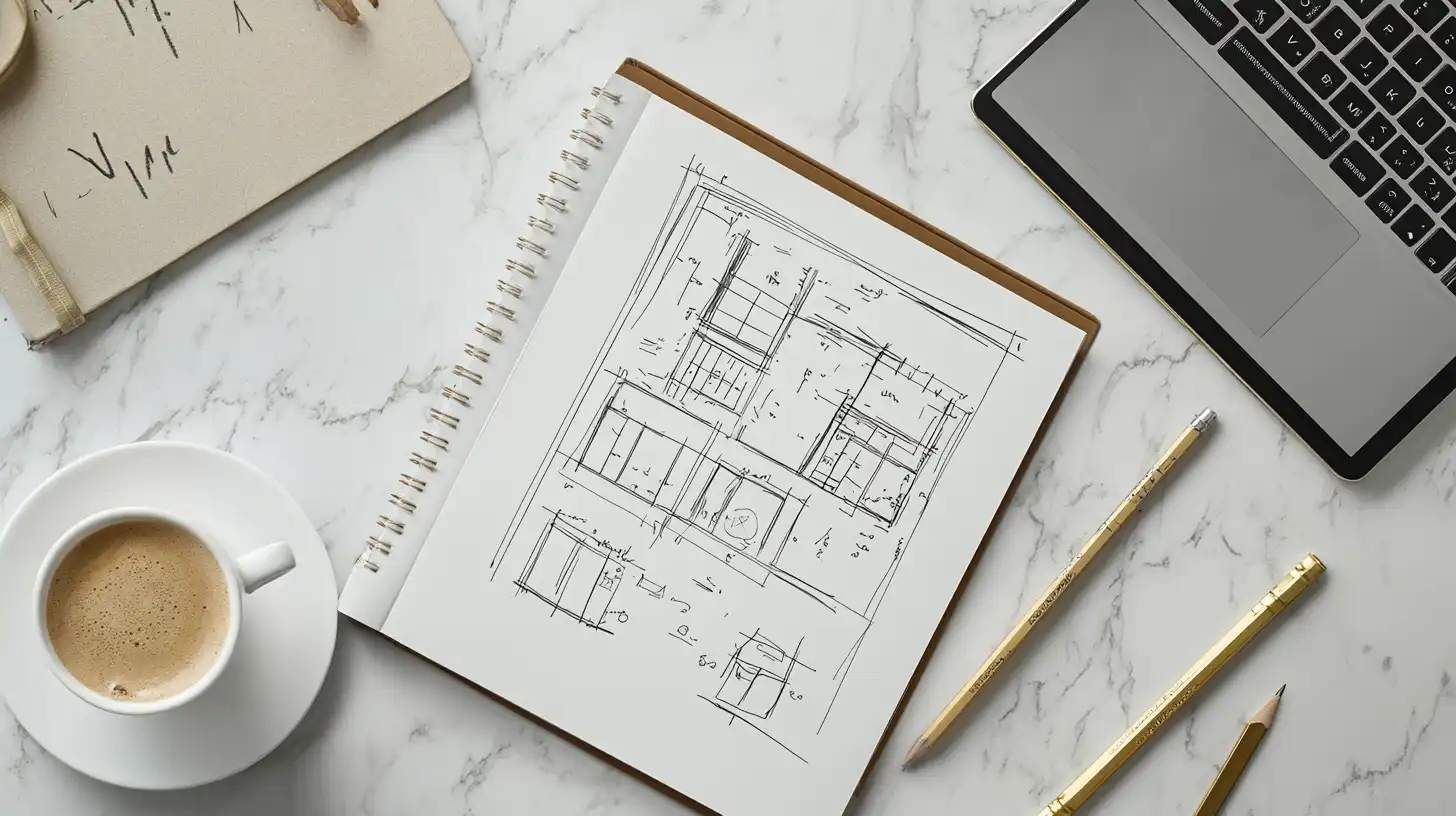
The right tool stack keeps costs low while maintaining professional output. Here is a breakdown of the essential categories and what to look for in each.
Essential Tool Categories for Solo Practices
The table below outlines the core tools a freelance architect needs, with estimated monthly costs for solo use.
| Category | Purpose | Estimated Monthly Cost | Overhead Impact |
|---|---|---|---|
| CAD/BIM Software | Design and documentation | $50 – $300 | High (essential, non-negotiable) |
| AI Rendering | Client presentations, concept visuals | $20 – $50 | Low (replaces outsourced rendering) |
| Project Management | Time tracking, scheduling, invoicing | $0 – $30 | Low to moderate |
| Accounting Software | Expenses, invoicing, tax prep | $15 – $50 | Low (saves bookkeeper costs) |
| Cloud Storage | File management, collaboration | $10 – $20 | Low |
| Professional Insurance | Liability protection | $150 – $400 | High (legally necessary) |
The biggest cost-saving opportunity in this stack is visualization. Outsourcing a single photorealistic render can cost $300 to $800. An AI rendering subscription that handles the same output for $20 to $50 per month pays for itself after a single project. That savings compounds across every project you deliver throughout the year.
🎓 Expert Insight
“I run a small studio with no rendering team. ArchFine basically gave me a V-Ray artist for $20/month.” — Small Studio Owner, ArchFine user testimonial
This reflects a growing pattern among solo practitioners who replace expensive rendering workflows with AI tools, reallocating those savings toward marketing, professional development, or simply higher take-home income.
Final Thoughts: The Freelance Architect’s Competitive Edge
The architecture industry is shifting. Rising software costs, subscription-model pricing, and increasing demand for fast turnarounds all favor practitioners who can stay lean, move quickly, and deliver quality work without a large support staff. As a freelance architect, you already have the structural advantage: low fixed costs, direct client relationships, and full control over your workflow. The challenge is turning that advantage into consistent, profitable work.
Focus on three priorities: price your services based on actual costs (not guesswork), use technology to replace expensive manual processes, and build a client pipeline that does not depend on any single source of leads. The nine strategies in this guide work because they address all three at once. Pick two or three to start with, measure the results, and adjust from there.
✅ Key Takeaways
- Overhead, especially unbillable time, is the silent profit killer for freelance architects. Track every cost and hour.
- Set your billing rate based on your real overhead multiplier, not just your desired salary. Most solo architects underprice themselves.
- AI rendering tools can replace $300+ per-render outsourcing costs with a $20 to $50 monthly subscription, freeing up thousands annually.
- Specializing in a profitable niche reduces marketing costs, shortens sales cycles, and lets you reuse knowledge across projects.
- Speed of response and a referral system are the two highest-impact client acquisition strategies for solo practices.
Frequently Asked Questions
How do I get my first clients as a freelance architect?
Start with your existing network. Former employers, colleagues, classmates, and friends are the most likely sources of your first projects. Reach out personally, let people know you are available for independent work, and ask for referrals. Combine this with a strong online portfolio and active LinkedIn presence to attract inbound leads over time.
Do I need professional liability insurance as a freelance architect?
Yes. Most clients and many jurisdictions require architects to carry professional liability (errors and omissions) insurance. Even where it is not legally required, practicing without it exposes you to potentially career-ending financial risk from a single claim. Expect to pay $2,000 to $5,000 annually for a solo practice, depending on your project types and coverage limits.
How much should a freelance architect charge per hour?
Calculate your target income, add your total annual overhead, and divide by your expected billable hours (typically 1,000 to 1,400 hours for a solo practitioner). The result is your minimum rate. According to industry data, architect fees in the U.S. range from $100 to $250 per hour. Your rate should reflect your specialization, experience, and local market, not just what competitors charge.
Can AI rendering tools really replace traditional rendering software?
For client presentations, concept visuals, and marketing materials, AI rendering platforms produce results that are comparable to traditional tools at a fraction of the time and cost. They are best suited for early design stages and rapid iteration. For final construction documentation or highly specific material specifications, traditional BIM and rendering software still have a role. Many architects use both, choosing the right tool for each project phase.
Is freelance architecture sustainable as a long-term career?
Absolutely. The AIA reports that sole practices make up around 30% of all member firms, and that share is growing. Freelance architects who treat their practice as a business, with proper pricing, overhead management, and consistent marketing, regularly earn above the industry median salary while maintaining schedule flexibility and creative freedom.
Cost figures referenced in this article are approximate and vary by region, specialization, and market conditions. Always consult a financial advisor or accountant for guidance specific to your practice.