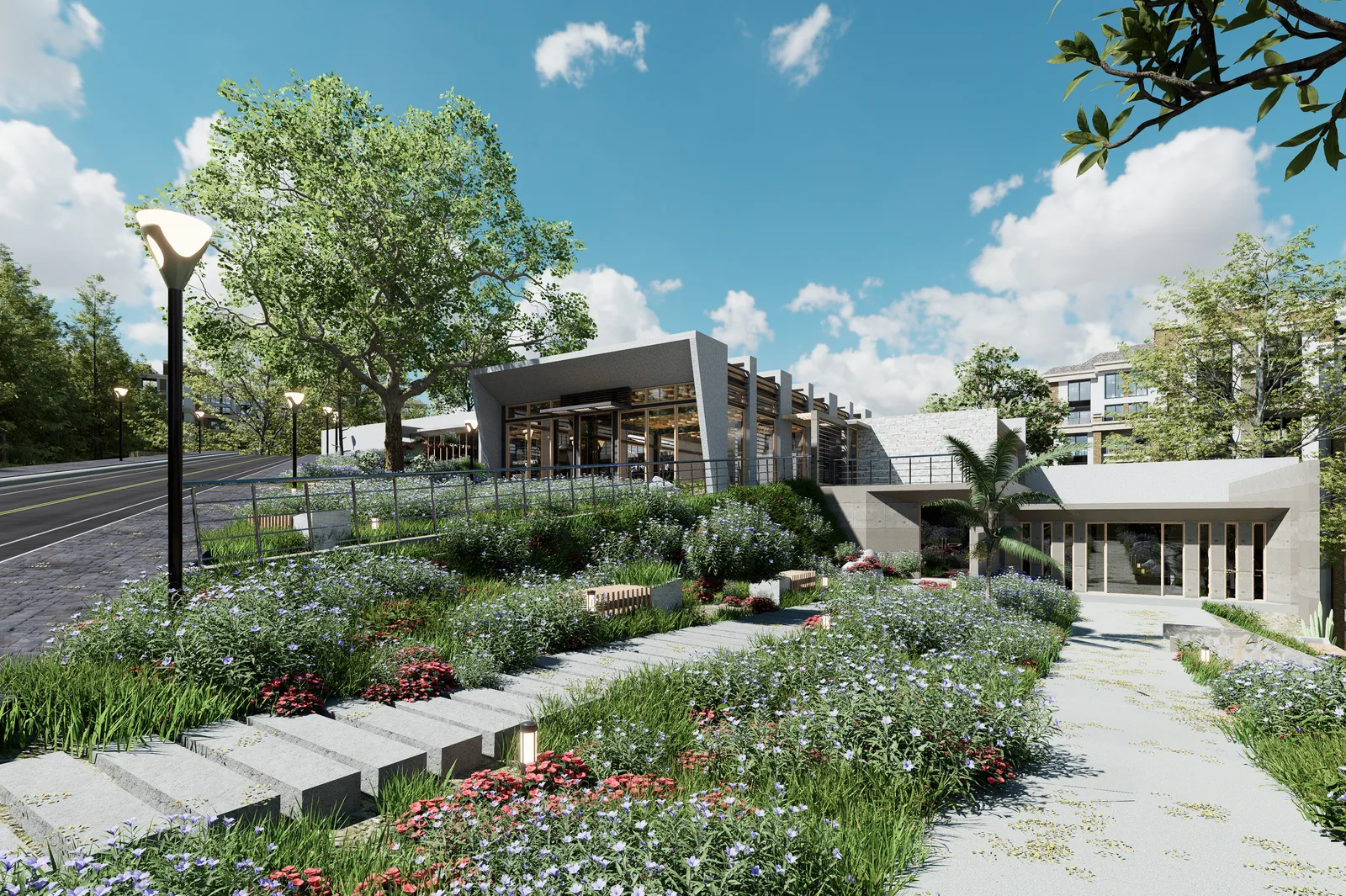

CGI stands for computer generated imagery, meaning any still or moving image created with 3D software rather than a camera. It covers film effects, product visuals, game cinematics and architectural renders. The images are built from geometry, materials and virtual lights, then calculated into a picture by a renderer.
So what is CGI once you strip the marketing language away? It is arithmetic. A computer is told where surfaces sit in space, how each one reflects light, and where the light comes from, then it calculates what a camera at a given position would record.
The term gets used loosely. A film critic means dragons. A product photographer means a phone that was never physically built. An architect means the image of a building that does not exist yet. All three are describing the same underlying process at different scales.
This is a plain explanation of what the process involves, where the boundaries with related terms sit, and why the architectural version of it works differently from the Hollywood version.
What Is CGI in Practice?
Three things have to exist before a computer can generate an image. There is geometry, which describes shape as points and surfaces. There are materials, which describe how each surface responds to light. And there are lights, which supply the energy the calculation needs.
A renderer then solves what a virtual camera would see. The definition maintained at the computer generated imagery entry on Wikipedia is broad enough to include a 1970s wireframe and a modern path traced film frame, because the principle has not changed. Only the accuracy of the light simulation has.
The word generated is doing the important work in that phrase. Nothing is captured. Every pixel is the result of a calculation, which is why a CGI image can show a building at a season, hour and weather condition that has never occurred. That calculation is the technical answer to what is CGI, and everything else in the field follows from it.
📌 Did You Know?
The renderer behind much of modern film CGI, RenderMan, was developed at Pixar and has been in continuous production use since the late 1980s. The same core ideas about how to sample light, documented openly at renderman.pixar.com, now sit inside the architectural render engines used in ordinary practice.
CGI, 3D Rendering and VFX Are Not the Same Thing
These three terms overlap enough that people treat them as synonyms, and the distinction is worth holding onto because it decides which specialist you need to hire.
How the terms actually differ
| Term | What it covers | Typical output |
|---|---|---|
| CGI | Any computer made image, still or moving | The umbrella term for all of the below |
| 3D rendering | The calculation step that turns a scene into an image | Still frames or image sequences |
| VFX | Combining computer images with filmed footage | Composited shots |
| Archviz | CGI applied to buildings and interiors | Marketing visuals, planning images, walkthroughs |
Rendering is a step inside CGI, not a synonym for it. Modelling, texturing and lighting all happen first, and in architectural work those stages take far longer than the render itself. Our overview of what architectural visualization involves maps the full sequence for building projects.
How CGI Images Are Actually Made
Modelling
Everything starts with geometry. In film that means sculpted meshes. In architecture it usually means a model that already exists for another reason, since the Revit or Rhino file was built to describe a real building rather than to look good on camera.
That difference has consequences. A film asset is modelled only where the camera will see it. A building model carries structure, services and dimensional accuracy the camera will never notice, which makes architectural scenes heavier than their visual complexity suggests.
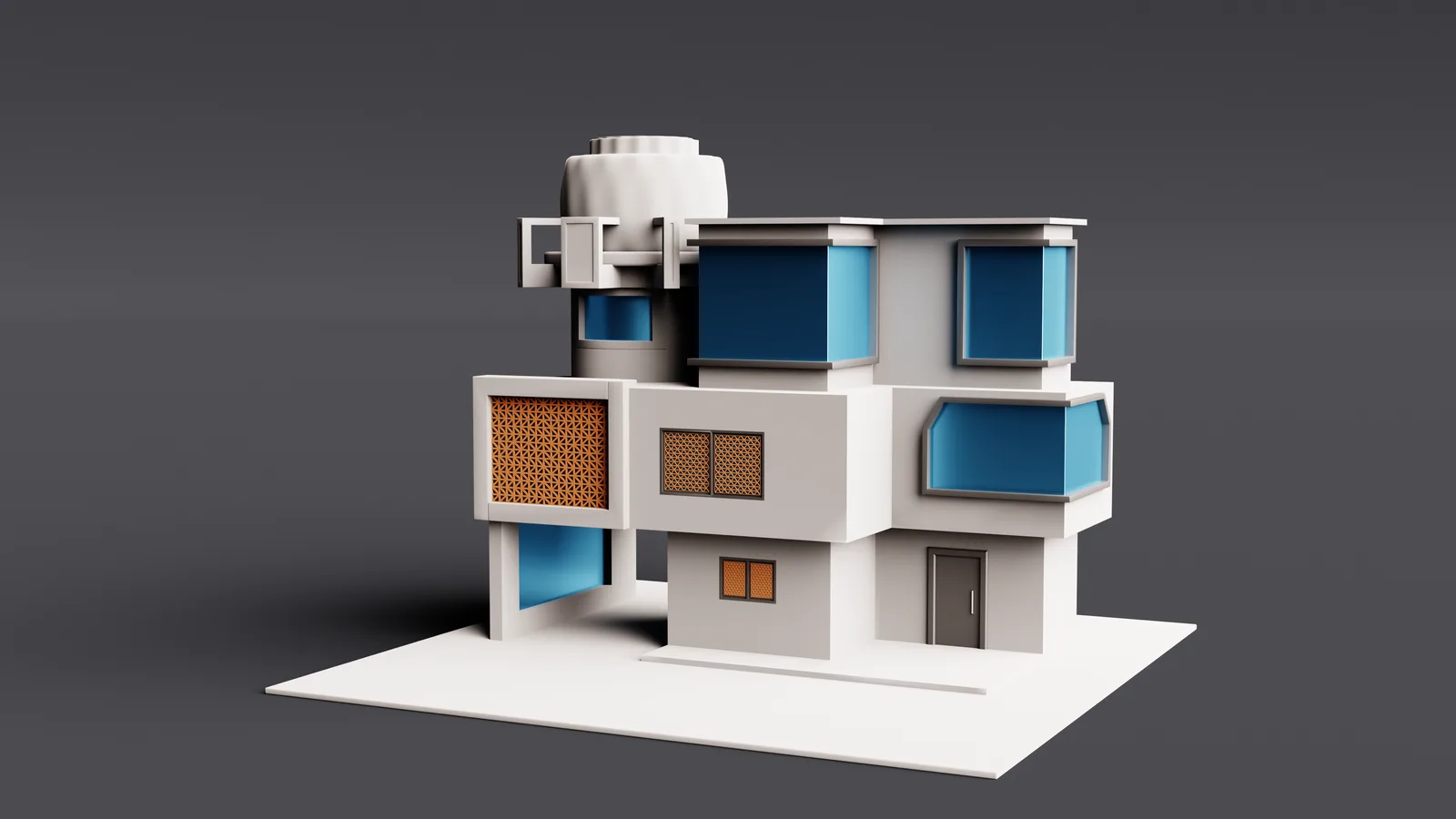
Materials and texturing
Each surface needs a description of how it interacts with light, covering colour, roughness, reflectivity and sometimes translucency. Modern workflows use physically based values so a material behaves consistently under any lighting, an approach explained in our guide to PBR materials.
Lighting
Virtual lights carry real units. A sun at a given date and latitude, an interior fitting with a stated lumen output, a sky dome captured from a real location. Getting these right is the single largest factor in whether an image reads as believable, which is why our lighting setup guide spends more time on sources than on materials.
Rendering
The renderer traces light paths through the scene and resolves what reaches the camera. The mathematics behind that process is set out clearly in the open lessons at Scratchapixel, and the same equations run whether the subject is a spaceship or a stairwell.
Post production
Almost no CGI image ships straight from the renderer. Exposure, contrast, colour grading and small compositing fixes happen afterwards, a stage covered step by step in our post production workflow.
💡 Pro Tip
When commissioning CGI, ask for the camera list before the images. Agreeing on four specific viewpoints at the start prevents the expensive version of this work, which is discovering after three days of rendering that the client wanted the approach view rather than the corner view.
Why Architectural CGI Is Its Own Discipline
Film CGI is judged on whether the audience believes the shot. Architectural CGI is judged on whether the building gets built, sold or approved, and those are different tests.
Accuracy carries legal weight. A marketing visual that shows a balcony larger than the consented drawing creates a real problem, which is why architectural work stays tied to a coordinated model rather than a sculpted approximation.
Scale is different too. A film studio can spend a week on one shot. An architectural practice usually needs six images by Friday, on a fee that is a fraction of a single VFX shot budget. That pressure has shaped the entire toolset toward speed, from real time engines to the AI tools now used in early stages.
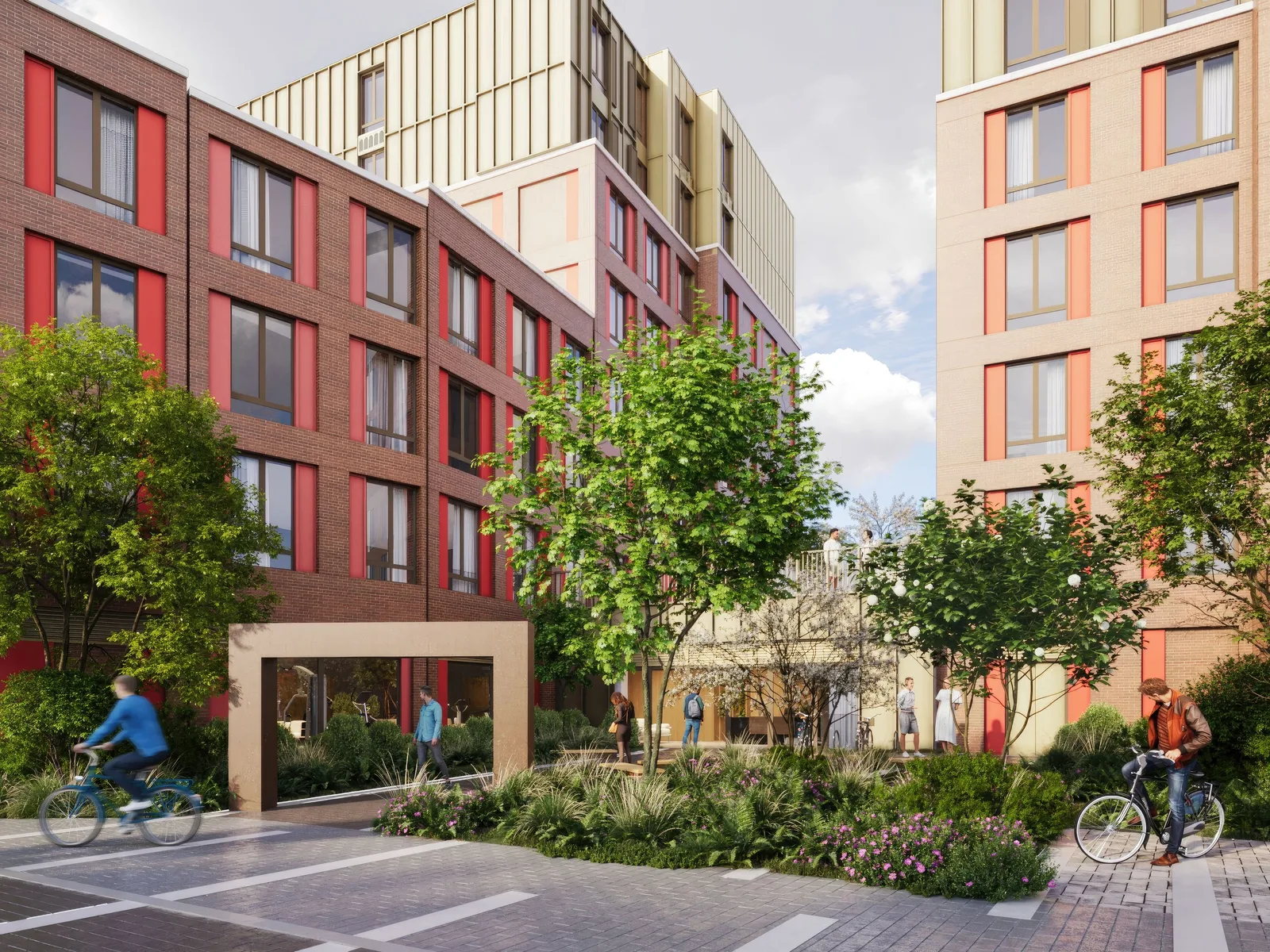
🏗️ Real-World Example
Property marketing suites: large residential schemes are routinely sold years before completion using nothing but CGI. Buyers walk into a sales suite, look at images of a building that exists only as a model, and commit money. The commercial weight placed on these images is why accuracy standards in architectural work sit closer to surveying than to entertainment.
The Cost and Time Behind a Single Image
People consistently underestimate what sits behind one finished visual. Modelling and scene preparation usually take between two and five days for an exterior view of a mid sized building, assuming the design model already exists. Materials add another day. The render itself might take four hours.
That ratio surprises clients who assume the computer is doing the work. The computer does the last ten percent. Everything before it is a person deciding where the camera goes, which trees belong in the foreground, and whether the sky matches the mood the design deserves.
Costs follow the same shape. A studio quoting for six images is quoting mostly for preparation time, which is why adding a seventh view to an existing scene costs far less than the first one did. Our breakdown of architectural rendering cost works through the numbers in detail.
Why render times vary so much
Interior scenes are slower than exterior ones, sometimes by a factor of five. Light entering a room bounces many times before it settles, and every bounce is more computation. Glass, water and translucent materials multiply the problem further.
Resolution matters less than people expect and sampling matters more. Doubling the pixel dimensions quadruples the pixel count, but a noisy scene at low resolution is still noisy. When deadlines get tight, studios distribute frames across many machines, an approach explained in our guide to what a render farm does.
Common Misunderstandings About CGI
The first is that CGI means fake. Every architectural drawing is a representation of something that does not yet exist, and a render is simply a more legible version of the same claim. A section drawing is no more real than a rendered perspective.
The second is that photorealism is always the goal. It often is not. A diagram, a clay render or a stylised illustration can communicate a design idea more clearly than a photographic image, because it removes information the viewer does not need.

The third is that better software produces better images. Renderers converged years ago and the visible difference between the major engines is now small. What separates a strong image from a weak one is composition, light and restraint, none of which live in a settings panel.
Where AI Fits Into CGI Now
Image models changed the entry point rather than the discipline. A traditional pipeline needs geometry before it can produce anything. An AI tool can produce a convincing architectural image from a sketch or a photograph, with no model behind it at all.
What it cannot do is guarantee that the image matches a drawing set. There is no geometry to check against, so nothing enforces that a window stays where the plan puts it. That tradeoff is examined in our comparison of AI renders and professional 3D artists.
The practical outcome in most offices is a split workflow. AI handles the exploratory stage where speed matters more than precision. Traditional CGI handles anything that will be published, submitted or sold against, where the image has to be defensible. The stylistic decision between the two ends is covered in photorealistic versus stylized renders.
Learning the Field
The barrier to entry has collapsed. Blender is free, capable of production quality output, and used professionally in both film and architecture. A student can now build the full pipeline on a laptop without a single licence fee.
The skill that still separates good work from average work is not software. It is understanding light, composition and material behaviour, which is the same knowledge a photographer needs. Anyone who has followed the shift described in the evolution of architectural visualization will notice that the tools keep changing while that core requirement does not.
Going forward, the interesting question is not whether images will be generated by simulation or by a model trained on photographs. It is who is accountable when the picture and the building disagree. In architecture that answer has always been the person who signed the drawing, and no rendering method changes it.