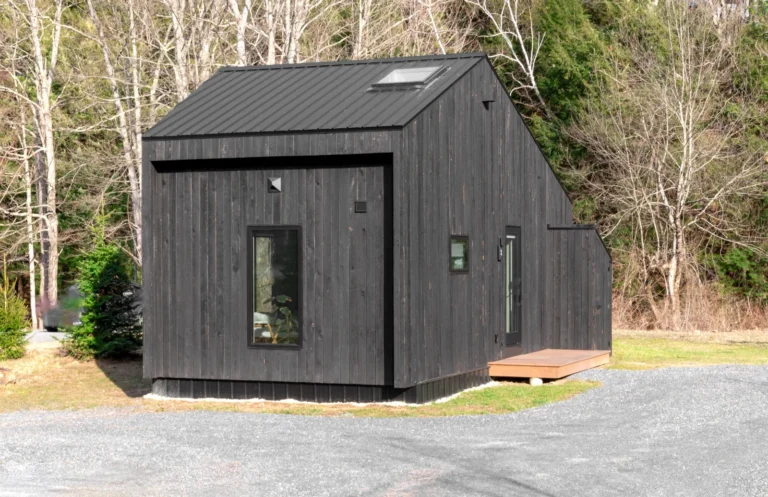

Building materials are the physical substances used to construct a building, from the structural frame to the envelope and the interior finishes. The seven families in common use today are concrete, steel, masonry, timber, glass, insulation and composites. Each is selected for a specific combination of strength, thermal behavior, durability and cost.
Material selection touches structure, energy performance, fire safety, acoustics, maintenance and carbon at once, and it is expensive to correct once the building is out of the ground. What follows is a working reference for the main families and the properties that decide a specification.
What Are Building Materials?
Building materials are any substances used in construction. The useful way to sort them is by the job they do: structural materials carry load, envelope materials manage the inside-outside boundary, finish materials handle wear and appearance. Fair-faced concrete does two jobs at once, which is why it is unforgiving to specify.
The natural and manufactured split still matters for carbon. Stone, timber and earth are extracted or grown and processed lightly, while cement, steel, glass and most insulation come out of high-temperature industrial processes. Regional traditions relied on the first group, one reason vernacular construction methods are being studied seriously again.
The 7 Main Types of Building Materials
Every project draws on some mix of the families below, and each is governed by published standards. ASTM alone maintains more than 1,300 construction standards covering cement, concrete, masonry, wood, insulation and roofing.
Concrete
Concrete is strong in compression, weak in tension, and reinforced with steel to compensate. It starts as a liquid, so it takes any shape the formwork allows, and it delivers thermal mass, fire resistance and acoustic density cheaply. The trade-off is carbon, almost all of it from the cement. Worth reading first: what concrete does that no other material can.
Steel and Metals
Structural steel carries tension and compression equally and spans further than concrete at the same depth. It also conducts heat and loses strength quickly in fire, so it needs protection and careful thermal bridge detailing. It is heavily recycled: around 35 per cent of all steel is now made from scrap. Aluminium, zinc and copper sit mostly in the envelope.
Masonry: Brick, Block and Stone
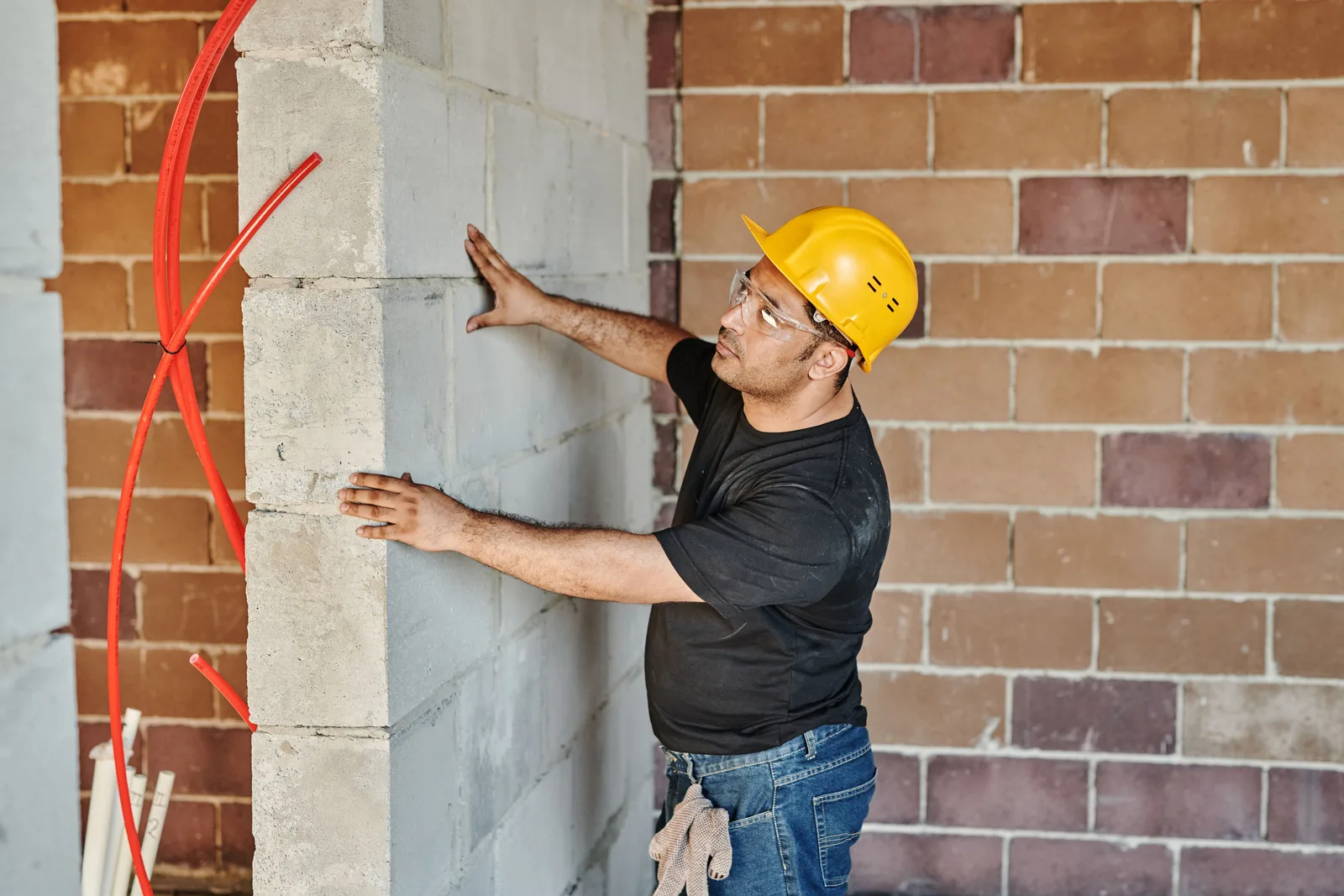
Masonry units bedded in mortar produce walls that are strong in compression and highly durable. Fired clay brick offers thermal mass, weathering character and a service life measured in centuries. Concrete block is faster and cheaper where the structure gets covered, and stone outlasts both. The return of brick in contemporary practice follows from these properties.
Timber and Engineered Wood
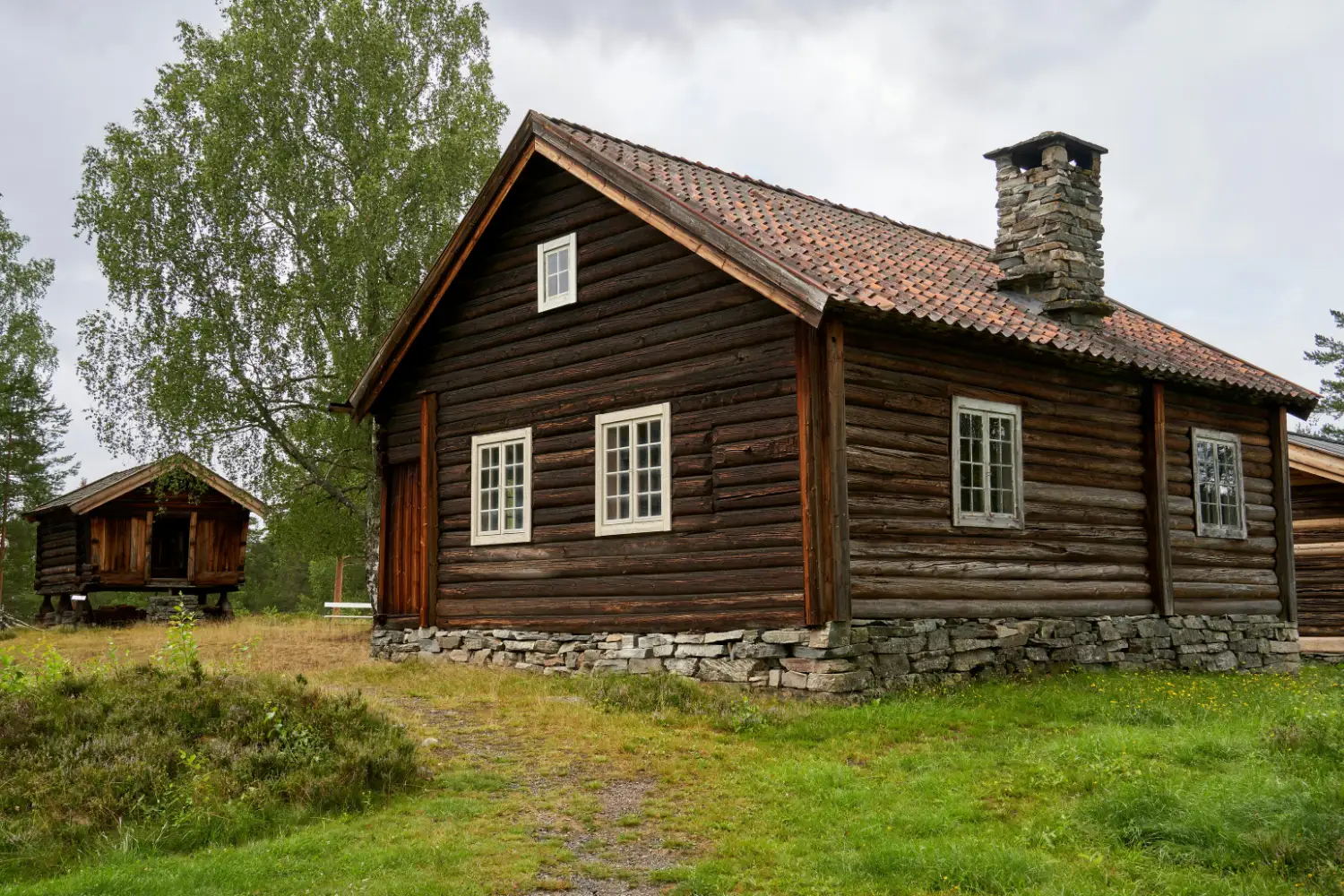
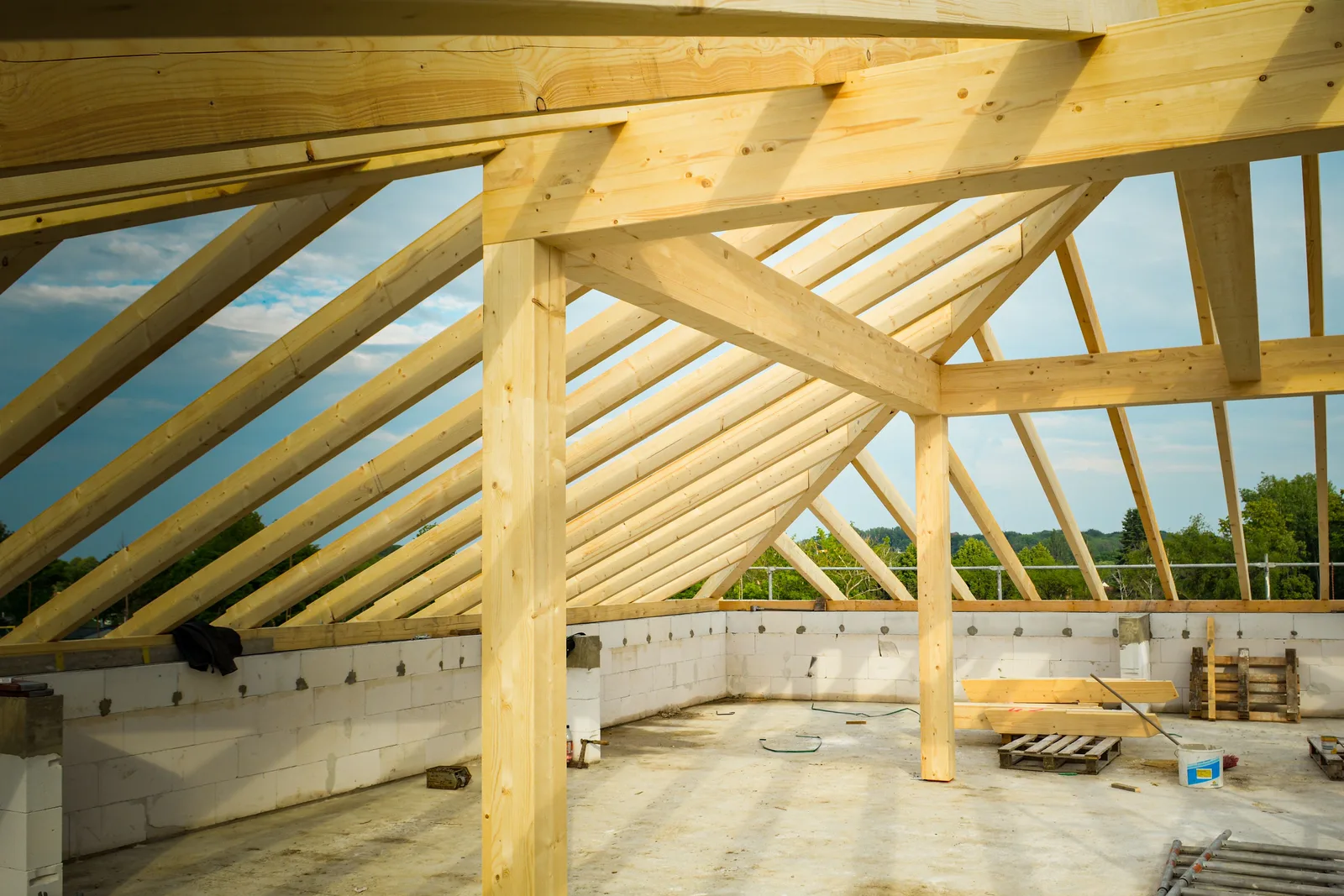
Timber is the only mainstream structural material that stores carbon rather than releasing it. Sawn softwood covers residential framing, and engineered products extend the range: glulam for long spans, cross-laminated timber for panels, laminated veneer lumber for concentrated loads. All of them move with moisture and none tolerate prolonged wetting, which makes junction and ground-level detailing the critical part of the design.
💡 Pro Tip
When two material families meet in one assembly, check their movement behavior before detailing the junction. Fired brick expands slowly across its life, concrete shrinks as it cures, timber moves with moisture content. A joint sized for one will open or crush at the interface with another, usually years after handover.
Glass
Glass is specified for daylight and view, then engineered around what comes with them: solar gain, heat loss, glare and safety. Sealed units with low-emissivity coatings and inert gas fills reach centre-pane U-values below 1.0 W/m²K in triple-glazed form.
Insulation
Insulation does one job, slowing heat transfer, and it is still the cheapest route to better energy performance. Mineral wool, polystyrene, polyisocyanurate, wood fibre and cellulose manage it with very different fire behavior, moisture tolerance and compressive strength. The right choice depends on where in the build-up it sits.
Composites and Polymers
This group covers fibre-reinforced polymers, membranes, sealants, coatings and a growing set of bio-based boards. They rarely carry primary load, but they control water, air and vapour movement, and failures here cause more defects in practice than structural problems do.
Building Material Properties That Drive Specification
Six properties do most of the work. Strength sets what the element can carry. Thermal conductivity sets how much insulation the assembly needs. Density controls thermal mass and acoustics. Moisture behavior decides where a material can sit in a wall build-up, and getting that wrong causes interstitial condensation. Fire performance is regulated, and durability drives maintenance cost.
Building Material Properties Compared
The table sets the seven families side by side on the criteria that come up first in review.
| Material Family | Key Properties | Typical Use | Main Limitation |
|---|---|---|---|
| Concrete | Compression, mass, fire resistant | Frames, slabs, foundations | Embodied carbon from cement |
| Steel | Tension and compression, conductive | Long spans, frames | Needs fire protection |
| Masonry | Compression, high mass, durable | Loadbearing walls, facades | Slow to build, heavy |
| Timber | Light, low conductivity, stores carbon | Framing, floors, cladding | Moisture movement, decay |
| Glass | Transparent, high heat transfer | Windows, curtain walls | Solar gain and heat loss |
| Insulation | Very low conductivity, no load | Walls, roofs, floors | Moisture and compression sensitive |
| Composites | Controls water, air, vapour | Membranes, sealants, coatings | Ageing, hard to repair |
📐 Technical Note
Thermal conductivity values for envelope calculations come from tabulated design data, principally ISO 10456. Typical figures put dense concrete at 1.35 to 2.0 W/mK, fired clay brick at 0.5 to 0.8 W/mK, softwood near 0.13 W/mK and mineral wool between 0.035 and 0.040 W/mK. That gap is why a masonry wall still needs a dedicated insulation layer to meet current U-value targets.
How Do You Choose the Right Building Material?
Start with the constraint that cannot move. On most projects that is the structural span, the fire strategy or the local code, and it removes several options immediately. Climate comes next, since temperature swing, driving rain and freeze-thaw cycles decide which materials survive.
The second filter is the assembly, not the material. Insulation outside thermal mass produces a stable interior; the same insulation inside stops the mass working at all. Brick on a rainscreen behaves nothing like brick in a solid wall. Judge the build-up, not the sample.
⚠️ Common Mistake to Avoid
Approving a material from the sample board alone. A brick that reads perfectly in the studio can have a water absorption rate that makes it wrong for its exposure zone, and freeze-thaw damage will not show for several winters. Check absorption class, frost resistance and durability designation before sign-off.
Comparing options visually helps too. Generating the same building with a brick facade, exposed concrete and timber cladding turns an abstract argument into a decision the client can actually make, and platforms like ArchFine produce those comparisons in seconds.
Sustainable Building Materials and Embodied Carbon
Sustainable building materials are usually treated as a category of products, which is misleading. Sustainability is a property of a specification, not of a product. Badly sourced timber shipped across the world can carry a worse footprint than local block, while concrete with half its cement replaced performs like standard concrete.
Three levers matter: cement replacement, recycled content and service life. A material that lasts 200 years amortises its embodied carbon over a period that makes the initial figure look very different. Reuse beats all three.
🔢 Quick Numbers
- Buildings and construction produce around 37 per cent of global CO2 emissions and account for close to 50 per cent of global material extraction (UNEP and GlobalABC, Global Status Report for Buildings and Construction 2025-2026)
- 55 per cent of world iron and steel output goes into the built environment (UNEP and GlobalABC, Building Materials and Climate)
- 35 per cent of all steel is now made from scrap (World Steel Association, 2023)
Those figures come from the UNEP Global Status Report for Buildings and Construction, which also notes that half the buildings standing in 2050 have not been built yet. None of this needs a premium budget: many low-cost sustainable material strategies cost the same or less than the conventional default.
Thermal and durability figures here are typical design values. Codes and standards vary by jurisdiction, so specifications should be verified by a licensed professional.
Frequently Asked Questions
What are the most common building materials used today?
Concrete, steel, masonry and timber account for the majority of structural work worldwide, with glass, insulation and polymer products covering the envelope and finishes. Concrete remains the most used construction material by volume, though the regional mix shifts with local supply and seismic requirements.
Which building material is the most sustainable?
No single material holds that title, since the answer depends on transport distance, sourcing, service life and application. Responsibly sourced timber performs well on embodied carbon because it stores carbon during growth. Reused and salvaged materials usually beat everything else.
How do you compare building material properties?
Compare on the property that governs the design: compressive strength for loadbearing elements, thermal conductivity for envelope layers, fire classification where regulations apply, durability class against real exposure. Datasheets and published standards give figures tested under defined conditions, which sample boards do not.