Brick architecture in contemporary practice is experiencing a resurgence that would have seemed unlikely thirty years ago. After decades of being associated with tradition, nostalgia, or low-budget construction, brick is now being specified by some of the most critically acclaimed practices in the world. The reasons are not sentimental. They are rooted in the material’s physical properties: its thermal mass, its tactile quality, its aging characteristics, and its ability to create surfaces that engage the eye and the hand in ways that glass, steel, and rendered concrete cannot.
Why Modernism Rejected Brick (And Why That Mattered)

The Machine Aesthetic and the Rejection of Handcraft
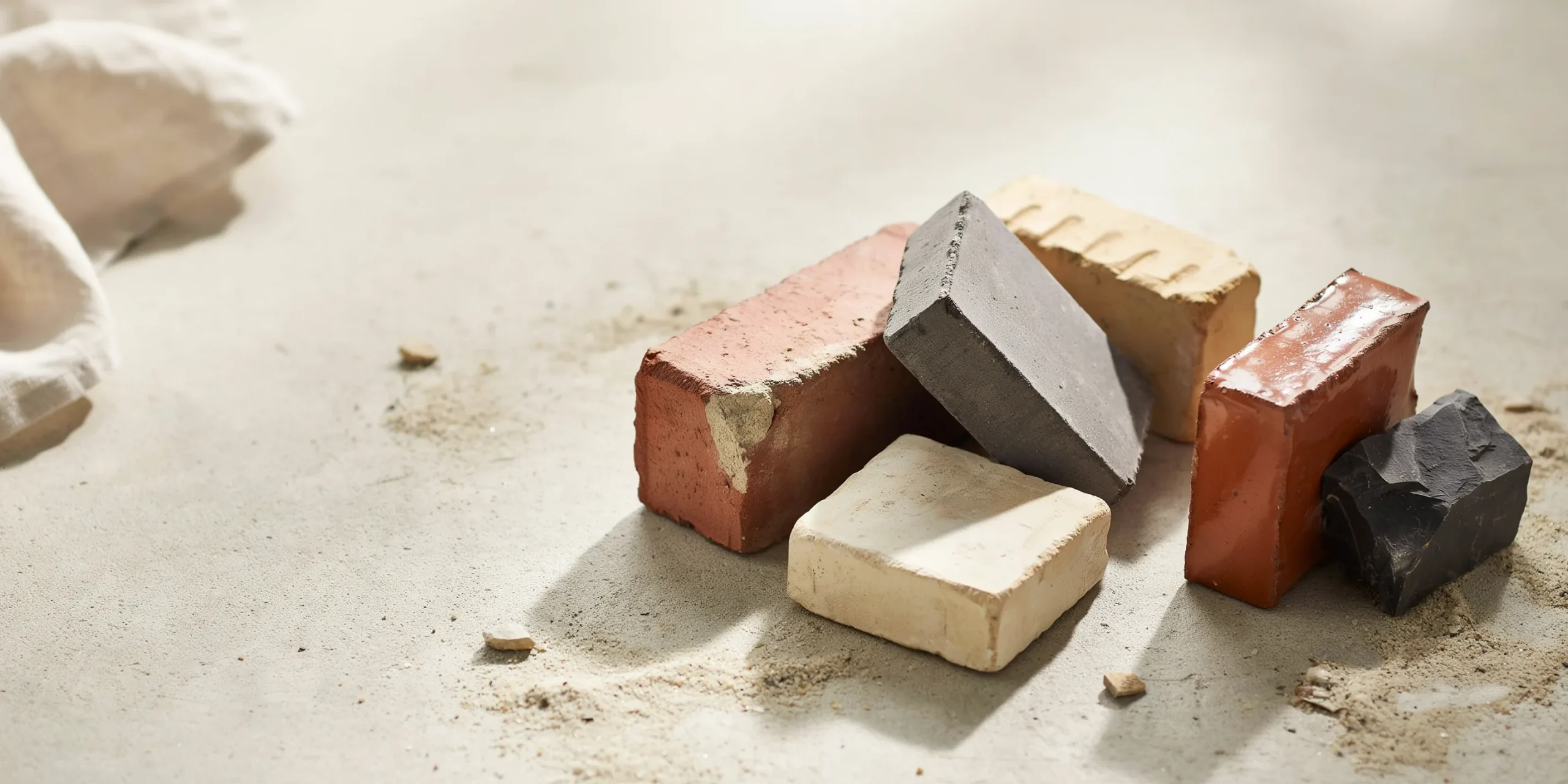
Early modernism defined itself partly by what it excluded. Le Corbusier, Mies van der Rohe, and the Bauhaus circle championed industrial materials: steel, glass, and reinforced concrete. These materials could be produced at scale, shaped by machines, and assembled with precision. Brick, by contrast, was associated with handcraft, regional variation, and historical styles that modernism was determined to leave behind.
The rejection was ideological as much as practical. Brick could do many of the same things that concrete did structurally. But it looked traditional, and looking traditional was incompatible with the modernist project of building a new visual language for the industrial age. The result was that brick was sidelined in high-culture architecture for much of the 20th century, even as it continued to dominate ordinary construction worldwide.
What Postmodernism Did to Brick’s Reputation
When postmodern architects revived historical references in the 1980s, brick reappeared in prominent buildings. But it often appeared as a thin veneer applied to steel or concrete frames, used for its visual associations rather than its structural or thermal properties. Projects like Philip Johnson’s AT&T Building and Michael Graves’s Portland Building treated granite, tile and painted cladding as decoration, not as load-bearing structure.
This decorative use gave brick a reputation problem in architectural criticism. It became associated with pastiche and surface-level historicism rather than with serious material practice. Recovering from that association took another two decades.
💡 Pro Tip
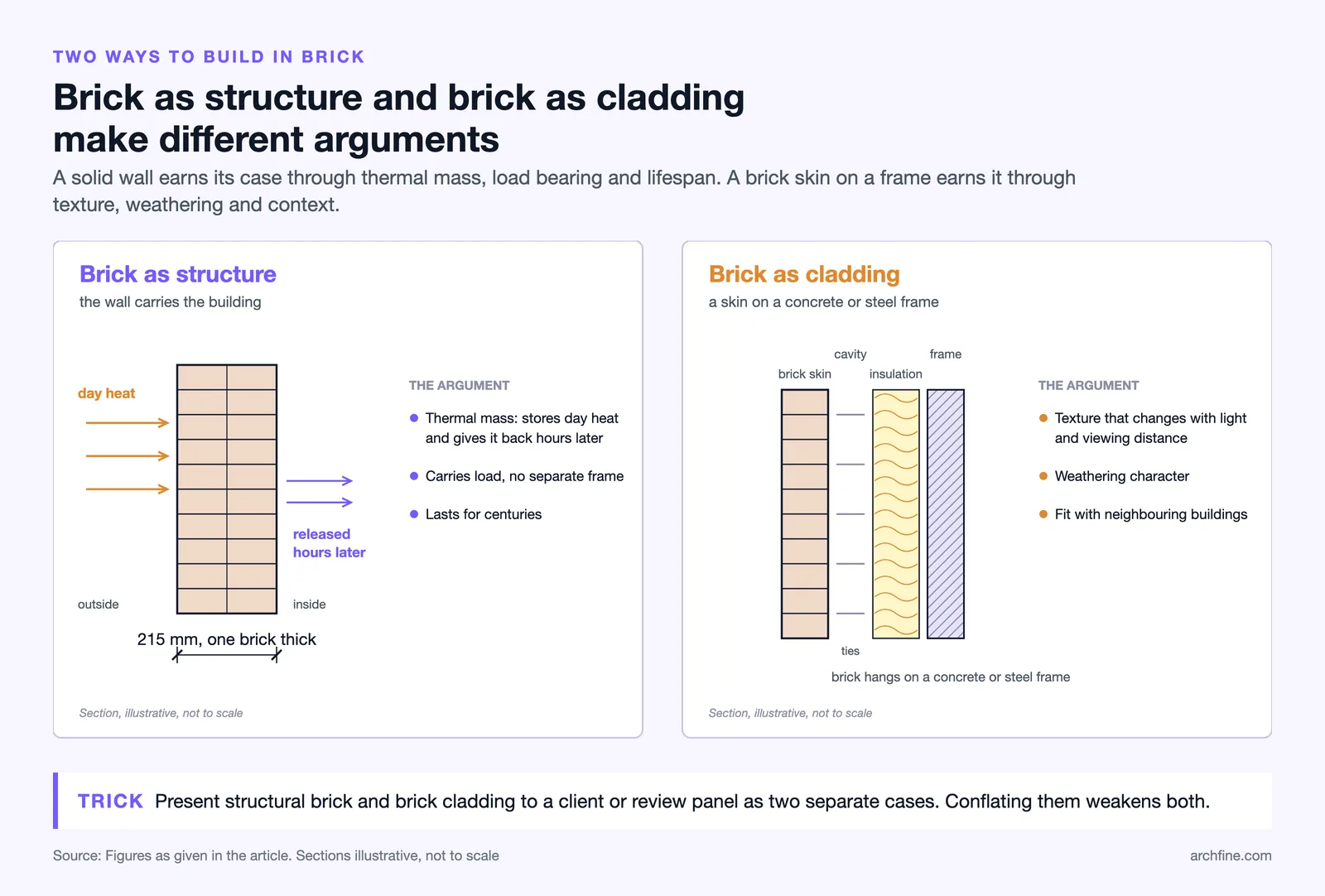
When presenting brick as a material choice to clients or design review panels, distinguish clearly between brick as structure and brick as cladding. The arguments for each are different. Structural brickwork offers thermal mass, load-bearing capacity, and longevity. Brick cladding offers texture, weathering character, and contextual fit. Both are valid, but conflating them weakens the case for either.
What Brought Brick Back Into Serious Architecture?
Tactility as a Value in Contemporary Design
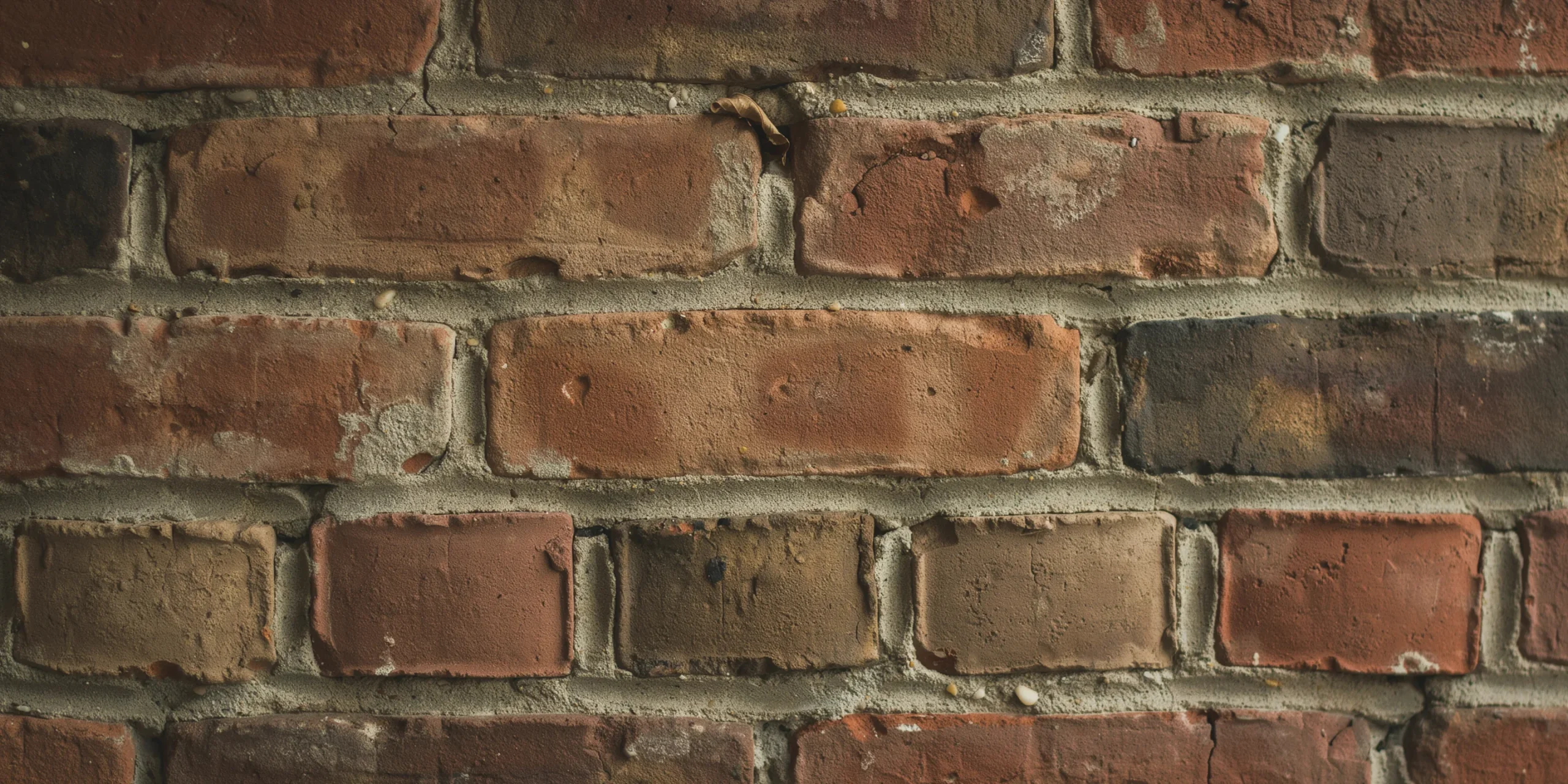
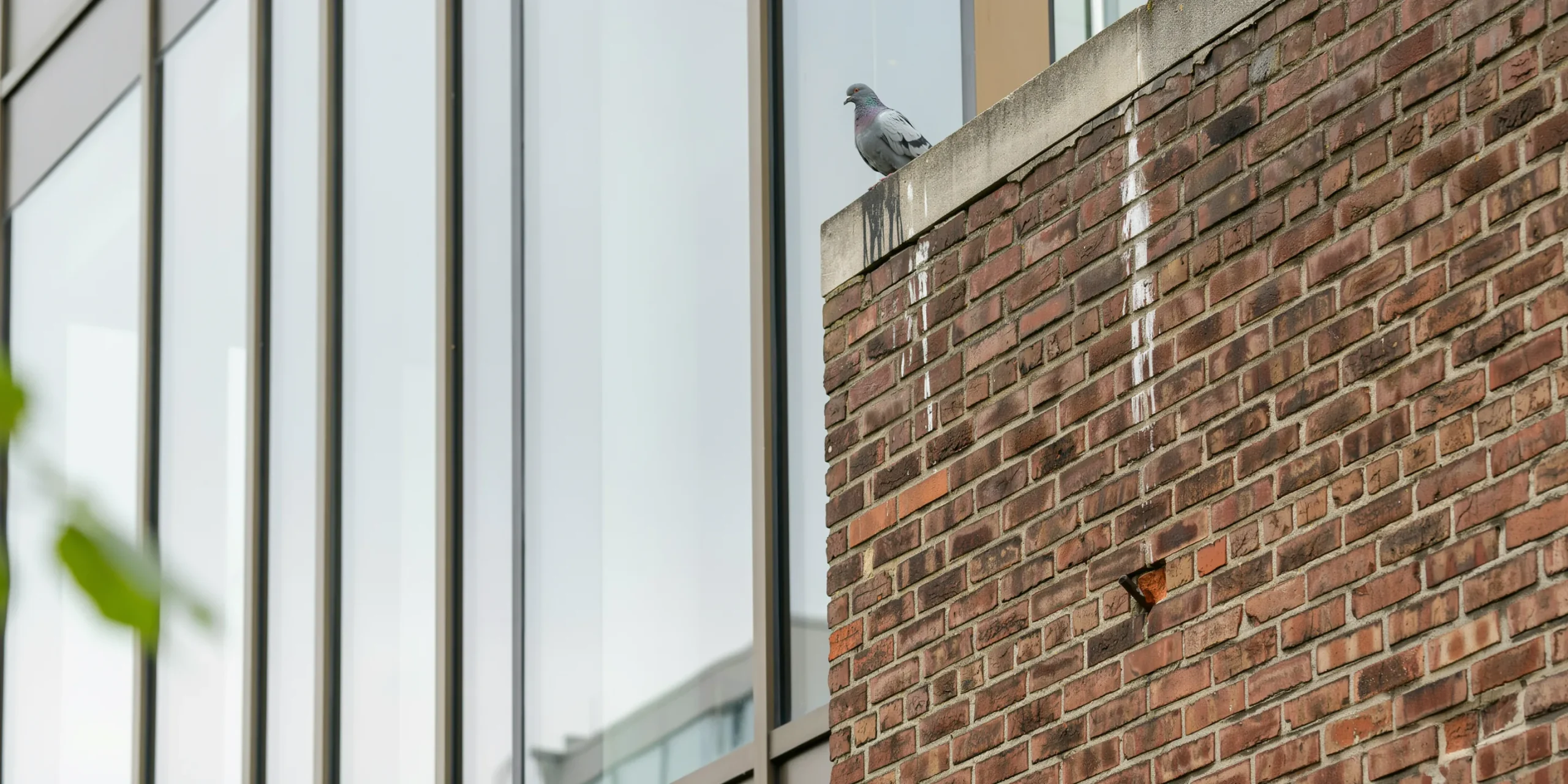
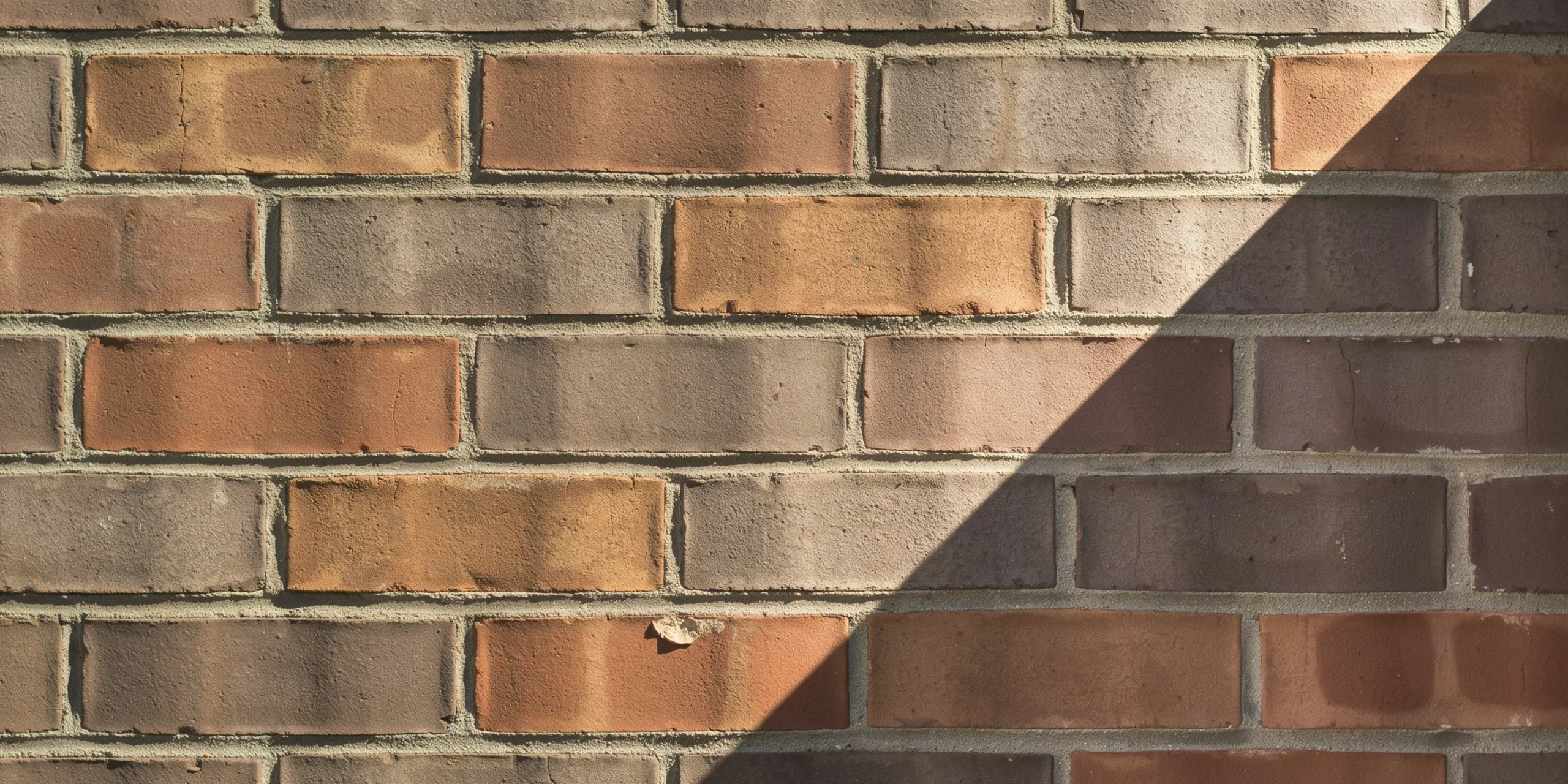
After several decades of smooth, reflective, and digitally produced surfaces, a counter-movement emerged in architecture that valued roughness, texture, and the evidence of making. Brick, with its visible mortar joints, its slight dimensional variations, and its surface irregularities, offered something that curtain wall systems and rendered concrete could not: a surface that changes in appearance with the angle of light and the distance of the viewer.
This quality, sometimes described as haptic richness, became increasingly valued as architects sought to create buildings that engaged the senses rather than presenting a single, fixed image. Practices like Caruso St John, Sergison Bates, and Grafton Architects all cited the tactile qualities of brick as a primary reason for specifying it.
Thermal Mass and Brick’s Passive Performance Properties
Brick has significant thermal mass: it absorbs heat during the day and releases it slowly at night. In climates with significant diurnal temperature swings, a well-designed brick building can reduce or eliminate the need for mechanical cooling during moderate seasons. This property, which was the primary reason brick was used in traditional construction, is now being rediscovered as architects seek to reduce operational energy consumption.
A 215mm solid brick wall has a thermal lag of several hours, meaning that the heat absorbed on the exterior surface during the day reaches the interior in the evening, when it is typically wanted. This natural regulation is free, silent, and requires no maintenance. In passive building design, brick’s thermal mass is a genuine asset.
Examples of Brick Being Used With Ambition Today
Caruso St John and the British Brick Revival
The London-based practice Caruso St John has become closely associated with the contemporary brick revival in Britain. Their Stirling Prize-winning Newport Street Gallery in London (opened 2015, Stirling Prize 2016) uses a hand-laid brick facade with carefully considered bonding patterns, setbacks, and reveals that create a surface of considerable visual depth. The brick is not decorative. It is the architecture. The proportions, the texture, and the color of the masonry are the building’s primary means of expression.
Their brick buildings, set alongside projects such as the Nottingham Contemporary gallery (clad in patterned precast concrete) and the refurbishment of Tate Britain’s galleries, demonstrated that brick could be used with the same level of design ambition as any other material. The RIBA Stirling Prize recognition confirmed that the architectural establishment had accepted brick as a material for serious contemporary work.
🏗️ Real-World Example
Newport Street Gallery by Caruso St John uses three different types of brick across its connected gallery volumes, each selected to respond to the specific proportions and light conditions of that section. The mortar joints are recessed to emphasize the individual bricks, and the bonding pattern shifts between sections to create distinct surface rhythms. The entire design language of the building is derived from brickwork decisions.
Grafton Architects’ Use of Brick in Civic Projects
Grafton Architects, the 2020 Pritzker Prize laureates, have used brick extensively in educational and civic buildings. Their University of Limerick Medical School and Student Housing, and the UTEC campus in Lima, Peru, demonstrate that brick can be used at institutional scale with structural ambition. At UTEC, exposed concrete and brick work together, with brick infill panels providing thermal regulation and visual warmth within a raw concrete frame.
Grafton’s approach treats brick not as a nostalgic material but as one that responds to specific climatic and social conditions. In their work, brick is chosen because it is the right answer to a design problem, not because it looks traditional.
Brick in Scandinavian Contemporary Architecture
Scandinavian architecture has maintained a continuous relationship with brick that the rest of Europe largely abandoned during the modernist period. Danish practices in particular, including Lundgaard & Tranberg and COBE, have produced contemporary brick buildings that demonstrate the material’s ability to create warm, grounded, contextually appropriate buildings in northern climates. The Tingbjerg Library and Culture House by COBE (2018) is a recent example: a public building that uses brick to connect visually with its surrounding housing estate while delivering a thoroughly modern interior program.
Types of Brick That Architects Are Specifying Now
Handmade vs Machine-Pressed: What the Difference Means
Handmade bricks are formed individually in molds, producing units with irregular surfaces, slight color variations, and a textural quality that machine-pressed bricks cannot replicate. They are more expensive but create facades with a visual richness that increases with scale. Machine-pressed bricks are dimensionally precise, consistent in color, and more economical. They produce cleaner, more uniform surfaces.
The choice between them is a design decision, not a quality judgment. Some projects benefit from the regularity of machine-pressed brick. Others depend on the surface variation that only handmade brick provides. The Brick Development Association publishes guidance on specifying both types for different architectural applications.
Reclaimed Brick and the Circular Economy Argument
Reclaimed brick from demolished buildings is increasingly being specified in new construction. The material is already manufactured, its embodied carbon is already spent, and it carries a patina of age that new brick cannot replicate. From a circular economy perspective, reclaimed brick is one of the most genuinely reusable building materials available.
The practical challenge is supply consistency. Reclaimed bricks vary in size, strength, and absorption rate depending on their origin. Architects specifying reclaimed brick need to work closely with suppliers to ensure that the material meets structural and weather-resistance requirements for the intended application.
📌 Did You Know?
A well-made brick can last over 500 years. The oldest surviving bricks, found in Jericho, date back more than 9,000 years. No other manufactured building material has a comparable track record of durability. When architects specify brick, they are choosing a material with nearly ten thousand years of proven performance data.
Is Brick Actually Sustainable?
Embodied Carbon in Fired Brick vs Alternatives
Fired clay brick has a significant embodied carbon cost. Manufacturing requires kiln temperatures of approximately 1,000°C, and the energy source is typically natural gas or, in some regions, coal. A standard fired brick carries an embodied carbon footprint of roughly 0.2 to 0.5 kg CO2 per kilogram, depending on the manufacturing process and energy source.

This is higher than timber but lower than structural steel on a per-kilogram basis. Compared to concrete block, the difference is narrower. The carbon cost of brick is real and should not be dismissed, particularly in projects where embodied carbon targets are part of the design brief.
Longevity as the Counter-Argument
The strongest sustainability argument for brick is not its manufacturing footprint but its lifespan. A brick building designed and maintained properly can last centuries. When the embodied carbon of a material is amortized over 200 or 300 years rather than 50 or 60, the annual carbon cost per year of service becomes very low.
This longevity argument depends on the building being designed for adaptability and maintained over time. A brick facade on a building that is demolished after 40 years offers no longevity benefit. A brick building that remains useful and occupied for generations makes a credible case that the upfront carbon investment was worthwhile. The Architectural Review has published several essays exploring this tension between embodied carbon and material longevity in contemporary practice. The movement that first argued for ornament and material expression against modernist restraint is covered in our guide to postmodern architecture.
✅ Key Takeaways
- Brick was sidelined by modernism for ideological rather than technical reasons. Its physical properties remained valuable throughout.
- The contemporary brick revival is driven by demand for tactile surfaces, passive thermal performance, and material longevity.
- Practices like Caruso St John, Grafton Architects, and COBE are using brick with the same design ambition previously reserved for concrete, steel, and glass.
- Handmade, machine-pressed, and reclaimed bricks each serve different design intentions and carry different cost and sustainability profiles.
- Brick’s embodied carbon is significant, but its exceptional lifespan makes a strong counter-argument when the building is designed for long-term use.