Concrete architecture and its material properties sit at the center of a debate that has run for over a century. Concrete is the most widely used building material on earth and the second most consumed substance after water. It can be poured into virtually any shape, it gains strength over decades, and it offers thermal mass, fire resistance, and acoustic density that few alternatives match. It is also responsible for roughly 8% of global CO2 emissions, it stains in rain, it cracks under tension, and it has produced some of the most hated buildings of the 20th century. The argument about concrete is not going to end. Understanding its properties is the only way to participate in it usefully.
What Concrete Actually Is (And Why the Formula Matters)
Cement vs Concrete: The Basic Distinction
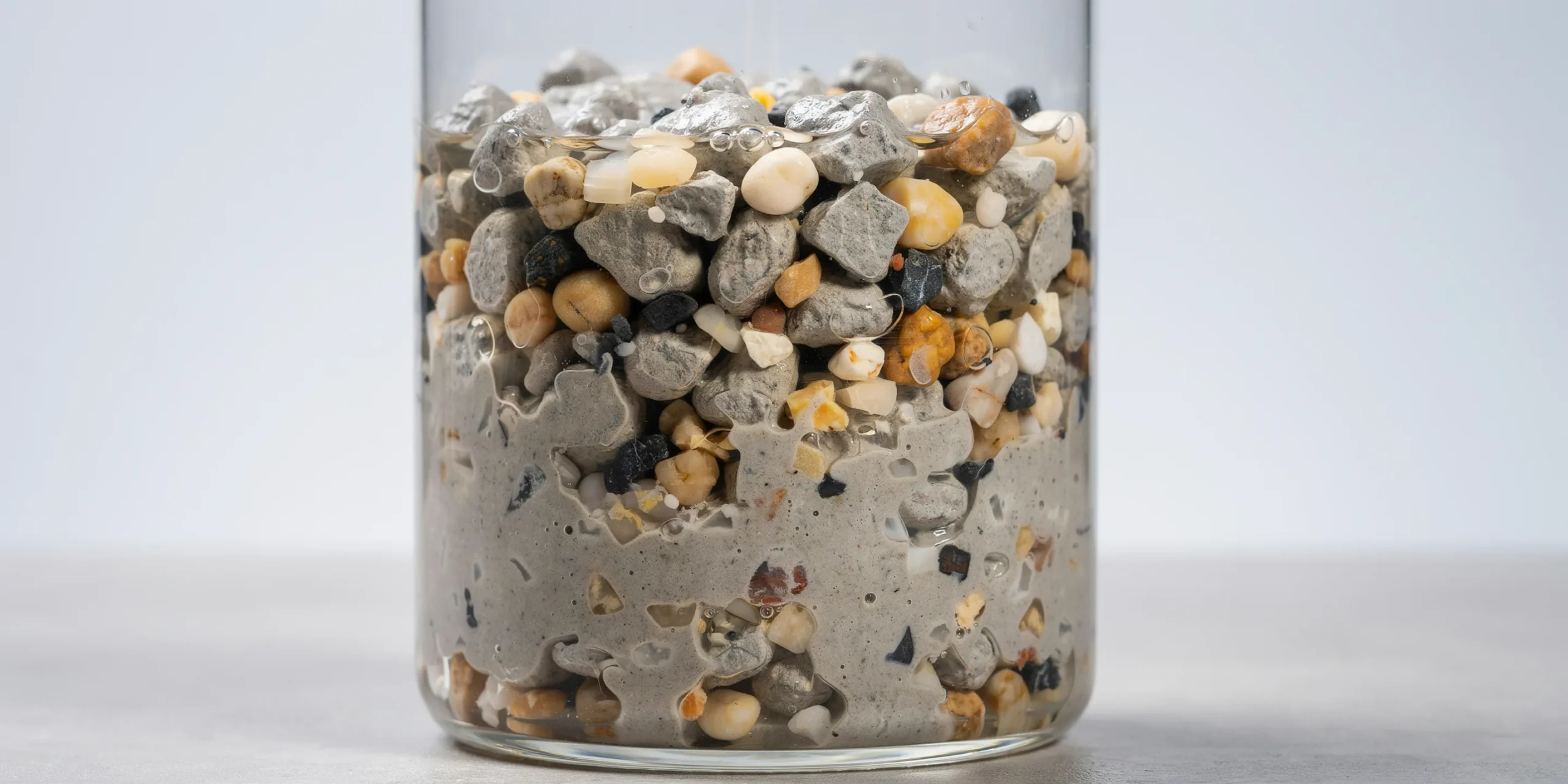
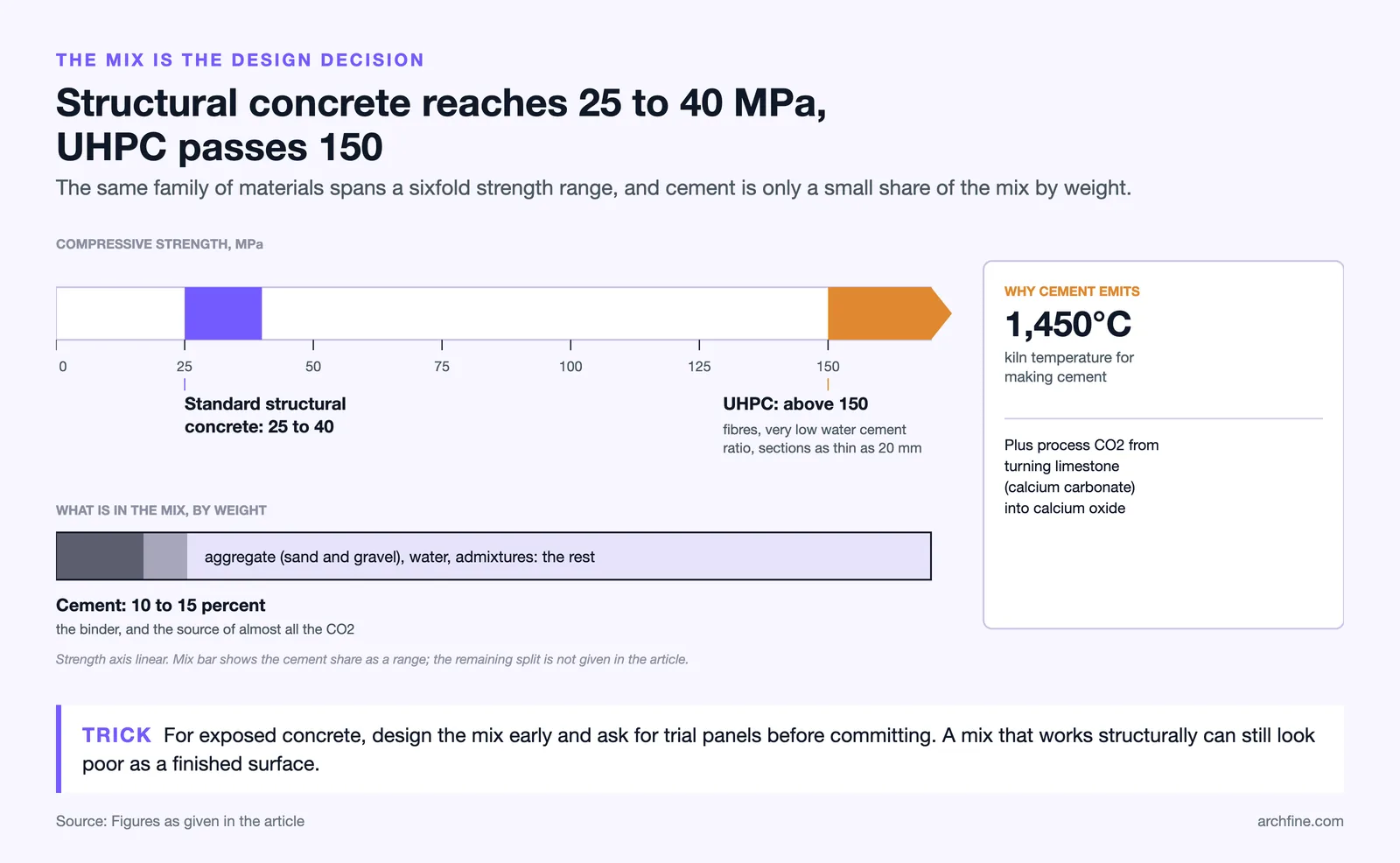
Concrete is not cement. Cement is one ingredient in concrete, typically making up 10 to 15% of the total mix by weight. The rest is aggregate (sand and gravel), water, and sometimes chemical admixtures. The cement acts as a binder: when mixed with water, it undergoes a chemical reaction called hydration that produces a calcium silicate hydrate gel. This gel coats the aggregate particles and hardens over time, creating the solid mass that we call concrete.
The distinction matters because the environmental problem with concrete is almost entirely a cement problem. Aggregate is inert and locally sourced. Water is cheap. Cement production is what generates the CO2, both from the energy required to heat kilns to 1,450°C and from the chemical process of converting limestone (calcium carbonate) to calcium oxide. Addressing concrete’s carbon footprint means addressing cement, not the material as a whole.
How Mix Design Changes Performance
Concrete is not a single material. It is a family of materials whose properties vary enormously depending on the mix. A standard structural concrete mix delivers compressive strengths of 25 to 40 MPa. Ultra-high-performance concrete (UHPC) can exceed 150 MPa. Lightweight concrete uses expanded clay or volcanic aggregate to reduce density for non-structural applications. Self-compacting concrete flows into formwork without vibration, allowing complex geometries to be cast without voids.
For architects, this variability is the point. No other structural material can be tuned this precisely to a specific application. The mix is the design decision, and it determines everything from the structural capacity to the surface finish to the carbon footprint of the final product.
💡 Pro Tip
If you are specifying exposed concrete, get involved in the mix design early. The cement content, aggregate size, water-cement ratio, and admixture selection all affect the final surface appearance. A concrete that performs well structurally may look terrible exposed if the mix was not designed with the surface in mind. Request trial panels before committing to a mix for visible work.
What No Other Material Does as Well as Concrete
Monolithic Form and Structural Freedom
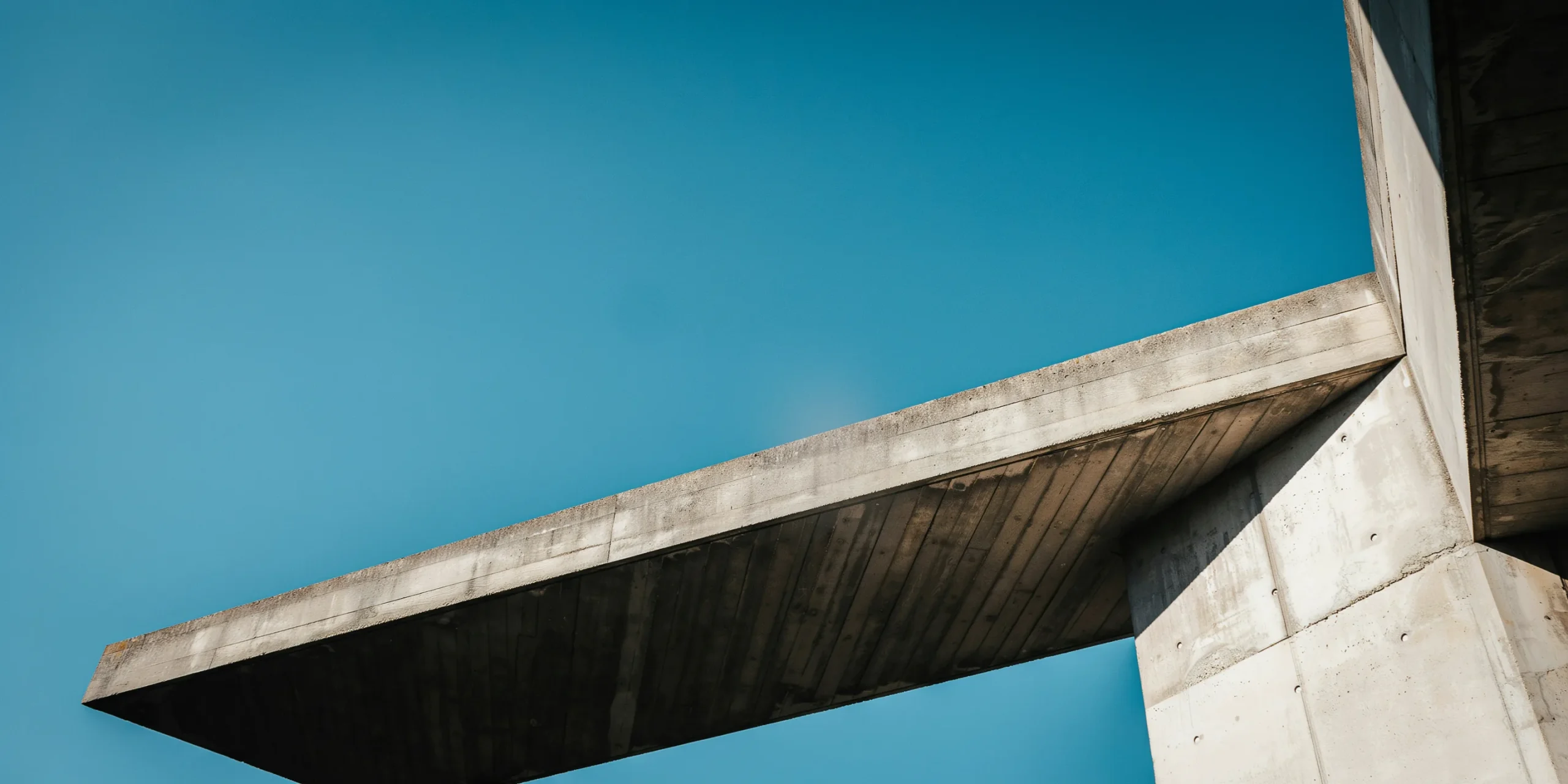
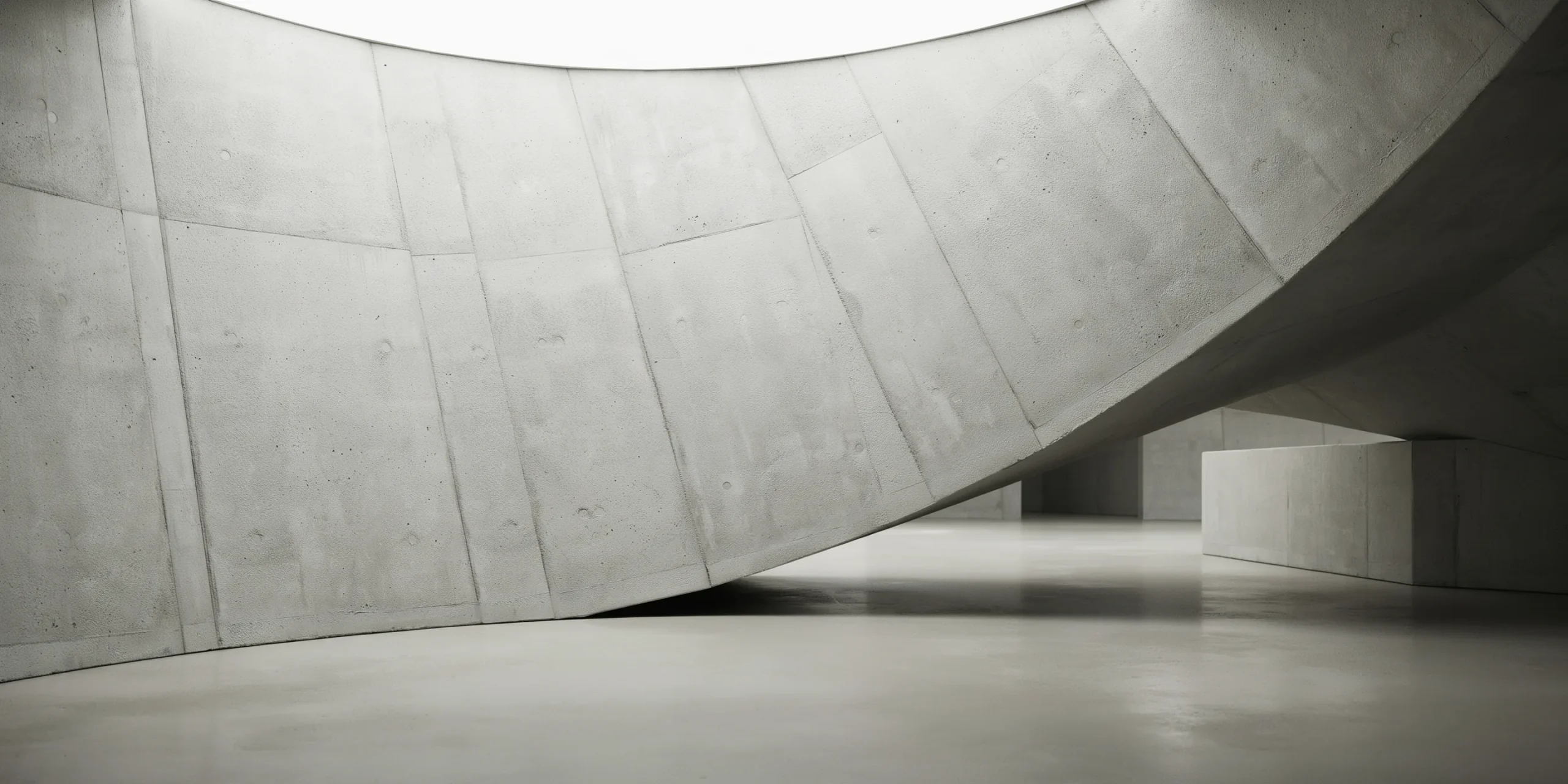
Concrete is the only structural material that starts as a liquid. This means it can take any shape that can be formed. Curved walls, shell structures, cantilevered slabs, and free-form geometries that would require expensive fabrication in steel or timber can be produced in concrete by building the right formwork and pouring. The structural freedom this provides is genuine and has produced some of the most celebrated buildings of the 20th and 21st centuries.
Tadao Ando’s Church of the Light, Zaha Hadid’s Heydar Aliyev Center, and Oscar Niemeyer’s entire body of work in Brasília all depend on concrete’s ability to become whatever shape the architect draws. No other material offers this combination of structural capacity and formal freedom at a comparable cost.
Thermal Mass in Passive Building Design
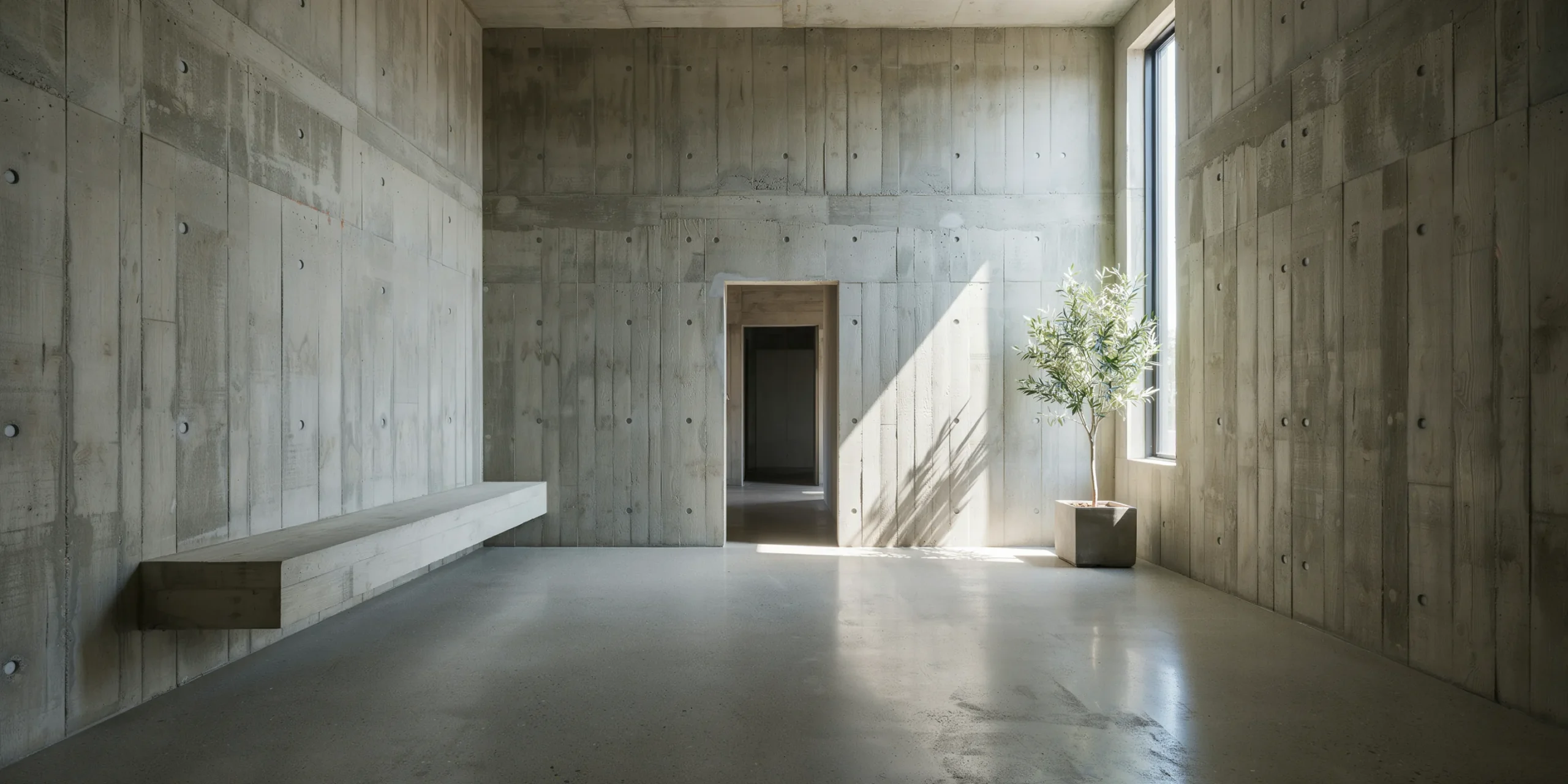
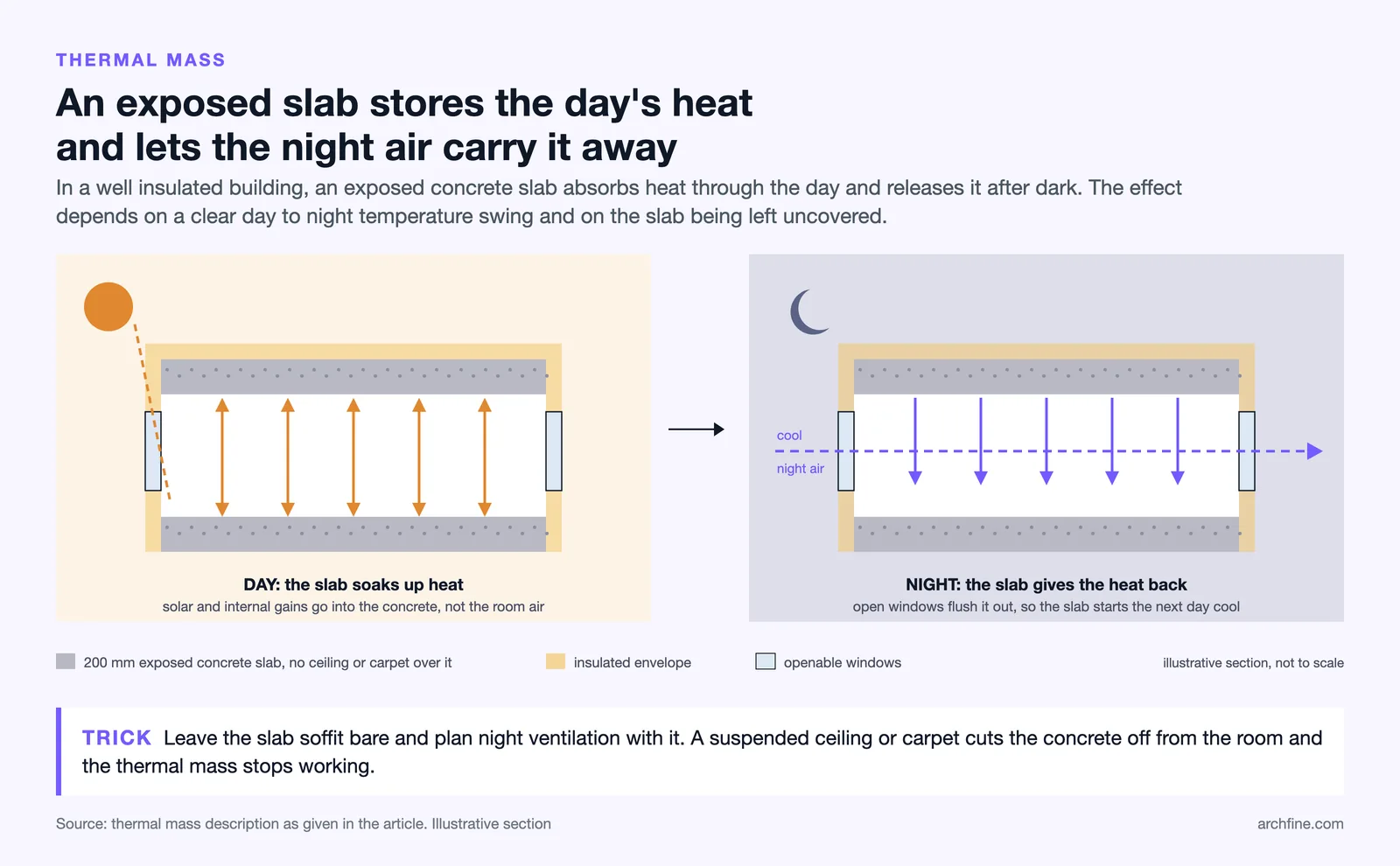
Concrete’s density gives it significant thermal mass: the ability to absorb, store, and slowly release heat. In buildings designed to take advantage of this property, exposed concrete floors and walls act as thermal batteries, absorbing excess heat during the day and releasing it at night. This reduces peak cooling loads and moderates interior temperature swings without mechanical intervention.
In passive building design, thermal mass is one of the most effective strategies for reducing operational energy. A 200mm concrete slab exposed to the interior of a well-insulated building can significantly reduce cooling energy demand in climates with significant day-night temperature variation. This performance is inherent to the material and costs nothing to operate.
Longevity and the Argument for Minimal Maintenance
Well-designed reinforced concrete structures have service lives that routinely exceed 100 years. The material does not rot, is not susceptible to insect damage, and does not require painting or surface treatment to maintain its structural integrity. For building types where long-term durability matters, including infrastructure, institutional buildings, and public housing, concrete’s longevity is a significant advantage.
Why Concrete Divides Architects
The Carbon Problem: Cement Production and Emissions
The cement industry accounts for roughly 8% of global CO2 emissions, making it one of the largest industrial sources of greenhouse gas emissions on earth. For every ton of Portland cement manufactured, roughly 0.6 to 0.9 tons of CO2 are released. This figure includes both the combustion emissions from heating the kiln and the process emissions from the chemical decomposition of limestone.
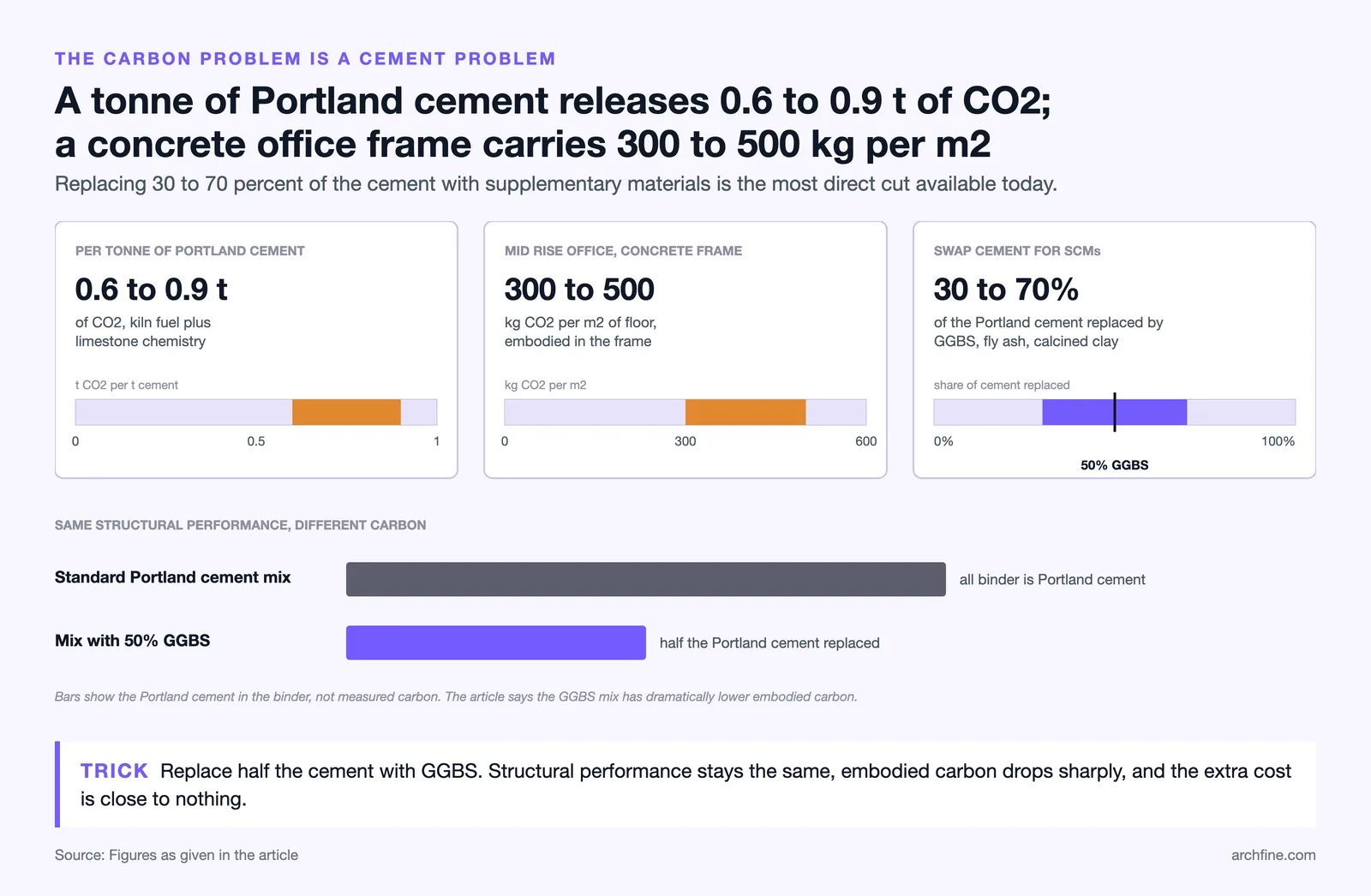
For architects working under carbon budgets or designing to net-zero targets, this is a serious constraint. A typical reinforced concrete frame for a mid-rise office building carries an embodied carbon load of 300 to 500 kg CO2 per square meter. Reducing this figure requires either using less concrete, replacing a portion of the cement with supplementary cementitious materials (SCMs) like fly ash or slag, or specifying one of the low-carbon cement alternatives now entering the market.
⚠️ Common Mistake to Avoid
Treating all concrete as equally carbon-intensive. A standard Portland cement mix and a mix using 50% ground granulated blast furnace slag (GGBS) can have the same structural performance but dramatically different embodied carbon. Specifying the right mix is one of the most effective carbon reduction measures an architect can take, and it costs little or nothing extra.
The Aesthetic Debate: Brutality vs. Honesty
Exposed concrete divides opinion more sharply than almost any other architectural surface. Its advocates, from Le Corbusier to Tadao Ando, argue that concrete’s raw surface is honest: it shows the process of its making, it weathers visibly, and it does not pretend to be anything other than what it is. Its critics argue that exposed concrete is cold, institutional, and ages badly in wet climates, developing stains, algae growth, and a general appearance of neglect.
Both sides have evidence. Fair-faced concrete in the hands of a skilled architect and contractor can produce surfaces of genuine beauty. The same material, poorly specified and carelessly cast, produces the grey, stained walls that have given brutalist concrete architecture its negative reputation. The difference is not in the material but in the level of care applied to its specification, formwork, and maintenance.
Types of Architectural Concrete in Use Today
| Type | Finish | Typical Use | Example Project |
|---|---|---|---|
| Fair-Faced (Board-Marked) | Timber grain imprint from formwork | Cultural, residential, religious | Tadao Ando, Church of the Light |
| Fair-Faced (Smooth) | Steel or phenolic ply formwork | Institutional, commercial | Zaha Hadid, MAXXI Museum |
| Precast Panels | Factory-cast, various textures | Facades, cladding, modular systems | Marcel Breuer, HUD Headquarters (Weaver Building) |
| UHPC (Ultra-High-Performance) | Extremely smooth, thin sections | Facades, bridges, complex geometry | Rudy Ricciotti, MuCEM Marseille |
| Pigmented Concrete | Integrally colored, various hues | Feature walls, public art, facades | David Adjaye, Ruby City |
Fair-Faced Concrete
Fair-faced concrete, sometimes called architectural concrete or béton brut, is concrete that is left exposed as the finished surface. The quality of the finish depends entirely on the formwork, the mix, and the skill of the contractor. Board-marked concrete retains the grain pattern of the timber formwork. Smooth fair-faced concrete uses steel or coated plywood forms to produce a uniform surface. Both require careful attention to tie-hole patterns, joint lines, and color consistency.
The margin for error is essentially zero. A blowhole, a cold joint, or an inconsistent color patch in fair-faced concrete cannot be hidden. This is why exposed concrete buildings cost more than their rendered equivalents: the material is the finish, and the finish must be right on the first pour.
Precast Panels
Precast concrete panels are manufactured in a factory under controlled conditions and transported to site for installation. Factory production allows for tighter quality control, more consistent finishes, and the incorporation of complex textures, reveals, and embedded details that would be difficult to achieve in situ. Precast has been used in architecture since the mid-20th century and remains one of the most versatile concrete systems available.
Ultra-High-Performance Concrete (UHPC)
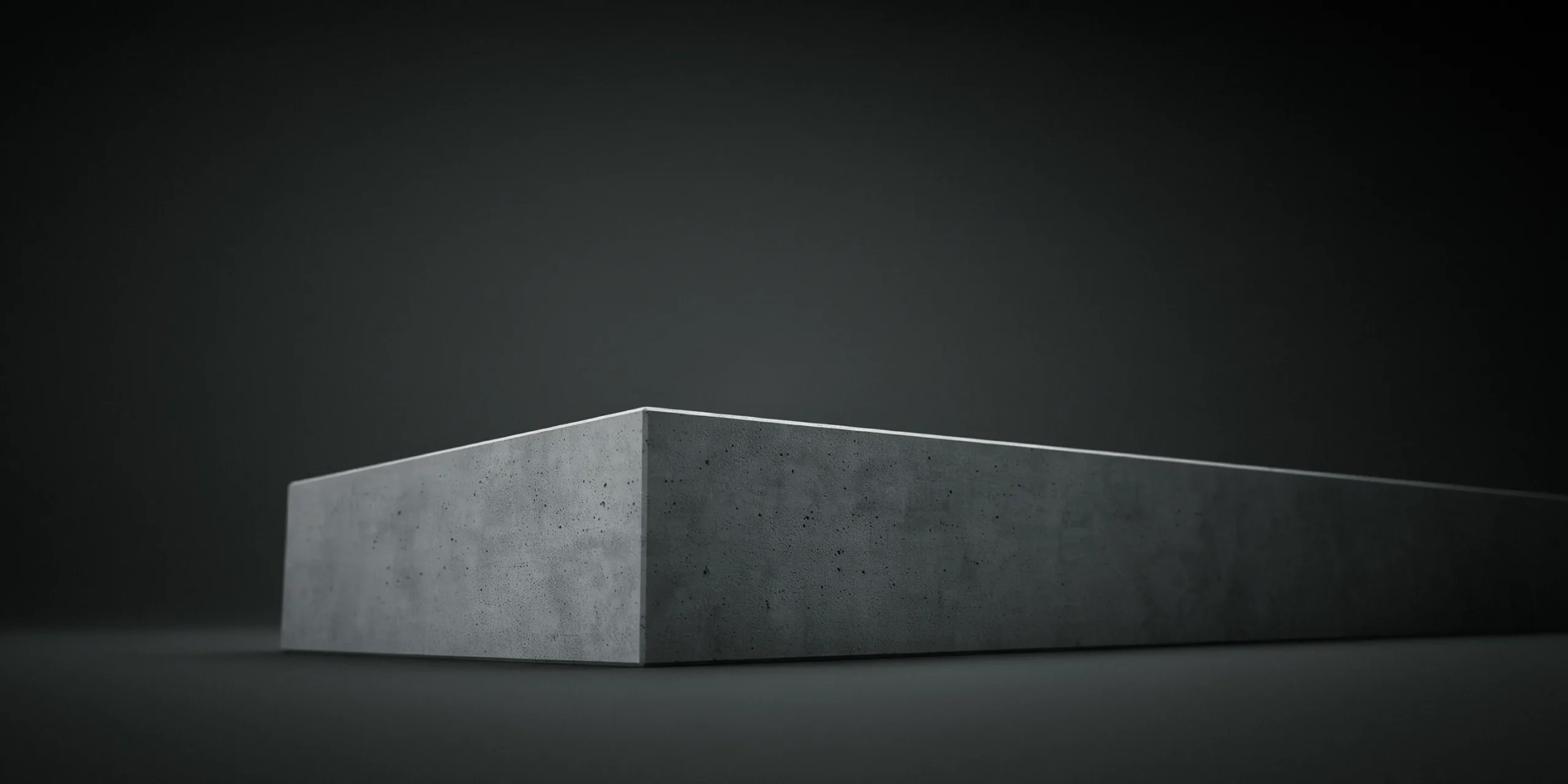
UHPC uses a finely graded mix with steel or polymer fibers and very low water-cement ratios to achieve compressive strengths above 150 MPa. The result is a material that can be cast in sections as thin as 20mm while maintaining structural integrity. UHPC is being used for facade panels, bridge decks, and complex curved elements where conventional concrete would be too heavy or too thick. The Concrete Centre provides technical guidance on specifying UHPC for architectural applications.
📌 Did You Know?
Concrete is the second most consumed substance on earth after water. Humanity uses approximately 30 billion tons of concrete per year. To put that in perspective, that is roughly four tons of concrete for every person on the planet, every year. No other manufactured material comes close to this volume of production.
Where Concrete Is Going From Here
Low-Carbon Alternatives and Supplementary Cementitious Materials
The most immediate path to reducing concrete’s carbon footprint is partial cement replacement. Ground granulated blast furnace slag (GGBS), fly ash, calcined clay, and natural pozzolans can replace 30 to 70% of the Portland cement in a mix without compromising structural performance. These supplementary cementitious materials are already widely available and are being specified with increasing frequency as embodied carbon becomes a standard design metric.
Beyond SCMs, several companies are developing alternative binder systems that eliminate Portland cement entirely. Geopolymer concretes, carbon-cured concretes, and limestone calcined clay cements (LC3) are at various stages of commercialization. None has yet displaced Portland cement at scale, but the trajectory is clear: the concrete of 2040 will have a significantly lower carbon profile than the concrete of 2020.
Self-Healing Concrete and Material Research
Self-healing concrete embeds bacteria or encapsulated healing agents within the mix. When cracks form and water enters, the bacteria activate and produce calcium carbonate, which fills the crack. This technology, developed at Delft University of Technology and now being commercialized by several firms, addresses one of concrete’s primary maintenance problems: the ingress of water through surface cracks leading to reinforcement corrosion.
The technology is still in its early commercial phase, and costs remain higher than conventional repair methods. But the principle is sound, and the potential to extend the service life of concrete structures by decades without manual intervention is significant. For architects concerned with long-term building performance, self-healing concrete is worth following as it moves from research to practice.
✅ Key Takeaways
- Concrete’s environmental problem is primarily a cement problem. Aggregate and water contribute minimal emissions.
- No other structural material matches concrete’s combination of formal freedom (it starts as a liquid), thermal mass, fire resistance, and cost-effectiveness.
- The aesthetic debate between brutality and honesty will not be resolved. The quality of exposed concrete depends almost entirely on specification, formwork, and contractor skill.
- UHPC, pigmented concrete, and precast systems have expanded the range of what architectural concrete can look and perform like.
- Low-carbon alternatives including SCMs, geopolymers, and self-healing mixes are narrowing the gap between concrete’s structural advantages and its environmental costs.