Raw Concrete Yoga Studio

Raw Concrete Yoga Studio

Minimalist Wellness 17 seconds 25 May 2026

Prompt Used

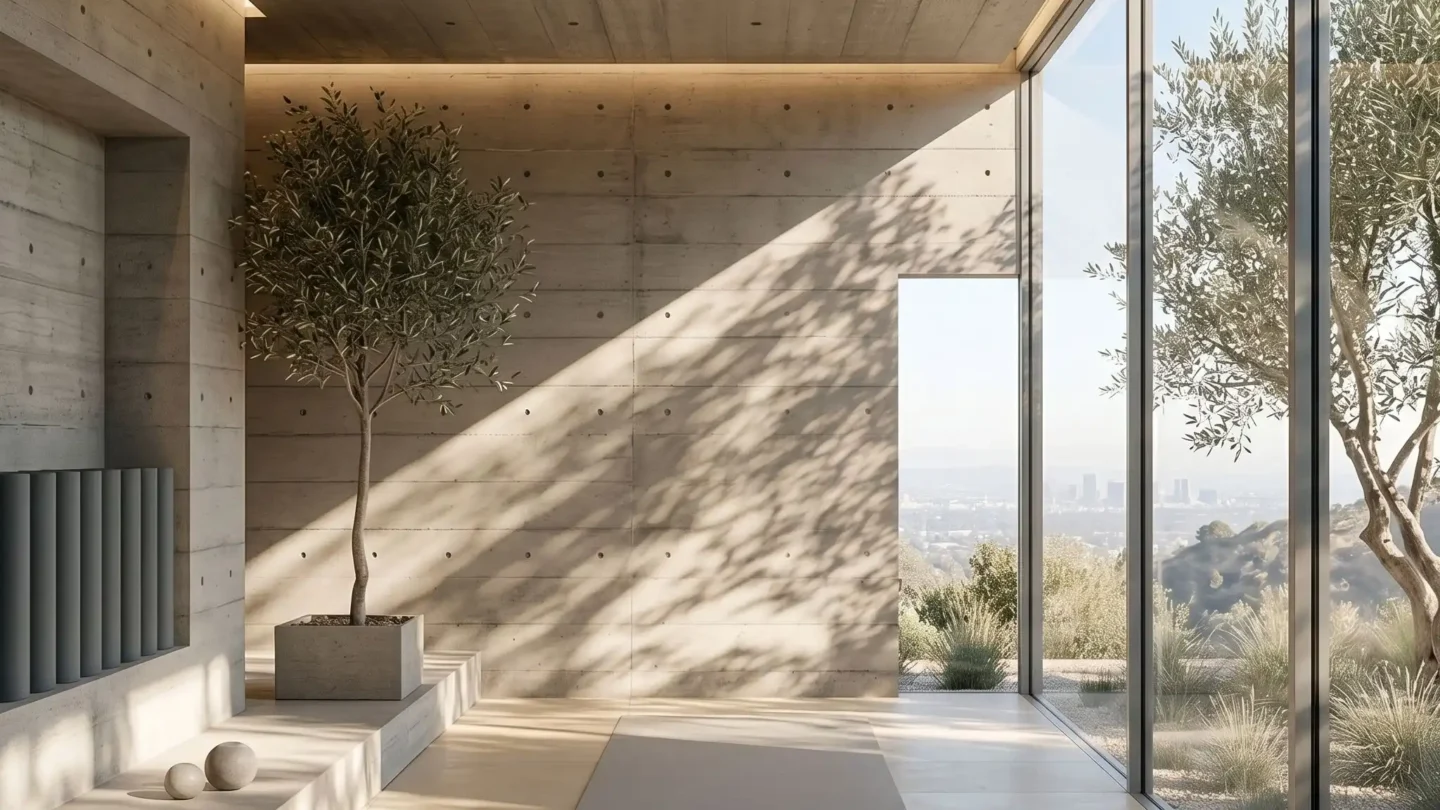
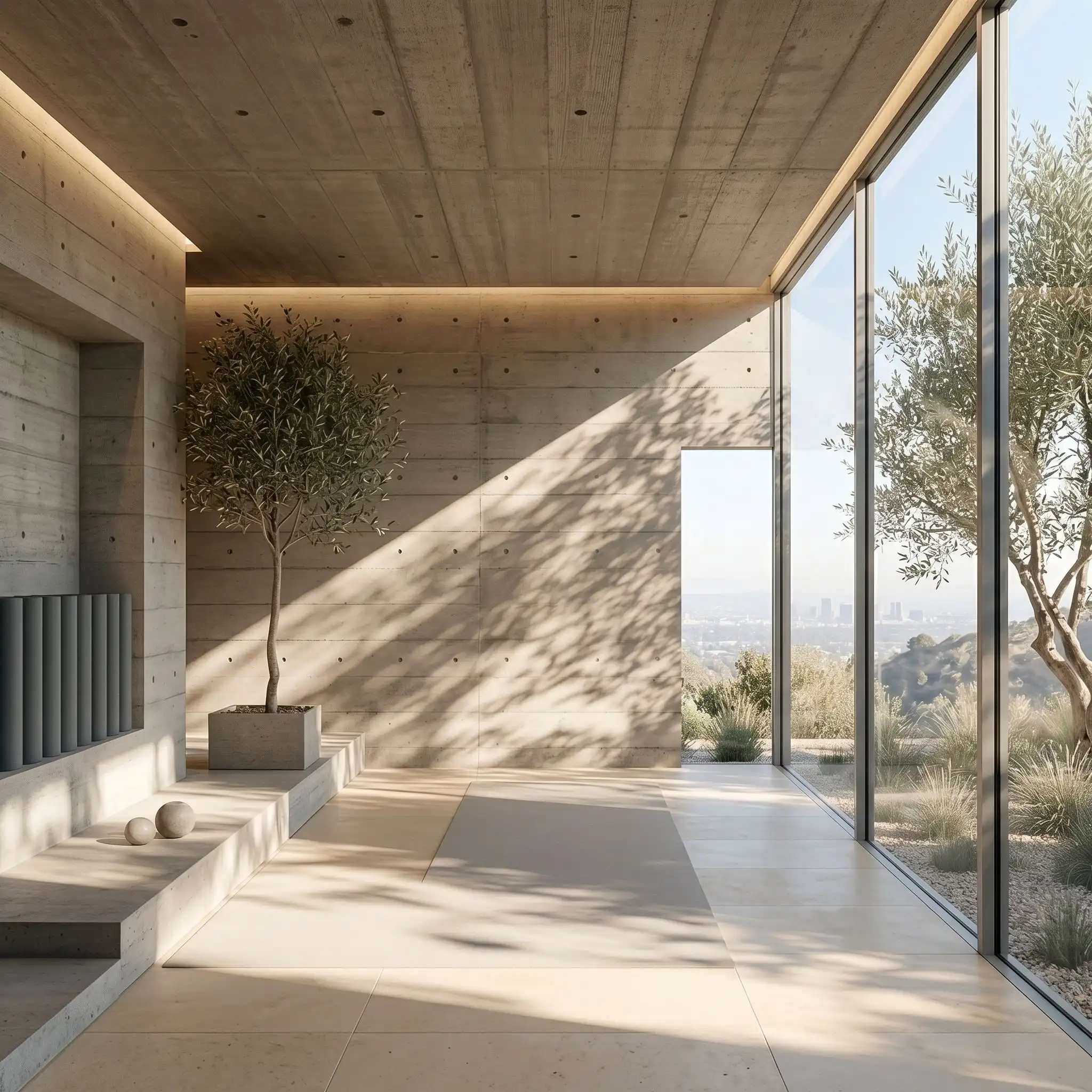
A photorealistic render of a private yoga and meditation studio built as a separate garden pavilion within the grounds of a contemporary home in the hills above Los Angeles, a small rectangular building (12m x 6m) designed as a space of absolute calm and material austerity. Exterior: The building is a simple flat-roofed box clad entirely in raw in-situ concrete (board-formed with 150mm wide horizontal planks, the tie holes arranged in a precise 400mm x 600mm grid, left open and unplugged, the concrete a warm medium gray with slight variations from the pour joints). The building sits on a concrete plinth elevated 400mm above the garden grade, accessed by three wide steps in the same board-formed concrete. A single mature olive tree (multi-stem, approximately 5m spread, silvery-green foliage) is positioned 2m from the south facade, its canopy partially shading the building. Interior: The interior is a single undivided space 11m x 5m with a 3.2m flat ceiling (board-formed concrete, same texture as the exterior). The floor is a honed sandstone slab (Jura limestone, warm cream-beige, 900mm x 900mm tiles, 3mm joints, underfloor heating). The end wall (east) is entirely glazed — a single fixed glass panel (4.8m wide x 3.2m tall, frameless, structural silicone at perimeter) with a direct view through the olive tree to the canyon beyond, the LA basin visible as a pale haze in the far distance. Opposite end (west): A single narrow slot window (200mm wide x 2400mm tall, centered) cuts through the full wall thickness (250mm concrete), admitting a blade of morning light that travels across the floor during the hour after sunrise. The window reveal is painted in a warm ochre lime wash. No furniture. The floor is the furniture — twelve yoga mats (natural rubber, slate gray) rolled and stored vertically in a simple concrete niche (1200mm wide x 200mm deep x full height, formed into the north wall). A single shelf niche (800mm wide x 300mm deep x 300mm tall) at 1.2m height on the north wall holds a brass singing bowl, a small bundle of white sage, and a ceramic oil diffuser with a thread of smoke. Lighting: A continuous LED strip concealed in a 50mm shadow gap where the wall meets the ceiling on all four sides (3000K warm, dimmable, currently at 30% output) providing a soft wash of light upward onto the concrete ceiling. The primary light is natural — the east glass panel admits the morning view and reflected canyon light. Camera angle: Interior perspective from the west wall looking toward the east glazed end and the olive tree view. The yoga mat niche is visible on the left. The floor and ceiling concrete textures are the main material event. Focal length equivalent 28mm. Aspect ratio 16:9. Time of day: 9:00 AM, clear Southern California morning, warm direct light from the east.

Before & After

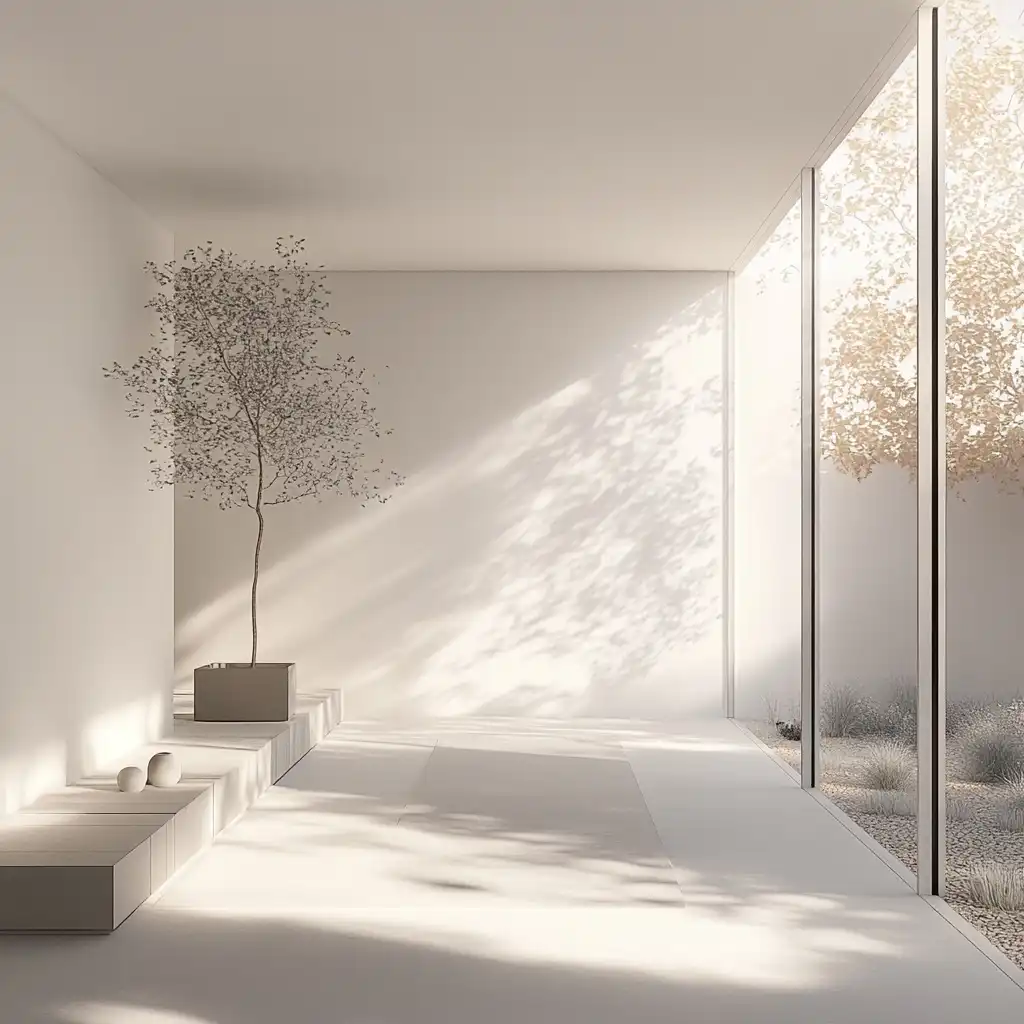
Before - original sketch
Before
After - AI render
After

Ideal for private wellness studio and garden pavilion projects. Upload site plans or topography for canyon context.
Getting Started with This Prompt

1

Grab the Prompt

Tap the copy button above and the entire prompt will be saved to your clipboard, ready to use.

2

Launch Your Renderer

Head over to Archfine AI or any compatible visualization tool you prefer working with.

3

Add Your Design

Drop in your floor plan, elevation sketch, or any reference image - then paste the prompt.

4

Render & Refine

Run the generation and review the output. Swap out a few keywords to explore completely different aesthetics.

Want a faster workflow? Archfine AI lets you skip prompt editing entirely - just upload and render.

How to Get Stronger Renders

1

Describe the Scene

Mention specific materials, time of day, weather, and camera perspective. The more context the AI has, the more realistic the output becomes.

2

Run Multiple Passes

Each generation is unique. Changing even a single adjective can shift the entire mood - so experiment freely and compare outcomes.

3

Blend Prompts Together

Borrow phrases from other entries in our collection and merge them. Hybrid prompts often deliver the most original visuals.

4

Start with a Clean Drawing

Crisp linework and high-contrast sketches give the AI a clear foundation. Blurry or cluttered inputs lead to softer, less defined renders.

Common Questions About This Prompt

Am I allowed to edit or customize this prompt?

Of course. Think of it as a foundation you can build on. Adjust the style, swap materials, change the lighting setup, or rewrite entire sections to fit your specific project needs.

Which rendering platform does this prompt work with?

It has been fine-tuned for Archfine AI, but the descriptive structure translates well to other popular AI visualization engines. You may need minor adjustments depending on the tool.

Does using this prompt cost anything?

Every prompt in our library is completely free. You can copy, adapt, and use them across personal portfolios, client presentations, or commercial marketing materials without restrictions.

What kind of input image gives the best output?

Clean line drawings with strong contrast tend to perform best. The AI reads edges, proportions, and spatial relationships from your input - so a well-drawn elevation or section will consistently outperform a rough napkin sketch.

Can I use the rendered image commercially?

Yes. Renders generated through Archfine AI on any paid plan come with full commercial usage rights. Use them in proposals, publications, social media, or anywhere else your work needs to shine.

Try this prompt yourself

Upload your own sketch and use this prompt to generate a stunning render.

Try on Archfine