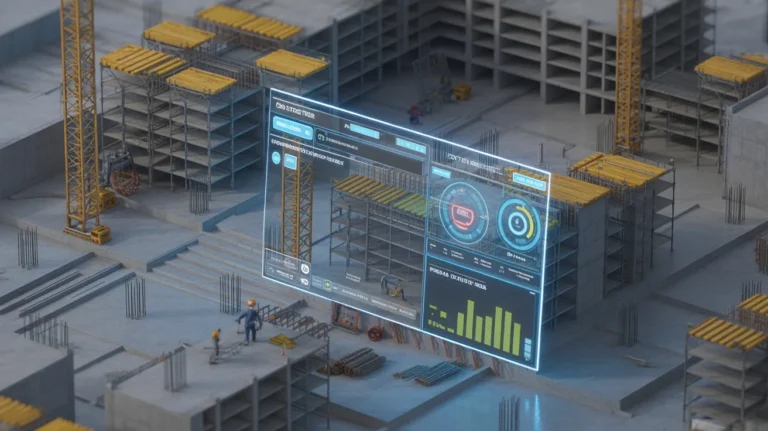
The past decade has witnessed some of the most ambitious and visually striking skyscrapers ever constructed. Between 2015 and 2025, architects and engineers across the globe pushed the boundaries of height, form, sustainability, and material innovation. Cities from Kuala Lumpur to New York, Seoul to Shenzhen, and Tokyo to Dubai unveiled towers that did far more than simply reach upward. They redefined what a skyscraper could look like, how it could perform, and what it could mean for the communities around it.
This article explores the most stunning skyscrapers completed in the last decade, examining their architectural significance, structural innovations, and the design philosophies that set them apart.
1. Shanghai Tower (2015) — Shanghai, China
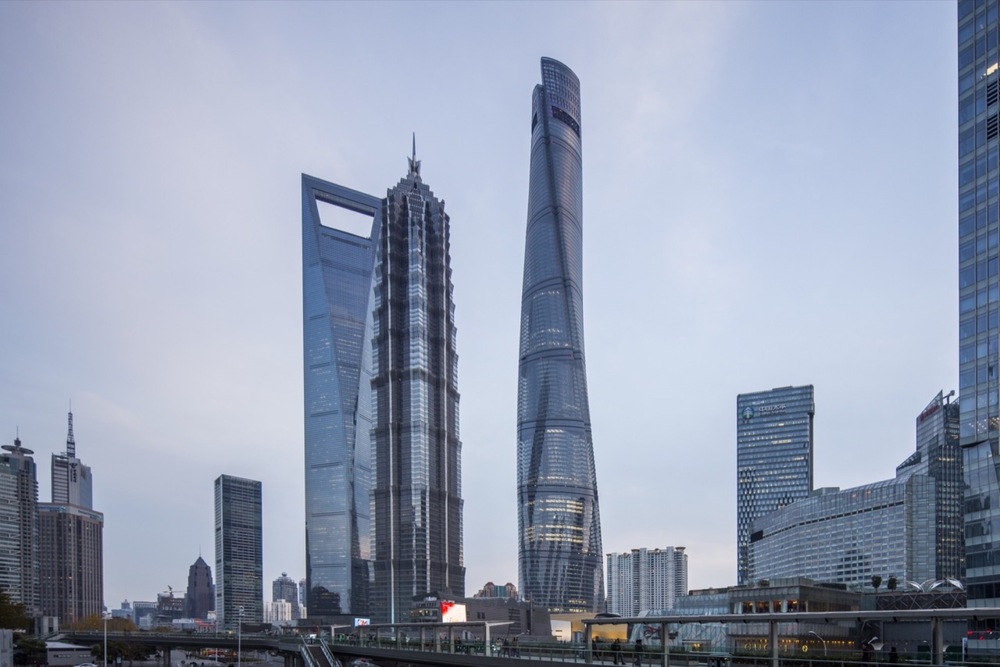
Height: 632 meters | Floors: 128 | Architect: Gensler
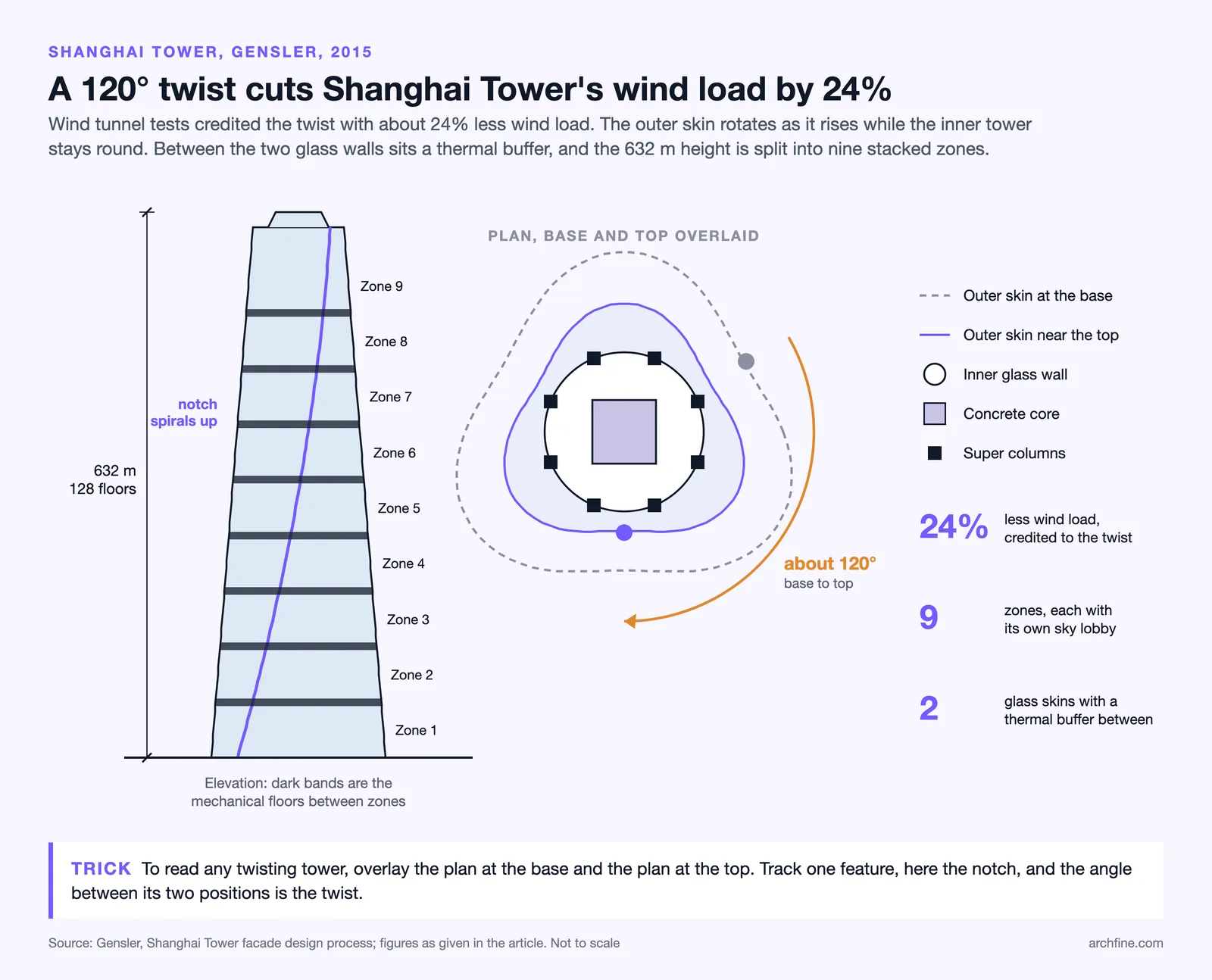
The Shanghai Tower stands as the tallest building in China and the third-tallest in the world. Its defining architectural feature is a spiraling, twisting form that rotates approximately 120 degrees from base to top. This design was not purely aesthetic. Wind tunnel testing demonstrated that the helical shape reduces wind loads on the structure by approximately 24 percent, translating into significant savings on structural materials.
Inside, the tower is organized into nine cylindrical zones stacked vertically, each functioning almost as a separate building with its own sky lobby, mechanical floors, and atrium spaces. The double-skin facade creates a thermal buffer zone between the inner and outer glass walls, contributing to energy efficiency. The tower incorporates around 47 environmental technologies and achieves energy savings of up to 54 percent compared to conventional buildings of similar scale. The structural system, engineered by Thornton Tomasetti, uses super-columns with outrigger trusses supported by an inner concrete core.
The observation deck near the top ranks among the highest in the world, offering panoramic views across the Lujiazui financial district and the Huangpu River.
2. Lotte World Tower (2016) — Seoul, South Korea
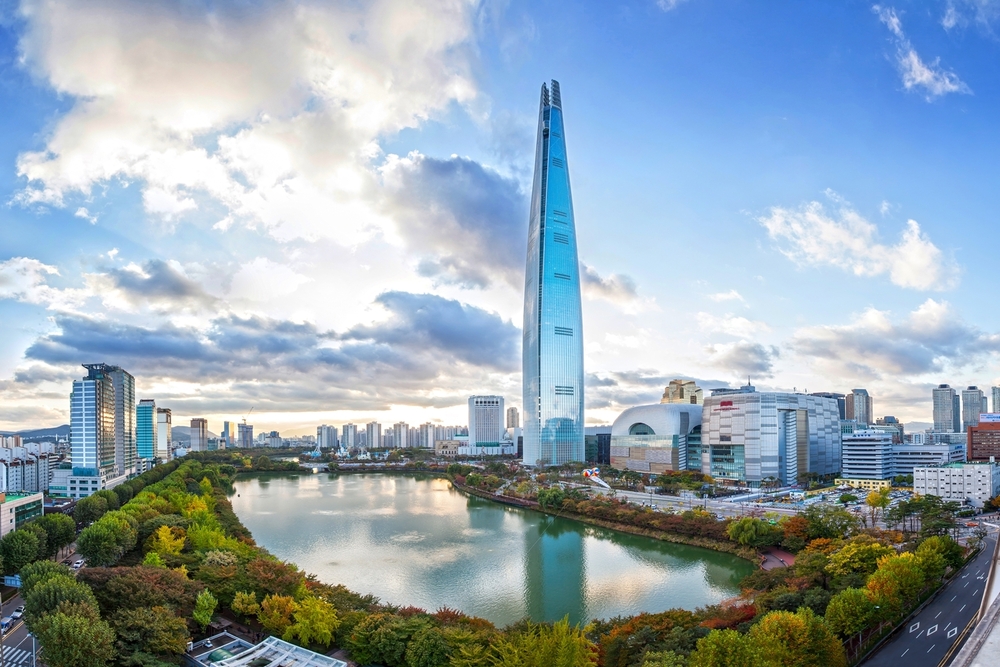
Height: 555 meters | Floors: 123 | Architect: Kohn Pedersen Fox (KPF)
The Lotte World Tower was completed in December 2016 and opened to the public on April 3, 2017, making it the tallest building in South Korea and one of the tallest in the world at the time of completion. Its design draws inspiration from traditional Korean ceramics, porcelain, and calligraphy, translating historical craft forms into a contemporary high-rise silhouette.
The tower’s exterior is composed of light-toned silver glass with white lacquered metal detailing, producing an elegant, refined appearance that changes character throughout the day as light shifts across the curved facade. A vertical seam runs along the building’s surface, visually connecting the modern tower to Seoul’s historic urban fabric.
A distinctive diagrid lantern-shaped roof structure tops the building, covering floors 107 to 123. The Seoul Sky observation deck on floors 117 to 123 features a glass-floor section that was, at the time of completion, the highest glass-floor observatory in the world.
3. 56 Leonard Street (2016) — New York, USA
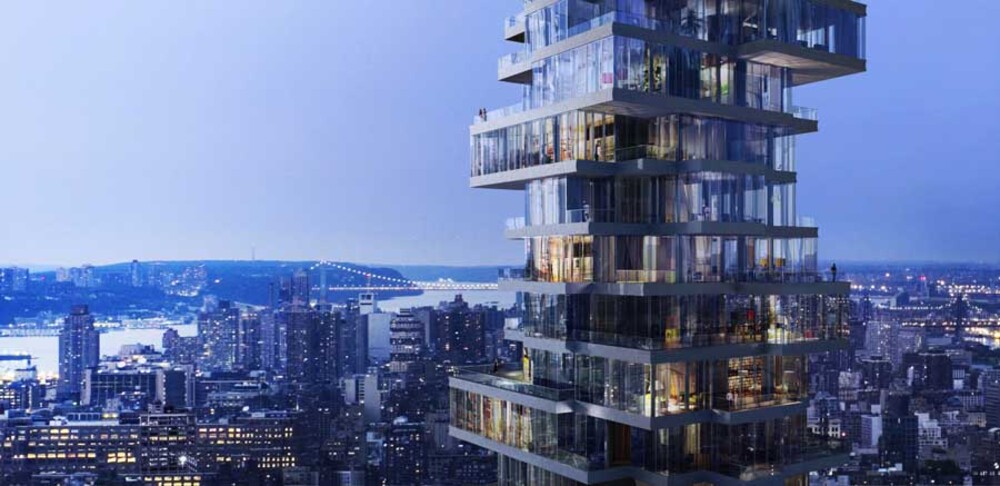
Height: 250 meters | Floors: 57 | Architect: Herzog & de Meuron
Known informally as the “Jenga Tower” for its stacked, cantilevered box configuration, 56 Leonard Street in Manhattan’s Tribeca neighborhood brought a radically different formal language to the New York skyline. The building’s massing is composed of irregularly stacked glass volumes that project and recess as they ascend, creating private outdoor terraces for many of the residential units.
The tower tapers as it rises, culminating in a cluster of 10 unique penthouse units at its peak. Each apartment has a distinct floor plan dictated by the shifting geometry of the boxes, and floor-to-ceiling glazing provides unobstructed views across lower Manhattan and the Hudson River. At ground level, Anish Kapoor‘s sculptural installation provides a public art anchor that reinforces the building’s commitment to design excellence at every scale.
4. Ping An Finance Centre (2017) — Shenzhen, China
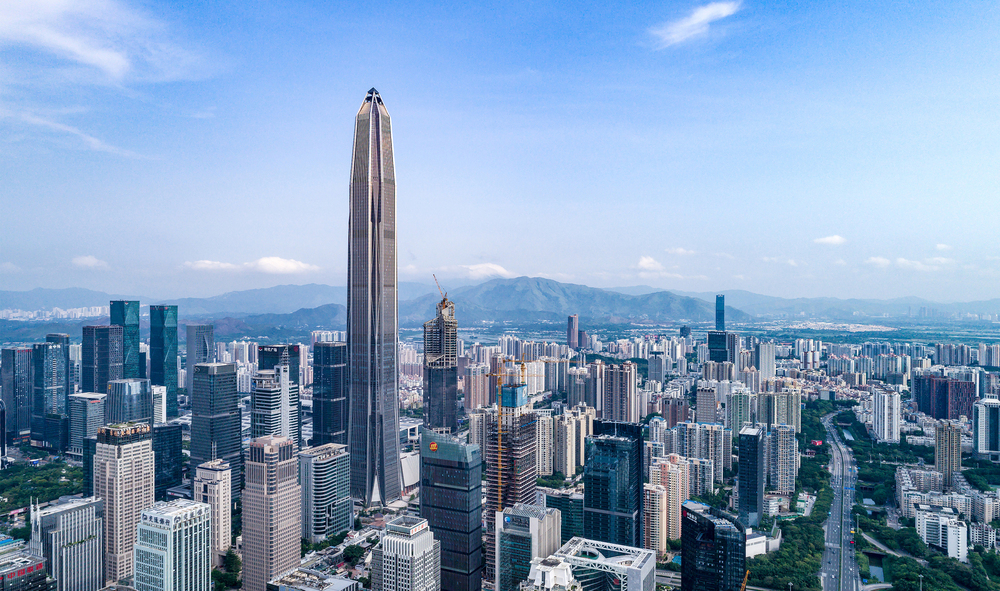
Height: 599 meters | Floors: 115 | Architect: Kohn Pedersen Fox (KPF)
The Ping An Finance Centre was the tallest building completed in 2017 and remains one of the tallest office buildings in the world. The facade is defined by four chevron-shaped stone verticals that run the full height of the structure, giving the tower a sharp, crystalline profile when viewed from different angles.
Originally designed with a spire that would have pushed the total height to 660 meters, the antenna was removed during construction due to airspace restrictions. Despite this reduction, the clean roofline became one of the building’s most distinctive characteristics, lending it a solid, monolithic quality that contrasts with the decorative crowns typical of many supertall towers.
The tower houses more than 100 floors of premium office space alongside retail podiums and an observation deck that offers sweeping views across the Pearl River Delta. The structural system relies on a composite mega-frame and core-wall arrangement, designed to resist both seismic activity and the typhoon-force winds common in the Shenzhen region. Wind performance was validated through extensive testing by RWDI, a leading wind engineering consultancy.
5. CITIC Tower (2018) — Beijing, China
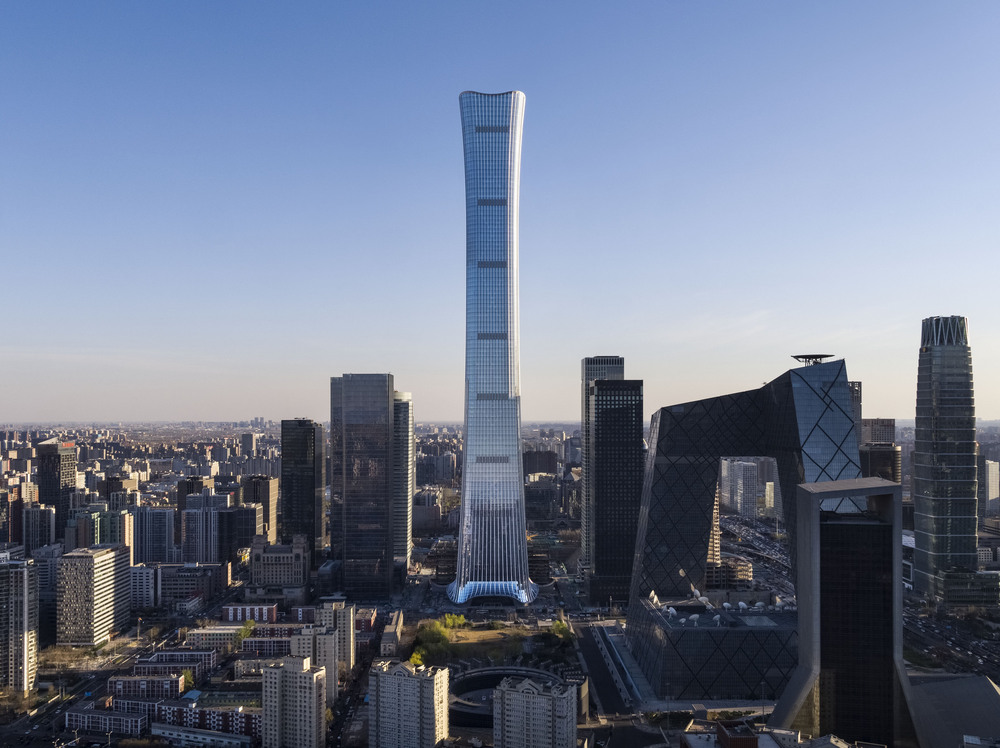
Height: 528 meters | Floors: 108 | Architect: Kohn Pedersen Fox (KPF)
Nicknamed “China Zun” for its silhouette that references a traditional Chinese wine vessel known as a zun, the CITIC Tower combines cultural symbolism with contemporary structural engineering. The form widens slightly at the base and crown while narrowing at the midsection, producing a subtle hourglass profile visible from across the Beijing skyline.
The building functions primarily as office space and has become one of the defining landmarks of the Beijing Central Business District. Its integration of traditional Chinese architectural motifs into a supertall form demonstrates how cultural identity can inform skyscraper design without resorting to superficial ornamentation.
6. Leeza SOHO (2019) — Beijing, China
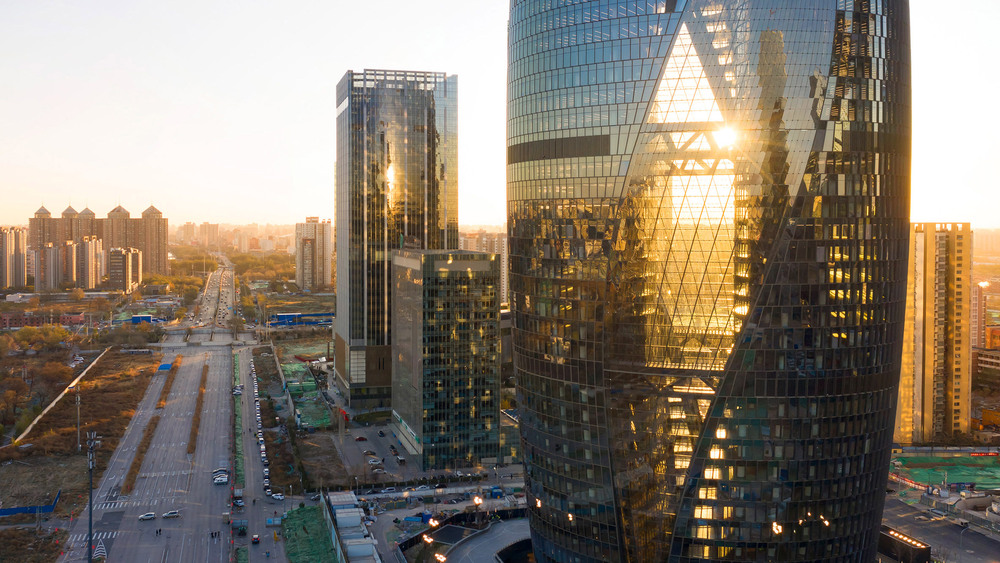
Height: 207 meters | Floors: 45 | Architect: Zaha Hadid Architects
While not a supertall by height, Leeza SOHO earns its place on this list through sheer architectural ambition. The building houses the world’s tallest atrium, a soaring void that spirals through the full height of the structure. This atrium was born from a practical constraint: the building straddles an underground subway service tunnel, which prompted Zaha Hadid Architects to split the tower into two interconnected halves joined by a sheer glass atrium.
The result is an interior space of extraordinary drama. Natural light floods down through the twisting void, creating constantly shifting patterns of light and shadow across the shared lobby and office floors. The exterior facade consists of flowing, parametric curves rendered in glass and aluminum, with the two halves appearing to rotate slightly relative to each other as they rise.
7. Central Park Tower (2021) — New York, USA
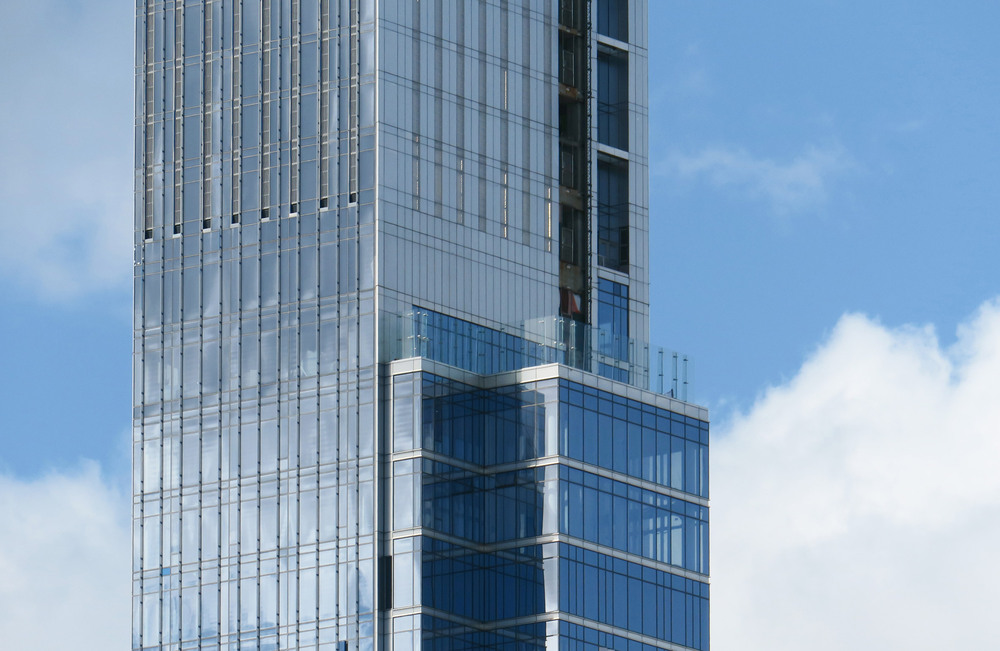
Height: 472 meters | Floors: 98 | Architect: Adrian Smith + Gordon Gill Architecture
Central Park Tower, located along Billionaire’s Row on 57th Street in Manhattan, was completed in 2021 as the tallest residential building in the world. Designed by Adrian Smith + Gordon Gill Architecture, the tower rises from a relatively compact footprint to achieve a height that exceeds many of the city’s commercial supertalls.
The glass-and-steel facade is structured around a series of setbacks that recall the stepped profiles of classic New York skyscrapers while employing a thoroughly modern material palette. The tower’s slenderness ratio is among the most extreme in residential construction, requiring a sophisticated tuned mass damper system to counteract wind-induced sway at the upper floors.
Residents have access to unobstructed Central Park views beginning at approximately the 30th floor, with the uppermost units offering a vantage point across the entirety of Manhattan and beyond.
8. Merdeka 118 (2023) — Kuala Lumpur, Malaysia
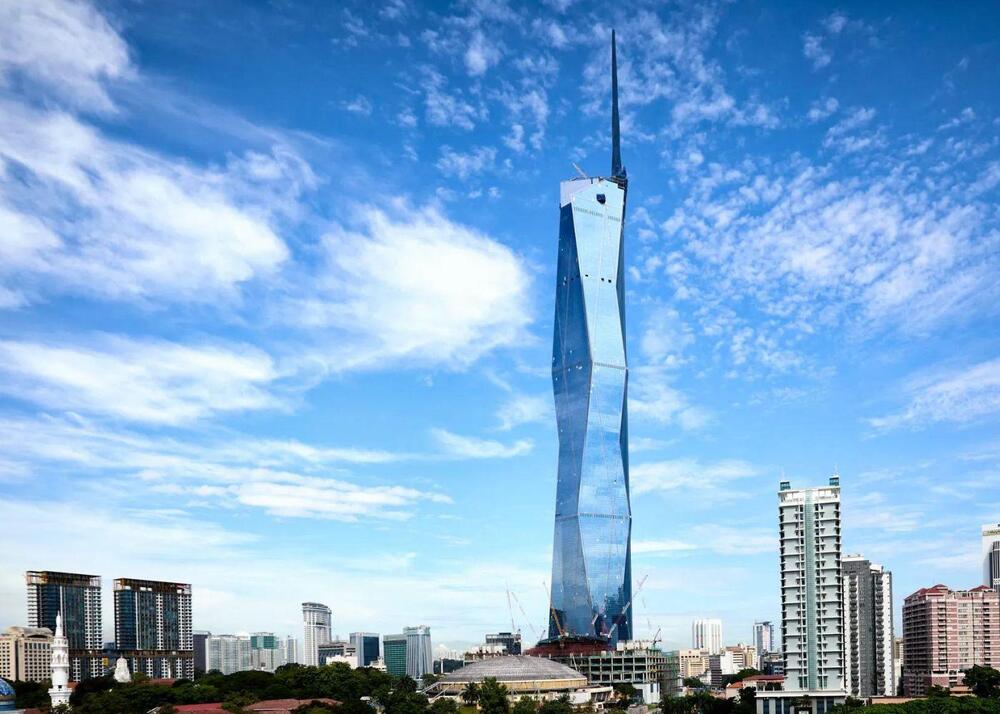
Height: 678.9 meters | Floors: 118 | Architect: Fender Katsalidis Architects
Merdeka 118 is the second-tallest building in the world, surpassed only by the Burj Khalifa. Officially inaugurated in January 2024, it represents a monumental achievement for Malaysia and Southeast Asian architecture. The tower’s name references Malaysia’s independence, and its faceted, diamond-shaped glass facade is inspired by the outstretched hand gesture of Tunku Abdul Rahman during the country’s independence declaration in 1957.
The exterior comprises 18,144 glass panels covering 114,000 square meters, with diamond-shaped facets set at varying angles that catch and reflect light in constantly shifting patterns. At night, 8.4 kilometers of LED light strips illuminate the facade with gradually moving light effects.
The structural system uses a dual lateral load-resisting arrangement: reinforced concrete core walls coupled by outrigger trusses to perimeter mega-columns, sloping columns, and belt trusses. The structural engineering was led by Arup as civil and structural engineer of record. Notably, the mega-columns and core walls are reinforced concrete without embedded structural steel (except within the outrigger truss depth), a strategy that reduced imported steel costs, simplified construction trades, and shortened the build timeline.
The tower houses 84 floors of premium office space, the Park Hyatt Kuala Lumpur hotel occupying the upper floors, a seven-story retail complex, and two observation decks. It achieved LEED Platinum certification, the first for a mega-tall building in Malaysia.
9. Mori JP Tower (2023) — Tokyo, Japan
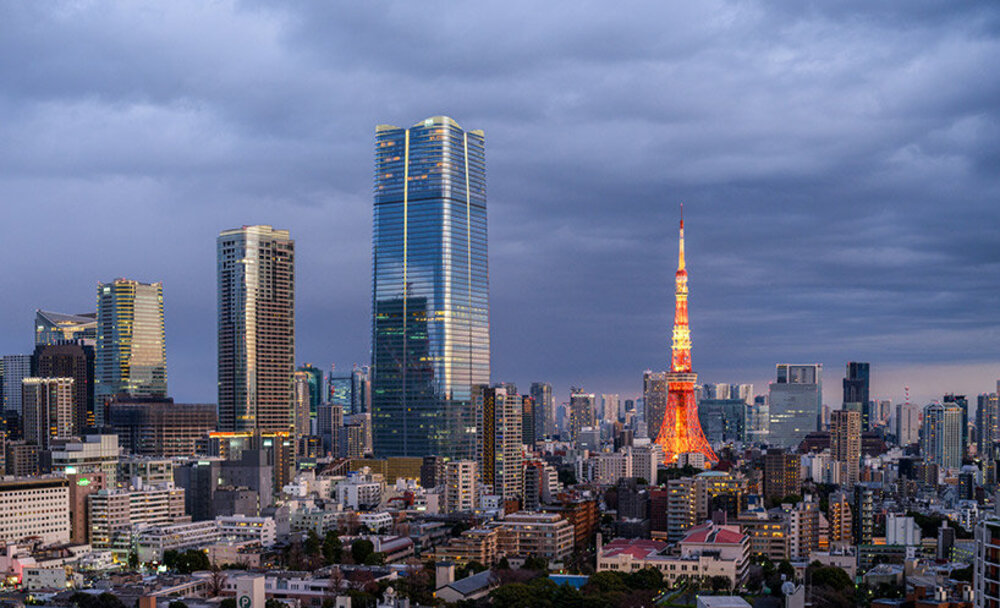
Height: 327 meters | Floors: 64 | Architect: Pelli Clarke & Partners
The Mori JP Tower became Japan’s tallest skyscraper upon its completion in 2023, overtaking the 300-meter Abeno Harukas in Osaka (also designed by Pelli Clarke & Partners). The tower is the centerpiece of the Azabudai Hills development, a mixed-use district in central Tokyo that also includes a low-rise, undulating building by Heatherwick Studio designed to create a green, garden-like atmosphere at the base.
The design is notable for its restrained elegance, characteristic of Pelli Clarke & Partners’ approach: a clean, vertically proportioned glass envelope that prioritizes transparency and visual lightness. In a city frequently affected by seismic activity, the structural engineering behind the tower is as impressive as its aesthetics, employing advanced base-isolation and damping technologies compliant with Japan’s rigorous Building Standards Act to ensure occupant safety and comfort.
10. One Za’abeel (2024) — Dubai, UAE
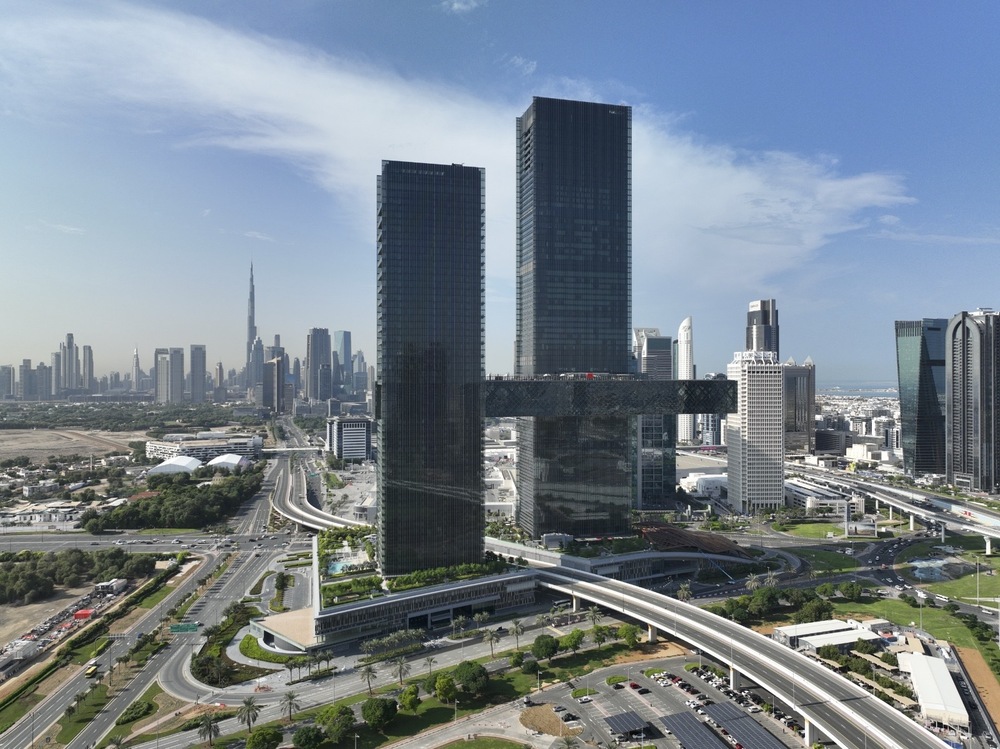
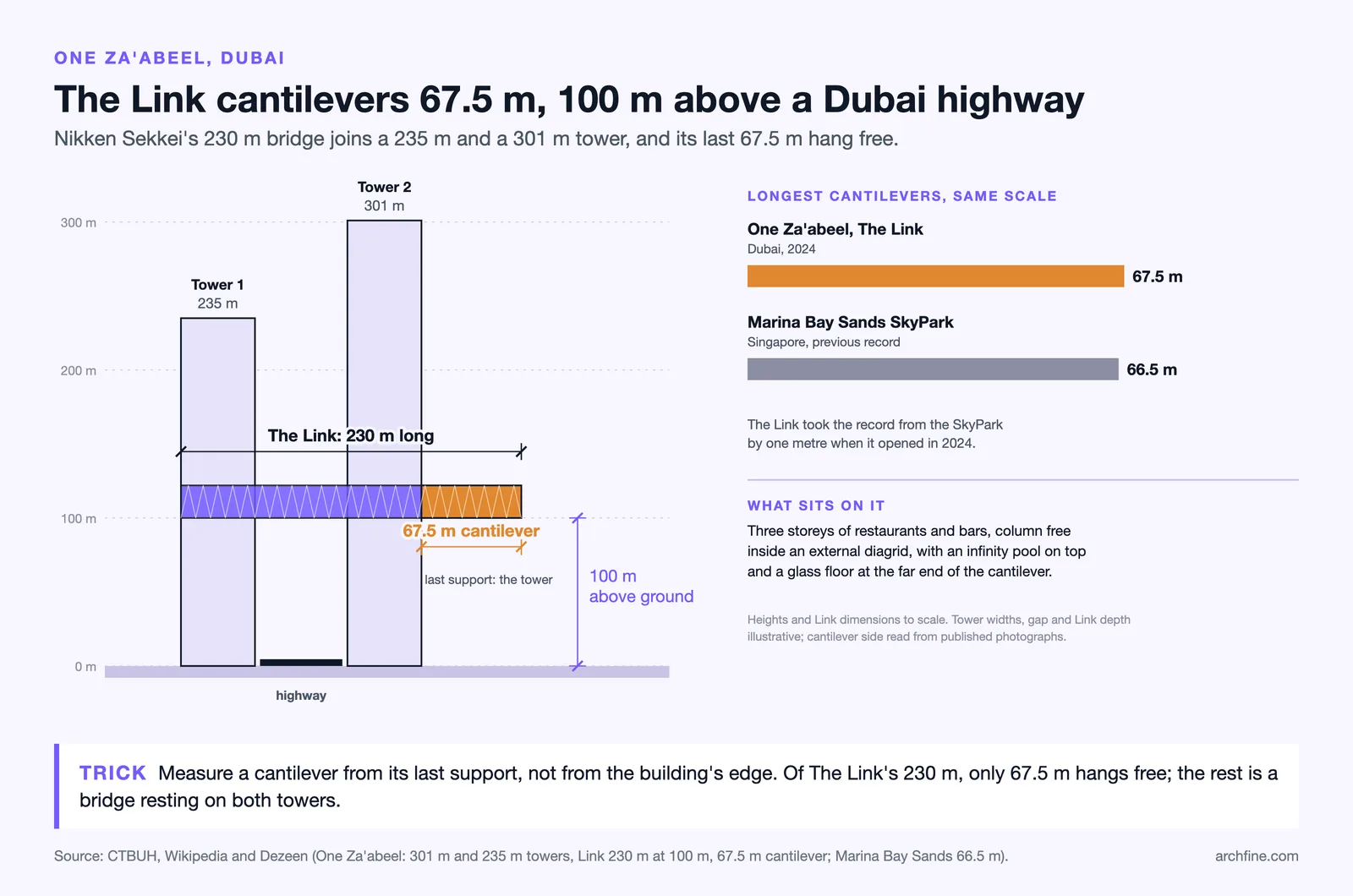
Height: 301 meters (tallest tower) | Architect: Nikken Sekkei
One Za’abeel is a pair of mixed-use skyscrapers connected by a skybridge suspended 100 meters above a six-lane highway. The skybridge extends outward from the towers to create the world’s longest cantilever, measuring 67.5 meters. Designed by Japanese firm Nikken Sekkei, this project was recognized as a favorite among readers of major architecture publications in 2024.
The cantilever structure, known as “The Link,” contains hospitality and dining spaces with panoramic views across Dubai. The engineering challenge of supporting a fully enclosed occupied volume at that cantilever length, while accounting for thermal expansion, wind loads, and seismic forces, represents a significant structural achievement. The overall composition of the twin towers and their horizontal connector creates a dynamic silhouette that reads differently from every angle.
11. 270 Park Avenue (2025) — New York, USA
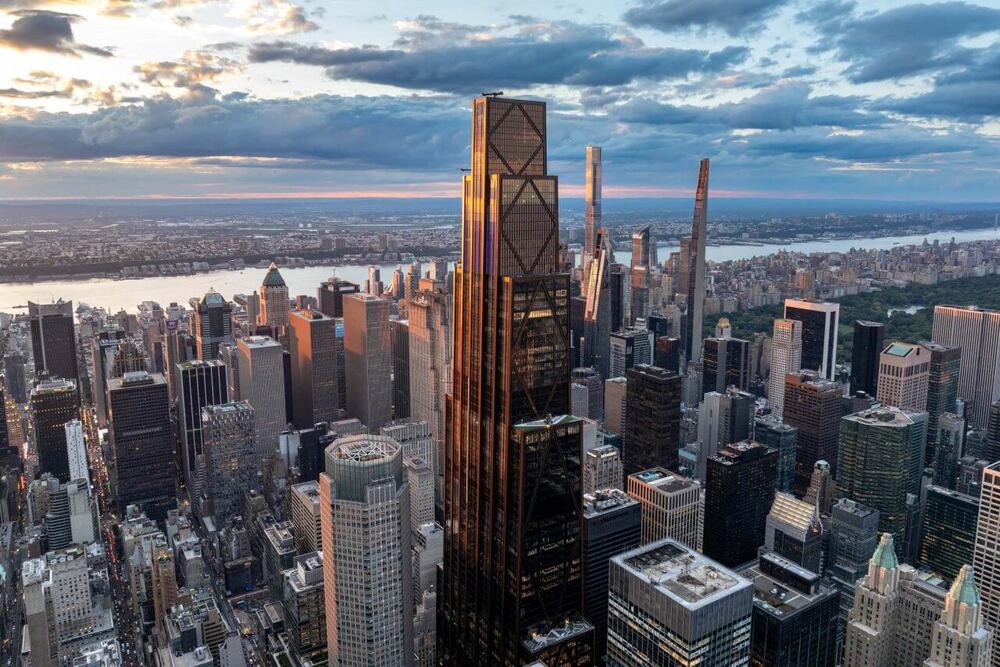
Height: 423 meters | Floors: 60 | Architect: Foster + Partners
The new JPMorgan Chase headquarters at 270 Park Avenue is one of the most significant skyscrapers completed in 2025. Designed by Foster + Partners, the tower features a stepped-back silhouette that echoes the setback profiles of early 20th-century New York skyscrapers while incorporating thoroughly contemporary engineering and sustainability standards.
The building sits on massive columns that fan upward from pushed-back entry facades, creating generous public space at street level. It is described as New York City’s largest all-electric tower and aims for net-zero operational carbon, a landmark achievement for a building of this scale.
The stepped massing was designed to maximize natural light penetration to the surrounding streets and neighboring buildings, a consideration that reflects a growing awareness among skyscraper designers that a tower’s impact extends far beyond its own walls.
12. China Merchants Bank Headquarters (2025) — Shenzhen, China
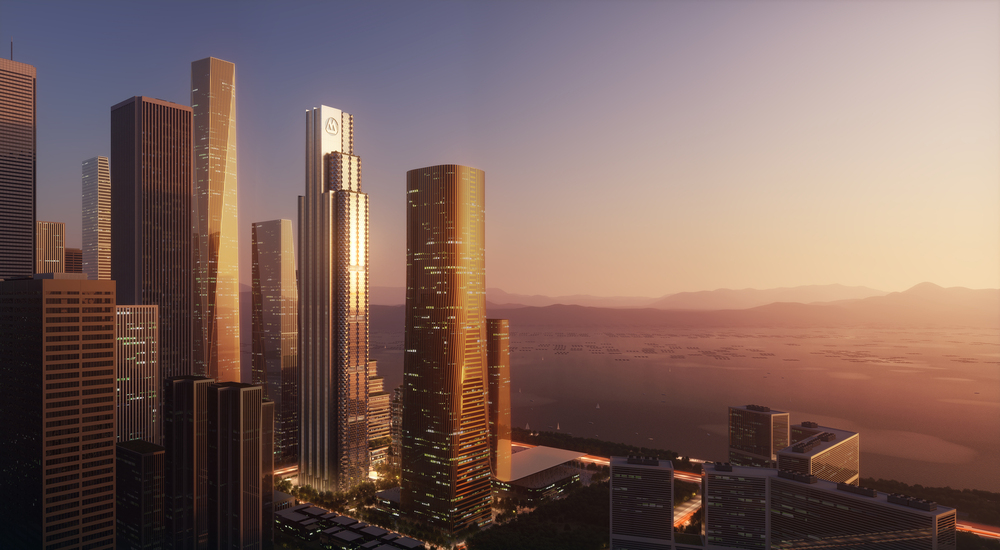
Height: 393 meters | Architect: Foster + Partners
The China Merchants Bank Headquarters is the latest supertall addition to Shenzhen’s rapidly evolving skyline. Designed by Foster + Partners, the tower has a highly distinctive profile: six rounded forms covered in triangular glass panes rise to a central peak, creating a silhouette unlike any other skyscraper in the world.
The faceted, organic geometry produces a constantly shifting play of light and reflection across the facade throughout the day. The triangular glass modules create a surface texture that reads as both crystalline and naturalistic, depending on viewing distance and angle. This building demonstrates the continued evolution of computational design tools in generating complex, non-repetitive facade patterns at supertall scale.
13. The Henderson (2025) — Hong Kong
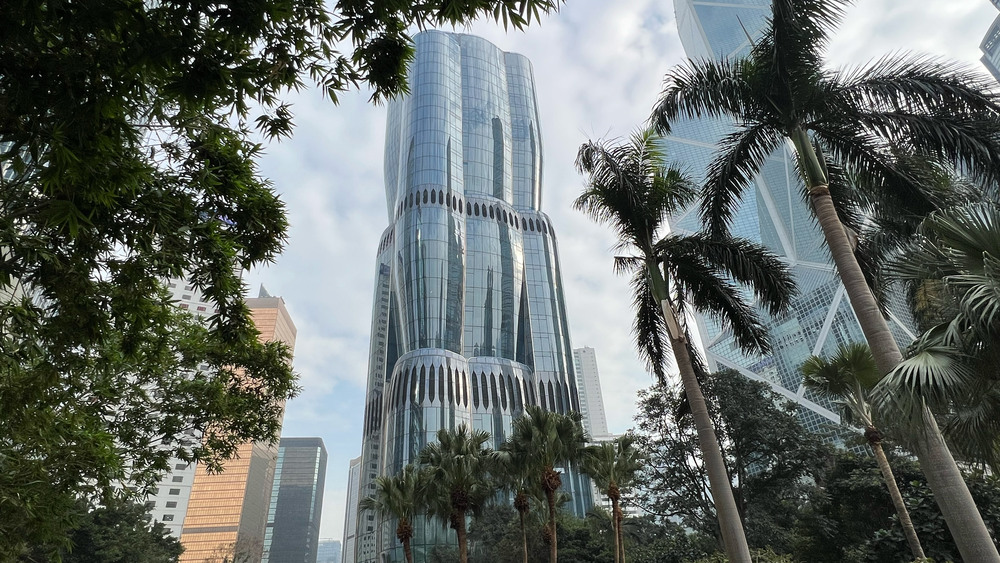
Height: 190 meters | Floors: 36 | Architect: Zaha Hadid Architects
Designed by Zaha Hadid Architects under the leadership of Patrik Schumacher, The Henderson features an undulating glass facade intended to evoke organic, natural forms. The building was developed by Henderson Land on what is reportedly the world’s most expensive plot of land, purchased in 2017 for approximately 764,000 pounds per square meter.
The column-free interior spaces are made possible by the building’s structural system, which integrates modern building management systems with sustainability features. The base of the tower features elevated courtyards and gardens that connect with surrounding public green spaces, creating a landscaped transition between the dense urban fabric of Hong Kong’s Central district and the tower above.
Construction started in 2019, with substantial completion achieved by 2024 and occupancy progressing into 2025. The building represents the continuation of Zaha Hadid Architects’ exploration of fluid, parametric forms applied to commercial high-rise typologies.
Honorable Mentions
Several other skyscrapers completed in the last decade deserve recognition for their architectural contributions:
432 Park Avenue (2015), New York — Rafael Viñoly’s ultra-slender residential tower reached 425 meters, becoming one of the defining structures of Billionaire’s Row with its rigorously minimal grid of square windows. One Vanderbilt (2020), New York — Designed by KPF, this 427-meter office tower adjacent to Grand Central Terminal features a tapered, crystalline form with terracotta and glass facade elements. Tianjin CTF Finance Centre (2019), Tianjin, China — A 530-meter mixed-use tower that added significant height to Tianjin’s skyline. Yachthouse (2024), Balneário Camboriú, Brazil — Designed by Pininfarina, these twin 294-meter residential towers became the tallest buildings in Brazil. Istanbul International Financial Center Towers (2025), Istanbul, Turkey — Designed by KPF, this pair of 40- and 46-story glazed towers anchors Turkey’s new financial district.
Key Trends Across a Decade of Skyscraper Design
Sustainability as Standard
The most notable shift over the past decade has been the integration of sustainability features as a baseline expectation rather than a bonus. Buildings like the Shanghai Tower with its 47 environmental technologies, Merdeka 118 with LEED Platinum certification, and 270 Park Avenue targeting net-zero operational carbon demonstrate that high-performance environmental design is now central to every major skyscraper project. Organizations like the World Green Building Council continue to push the industry toward more ambitious sustainability benchmarks.

Cultural Identity in Form
Many of the decade’s most memorable towers draw explicitly from regional cultural traditions. The CITIC Tower references Chinese ceremonial vessels. Lotte World Tower evokes Korean ceramics and calligraphy. Merdeka 118’s diamond facade recalls a moment in Malaysian independence history. These projects show that the most impactful skyscrapers are those that connect their architectural form to the cultural context of their cities.
Structural Innovation Enabling Design Freedom
Advances in computational analysis, composite structural systems, and facade engineering have enabled architectural forms that would have been impossible a generation ago. The spiraling double-skin of the Shanghai Tower, the cantilevered boxes of 56 Leonard, and the world’s longest cantilever at One Za’abeel all required structural innovations that expanded the vocabulary of what a tall building can be. Resources such as ArchDaily’s skyscraper coverage and the CTBUH research database provide deeper insight into the engineering behind these landmark structures.
Mixed-Use Programming
Nearly every major skyscraper completed in the past decade combines multiple functions: offices, hotels, residences, retail, observation decks, and public spaces. This trend reflects an urban planning philosophy championed by firms like Skidmore, Owings & Merrill (SOM) that views skyscrapers not as single-purpose vertical containers but as self-contained vertical neighborhoods that contribute to the vitality of the city around them.
Visualizing the Future with AI-Powered Rendering
For architects and designers inspired by these landmark projects, the ability to quickly visualize conceptual ideas is crucial during the early design phases. Tools like ArchFine use AI-powered rendering technology to help architects transform sketches, massing models, and early concepts into photorealistic visualizations in seconds. Whether you are exploring a twisted tower form inspired by the Shanghai Tower or experimenting with cantilevered volumes like 56 Leonard, AI rendering allows you to iterate faster and communicate your vision more effectively to clients and collaborators.
FAQ
What is the tallest skyscraper completed in the last decade?
Merdeka 118 in Kuala Lumpur, Malaysia, completed in 2023 and inaugurated in January 2024, is the tallest skyscraper completed in the last decade at 678.9 meters. It is the second-tallest building in the world after the Burj Khalifa.
Which skyscraper has the world’s tallest atrium?
Leeza SOHO in Beijing, designed by Zaha Hadid Architects and completed in 2019, contains the world’s tallest atrium. The twisting glass void runs the full height of the 207-meter building.
What is the tallest residential skyscraper in the world?
Central Park Tower in New York City, completed in 2021 at 472 meters, holds the title of the world’s tallest residential building.
Which recently completed skyscraper has the world’s longest cantilever?
One Za’abeel in Dubai, completed in 2024 and designed by Nikken Sekkei, features a 67.5-meter cantilever connecting two towers 100 meters above a highway, making it the world’s longest cantilever.
Are modern skyscrapers becoming more sustainable?
Yes. Sustainability has become a fundamental consideration in skyscraper design over the past decade. Projects like the Shanghai Tower (54% energy savings), Merdeka 118 (LEED Platinum), and 270 Park Avenue (targeting net-zero operational carbon) reflect the industry-wide integration of high-performance environmental systems into supertall construction.
What is the tallest skyscraper in Japan?
The Mori JP Tower in Tokyo, completed in 2023 at 327 meters and designed by Pelli Clarke & Partners, is the tallest building in Japan, surpassing the 300-meter Abeno Harukas, the country’s first supertall.
How can architects visualize skyscraper concepts quickly?
AI-powered rendering platforms like ArchFine allow architects to generate photorealistic visualizations from sketches and early-stage models in seconds, enabling faster iteration during conceptual design phases.