
Select rooms for renovation
You can select multiple rooms
Enter dimensions for each room
Enter the area in sq ft, or work it out from width x length
Select work to be done
Check the work categories needed for each room
Choose quality level
Select the quality level that fits your budget
Your Cost Estimate
Free Renovation Cost Calculator: Estimate Your Project Budget Before You Build
A renovation cost calculator is a free online tool that estimates your remodel expenses based on project type, square footage, finish level, and location. Most home renovation projects range from $20 to $200+ per square foot depending on scope — a bathroom refresh sits at the lower end, a full gut renovation at the upper. Use the breakdown below to understand what drives costs before you request a single quote.
How Much Does a Home Renovation Cost?
Renovation costs vary widely based on three main factors: the type of work, the quality of materials, and where you live. A minor cosmetic refresh — new paint, flooring, and fixtures — runs significantly cheaper than structural work involving plumbing reroutes or load-bearing wall removal.
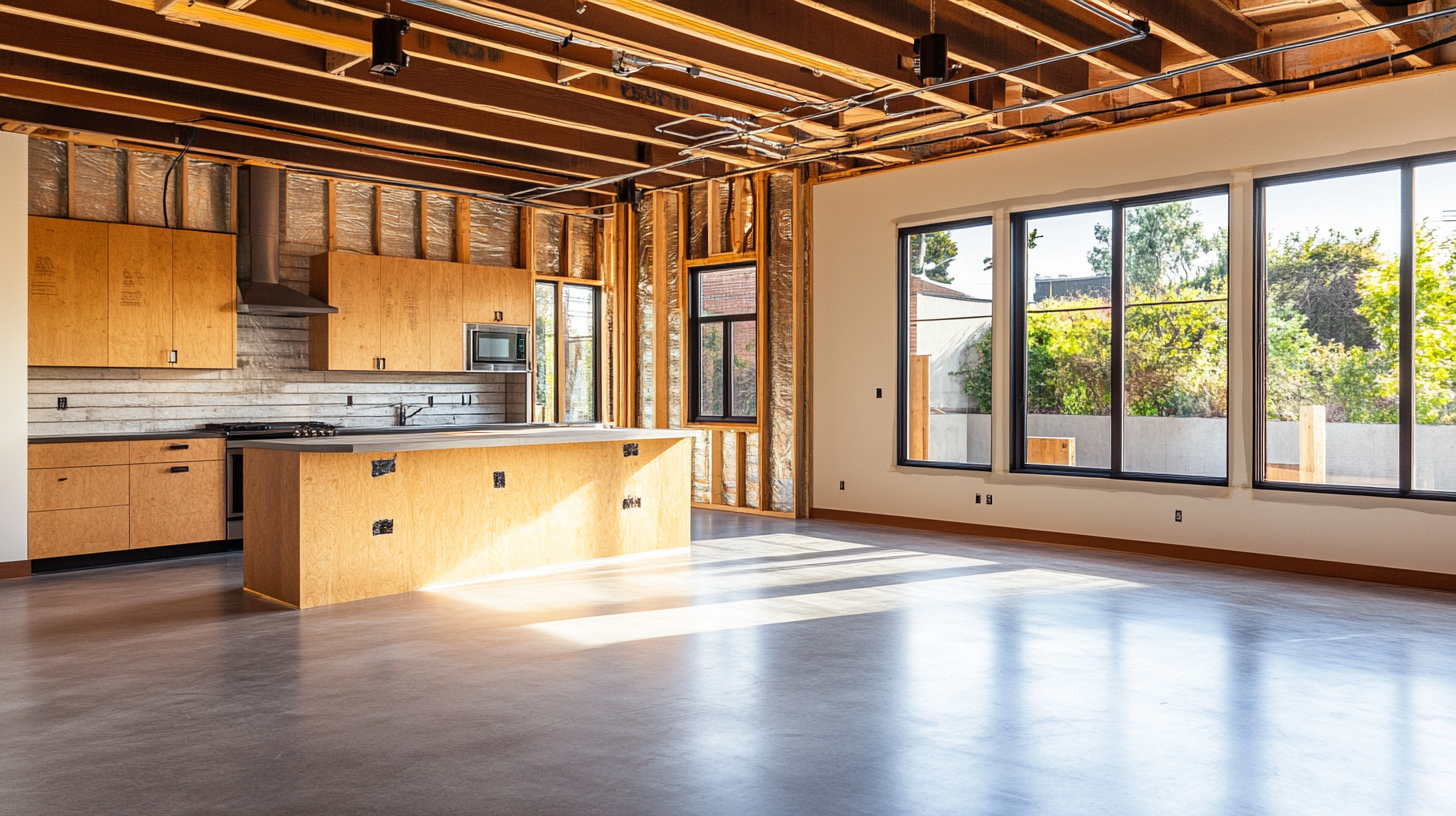
Here is a general cost range by project type to orient your budget:
| Project Type | Budget Range | Mid-Range | Premium |
|---|---|---|---|
| Bathroom Remodel (50–100 sq ft) | $8,000–$15,000 | $15,000–$35,000 | $35,000–$75,000+ |
| Kitchen Remodel (150–300 sq ft) | $15,000–$30,000 | $30,000–$75,000 | $75,000–$150,000+ |
| Basement Finish (500–1,000 sq ft) | $25,000–$40,000 | $40,000–$75,000 | $75,000–$120,000+ |
| Whole-Home Renovation | $100,000–$175,000 | $175,000–$300,000 | $300,000–$500,000+ |
| Room Addition (per sq ft) | $150–$200 | $200–$300 | $300–$500+ |
These figures reflect national averages. In high-cost metro areas like San Francisco or New York, expect to add 30–50% to any baseline estimate. In the rural Midwest or South, costs often run 10–20% below the national average.
⚠️ Common Mistake to Avoid
Many homeowners use a single average cost figure — say, “$50 per square foot for a kitchen” — without accounting for the fact that this number typically covers only labor and basic materials. It excludes appliances, cabinetry, countertop upgrades, permits, and the contractor markup, which together can add 40–60% on top of that base number. Always ask contractors to itemize their quotes before comparing them.
What Does a Renovation Cost Calculator Actually Estimate?
A renovation cost calculator takes your inputs — room size, project scope, finish quality, and ZIP code — and maps them against regional cost data to produce a budget range. Most tools break the output into four categories:
1. Labor Costs
Labor typically accounts for 30–50% of total renovation expenses. General contractors charge $50–$150 per hour depending on location and specialty. For complex projects involving licensed electricians or plumbers, expect $80–$200+ per hour for those trades alone. A calculator estimates labor by multiplying your square footage and project type against local labor rate averages.
2. Materials and Finishes
Materials represent the second-largest cost category, usually 30–40% of the total. Finish level has the biggest impact here. Stock kitchen cabinets run $100–$300 per linear foot; semi-custom cabinets jump to $300–$650; fully custom work can exceed $1,000 per linear foot. The same logic applies to countertops, flooring, tile, and fixtures. Upgrading from laminate to quartz countertops alone adds $2,000–$8,000 to a standard kitchen project.
💡 Pro Tip
When selecting finishes, define your “must-haves” versus “nice-to-haves” before you enter them into any calculator. A consistent mistake on renovation projects is entering a mid-range finish selection, receiving an estimate, approving a contractor, and then upgrading individual finishes during the project — which is how $60,000 kitchens become $90,000 kitchens. Lock in your finish tier before requesting quotes, not after.
3. Permit and Inspection Fees
Permits are frequently overlooked in early budgeting. Most structural, electrical, plumbing, or HVAC work requires a permit from your local building department. Fees vary significantly by municipality — a bathroom remodel permit in a mid-size U.S. city might cost $150–$500, while a full home addition can trigger permit fees of $1,000–$3,500 or more. Some cities calculate permit fees as a percentage of the project’s declared value, typically 0.5–2%.
4. Contingency Budget
Every renovation cost estimate should include a contingency line of 10–20%. Older homes routinely reveal hidden conditions behind walls — outdated wiring that must be brought to code, deteriorated subfloor, or plumbing that does not meet current standards. These discoveries are not failures of planning; they are a predictable part of working on existing structures. Budget for them from the start.
📌 Did You Know?
According to the 2024 Houzz & Home Study, 73% of homeowners who renovated in the prior year reported spending more than their original estimate. The most common causes were scope changes during construction, unforeseen structural conditions, and material price increases after project start. Setting a firm contingency of at least 15% reduces the likelihood of a budget overrun significantly.
How to Use a Free Renovation Cost Calculator: Step-by-Step
Most free renovation calculators follow the same basic workflow. Here is how to get the most accurate estimate from any tool you use:
Step 1 — Select your project type. Be specific. “Bathroom remodel” is not the same as “bathroom remodel with shower enclosure replacement and full tile work.” The more granular your project description, the closer the estimate will be to actual costs.
Step 2 — Enter your square footage. Measure the room you are renovating, not the total home footprint. For whole-home projects, use the total livable square footage.
Step 3 — Enter your location. ZIP code-level cost adjustment is the single most important accuracy factor in any renovation estimator. Labor and material costs differ by 30–60% between high-cost and low-cost regions. Skipping this step produces an estimate that may be meaningless for your market.
Step 4 — Choose your finish tier. Most tools offer three levels: Budget/Basic, Standard/Mid-Range, and Premium/High-End. If you are unsure, start with mid-range and then adjust specific line items upward or downward.
Step 5 — Review the itemized breakdown. A trustworthy calculator does not just output a lump sum — it breaks costs by category. Review each line to identify where the money is going and flag any categories where your actual plan differs from the calculator’s assumption.

How Does Location Affect Renovation Costs?
Location is the variable most people underestimate when using a renovation cost calculator. Labor markets, material availability, local building codes, and contractor demand all vary significantly from one city to the next.
A kitchen remodel estimated at $50,000 in Dallas might cost $77,500 in San Francisco — a 55% premium for the same scope and finish level. This difference reflects higher local labor rates, longer permit timelines, and greater contractor demand in high-cost metros. Conversely, the same project in rural Ohio or Mississippi might come in at $32,000–$38,000 due to lower hourly labor rates and more competitive contractor availability.
📐 Technical Note
The U.S. Bureau of Labor Statistics Construction Cost Index shows that construction labor costs increased 18–22% between 2021 and 2024 in major metropolitan areas, while material costs (lumber, steel, copper) fluctuated 25–40% during the same period depending on supply chain conditions. Any renovation estimate based on pre-2022 data should be updated — the cost environment has shifted substantially.
Kitchen Renovation Cost Breakdown
The kitchen is consistently the most expensive single-room renovation in a home. Costs divide roughly as follows for a standard mid-range remodel:
- Cabinetry: 35–40% of total budget
- Countertops: 10–15%
- Appliances: 15–20%
- Labor (installation, plumbing, electrical): 20–25%
- Flooring: 7–10%
- Permits, lighting, and miscellaneous: 5–8%
For a 200 sq ft kitchen at mid-range finish, expect a total investment of $40,000–$75,000. A full custom kitchen in the same space with premium appliances and stone countertops commonly runs $100,000–$150,000 before accounting for structural changes.
Bathroom Renovation Cost Breakdown
Bathrooms are expensive per square foot because of the density of plumbing, tile, and fixture work packed into a small space. A 60 sq ft bathroom can easily cost as much per square foot as a kitchen remodel. The cost drivers are:
- Plumbing (new fixtures, rerouting): 20–30% of total budget
- Tile (floor and wall): 15–25%
- Vanity, toilet, shower/tub: 15–20%
- Labor: 25–35%
- Permits and miscellaneous: 5–10%
A mid-range full bathroom remodel with new shower enclosure, vanity, tile, and lighting typically costs $18,000–$35,000. A master bath with a freestanding soaking tub, custom tile, and double vanity can range from $40,000 to $80,000 or more.

💡 Pro Tip
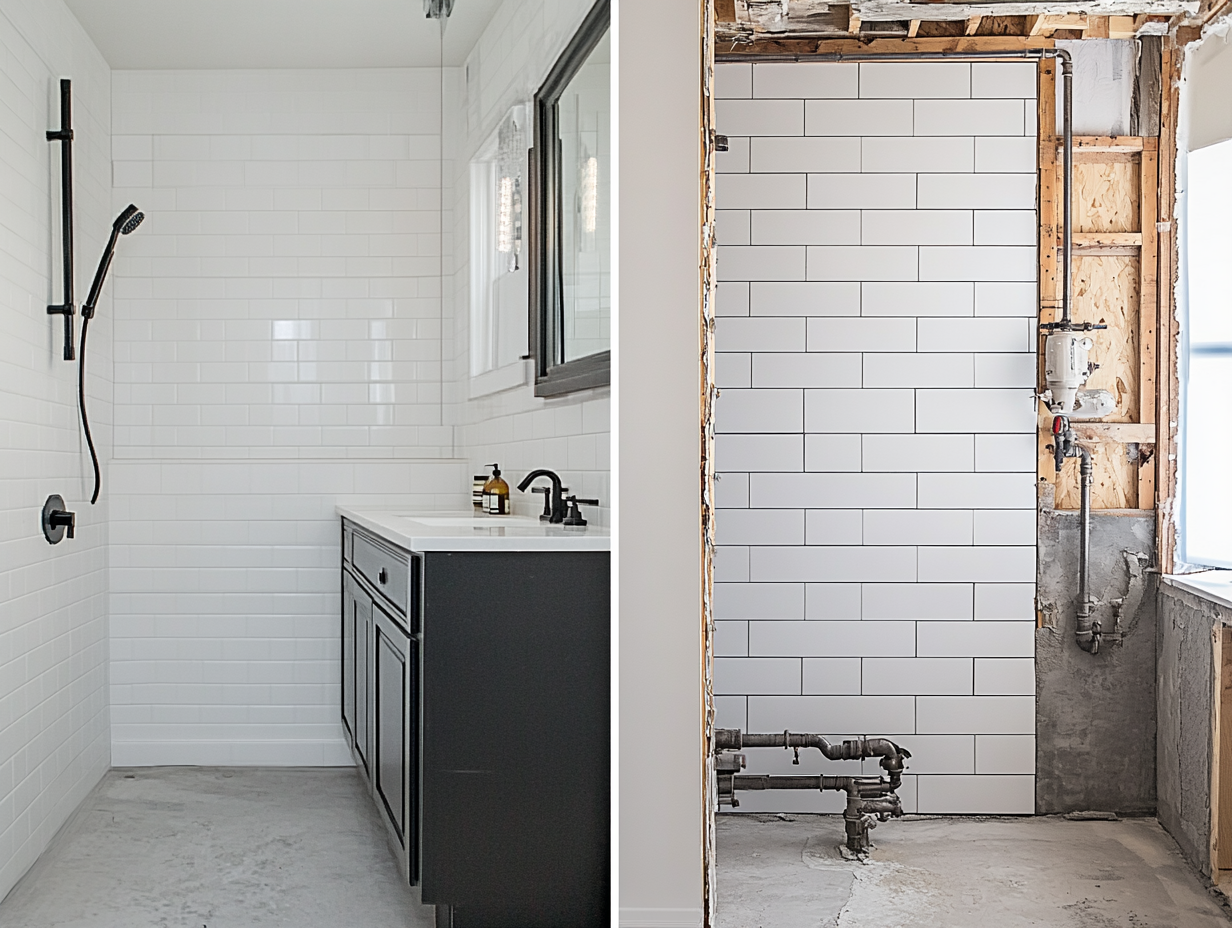
In bathroom renovations, keeping the plumbing in its existing location is one of the most effective ways to control costs. Moving a toilet or shower drain even a few feet requires opening the subfloor and rerouting drain lines, which adds $1,500–$5,000 in labor alone before a single tile is laid. If your calculator shows a figure that surprises you, ask your contractor specifically what happens to the number if you keep the plumbing footprint unchanged.
What Is the ROI on Home Renovations?
Return on investment varies significantly by project type and market conditions. Not all renovations add equivalent value at resale, and several high-cost renovations recover less than 60 cents per dollar spent.
According to the 2024 Cost vs. Value Report published by Remodeling Magazine, the following projects consistently offered the strongest cost recovery at resale:
- Garage door replacement: 193.9% ROI (highest in the report)
- Stone veneer addition: 153% ROI
- Minor kitchen remodel (mid-range): 96.1% ROI
- Deck addition (wood): 82.9% ROI
- Window replacement: 68–73% ROI depending on material
Projects with lower cost recovery — upscale bathroom remodels, primary suite additions, and home office conversions — tend to add lifestyle value without proportional resale return. The right question is not just “what will this cost?” but “am I renovating to live in the home or to sell it?”
🎓 Expert Insight
“Every renovation decision is really a financial decision. Homeowners who treat it otherwise are the ones who run out of budget halfway through a project.” — Licensed General Contractor with 20+ years of experience in residential renovation
This perspective reflects what project overruns consistently show: the homeowners who struggle most are those who make aesthetic decisions before they have locked in a firm budget. Starting with a cost calculator and a realistic contingency — before selecting finishes or signing contracts — is the single most reliable way to stay on track.
How AI Is Changing Renovation Cost Estimation
Traditional renovation cost calculators rely on static cost databases and regional multipliers. The newer generation of AI-powered estimation tools takes a different approach: they analyze photos of the existing space, identify materials, flag conditions that affect cost, and generate estimates adjusted to current local market pricing — all before a contractor steps on site.
This shift matters for accuracy. A photograph of a kitchen reveals whether existing tile needs to be removed (a labor cost), whether cabinet frames are in a condition that allows refacing (a cost-saving opportunity), and whether layout changes would require rerouting any plumbing. Static calculators cannot read these signals.
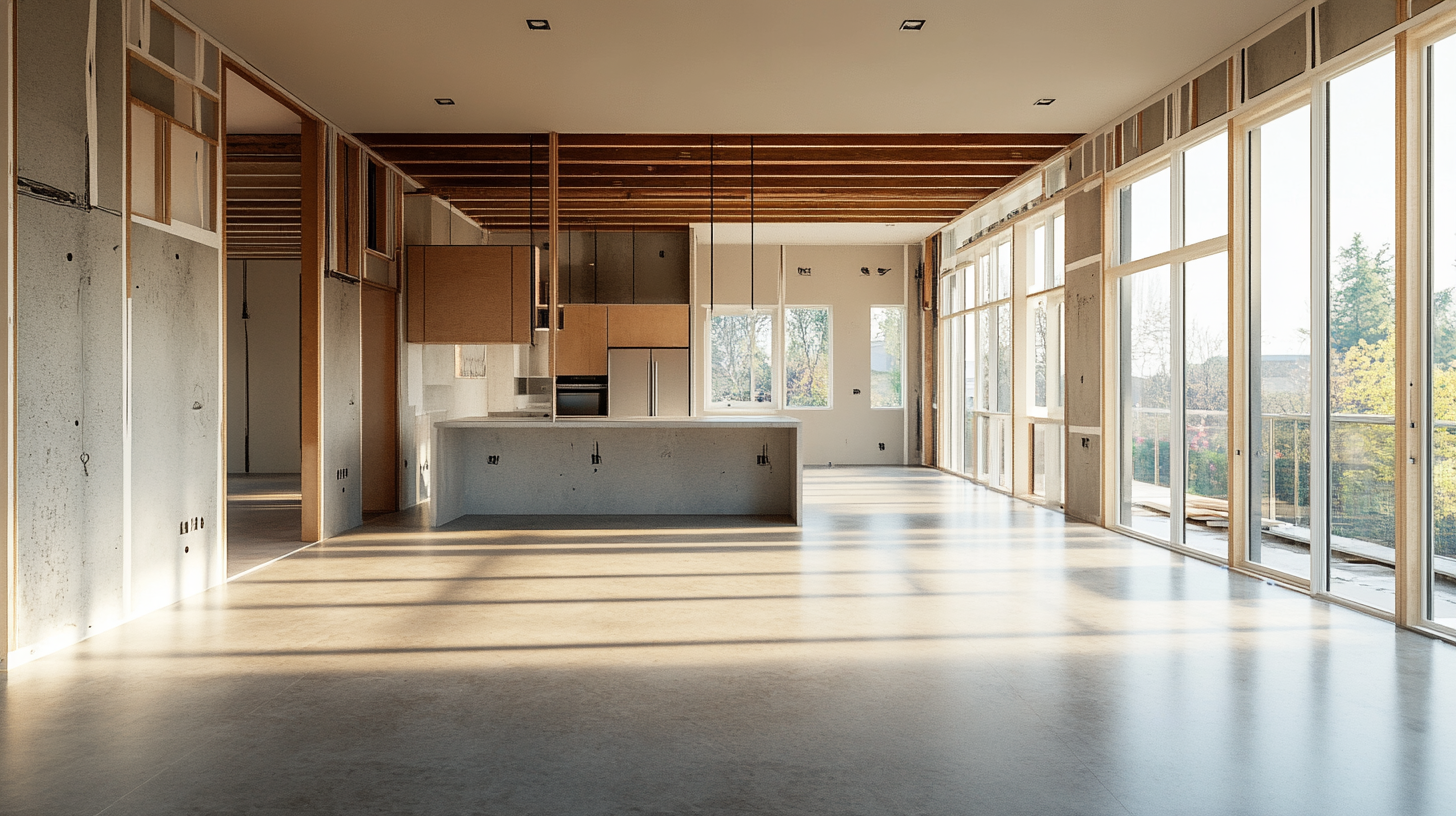
AI rendering platforms like ArchFine sit at the intersection of this shift — helping architects, designers, and homeowners visualize how a renovated space will look before construction begins. Combining a realistic visual rendering with a cost estimate gives clients a far clearer picture of whether a proposed renovation scope is worth its price tag.
Tips for Getting Accurate Contractor Quotes
A renovation cost calculator produces a planning estimate, not a contract price. Getting accurate quotes from contractors requires additional steps that the calculator cannot perform for you.
Request at least three bids for any project over $10,000. Ask each contractor to bid on the same written scope of work — not a verbal description. When quotes come back, compare them line by line. A $15,000 spread between the lowest and highest bid almost always reflects a difference in what is included, not just contractor pricing differences.
Ask every contractor to specify: materials included (by brand or grade), allowances for selections not yet made, whether the labor estimate covers demo and cleanup, and what their payment schedule requires. A contract that asks for more than 30–40% upfront before work begins is worth scrutinizing regardless of the contractor’s reputation.
✅ Key Takeaways
- Renovation cost calculators estimate budgets based on project type, size, finish level, and location — use ZIP code input for the most accurate regional figures.
- Labor typically represents 30–50% of total costs; materials and finishes account for another 30–40%.
- Always add a 10–20% contingency to any estimate — unexpected conditions behind walls are standard, not exceptional, on older homes.
- Location can shift the same project’s cost by 30–60% between high-cost and low-cost markets.
- ROI varies significantly by project type; garage door replacement and minor kitchen remodels offer the strongest cost recovery at resale according to industry data.
- Get at least three itemized contractor quotes before committing — bids on the same written scope reveal actual market pricing far more reliably than any calculator output alone.
External Resources for Renovation Cost Planning
The following resources provide reliable data for homeowners and design professionals working through renovation budgets:
- Remodeling Magazine — 2024 Cost vs. Value Report: Annual breakdown of renovation ROI by project type and region across the United States.
- U.S. Census Bureau — American Housing Survey: Federal data on home improvement spending, project types, and homeowner characteristics.
- Houzz — 2024 U.S. Houzz & Home Study: Annual homeowner survey covering renovation spending, priorities, and contractor hiring data.
- National Association of Home Builders — Housing Economics: Construction cost trends, labor market data, and material pricing updates.