Modernist Art Gallery

Modernist Art Gallery

Museum Contemporary 22 seconds ArchFine Pro 25 August 2026

Prompt Used

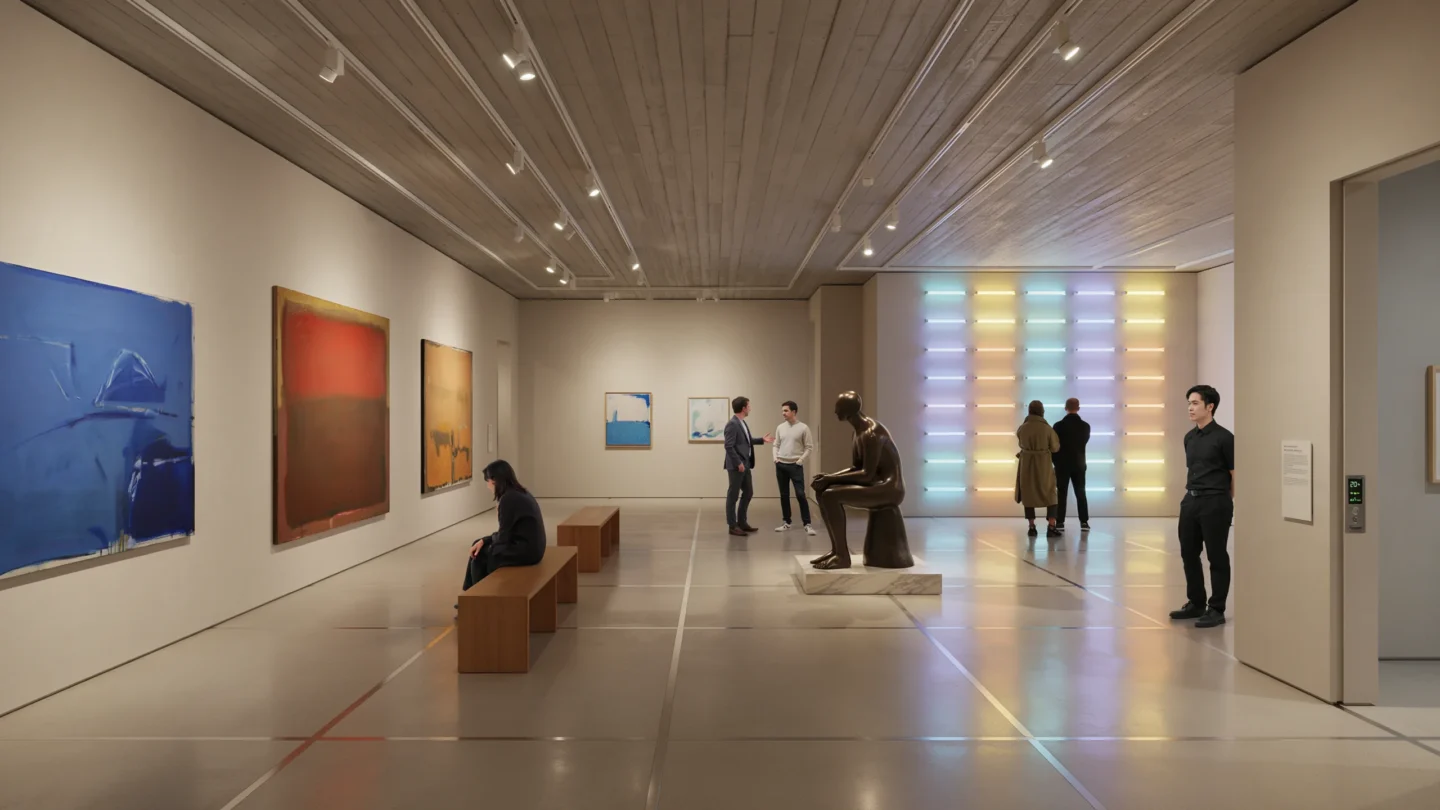
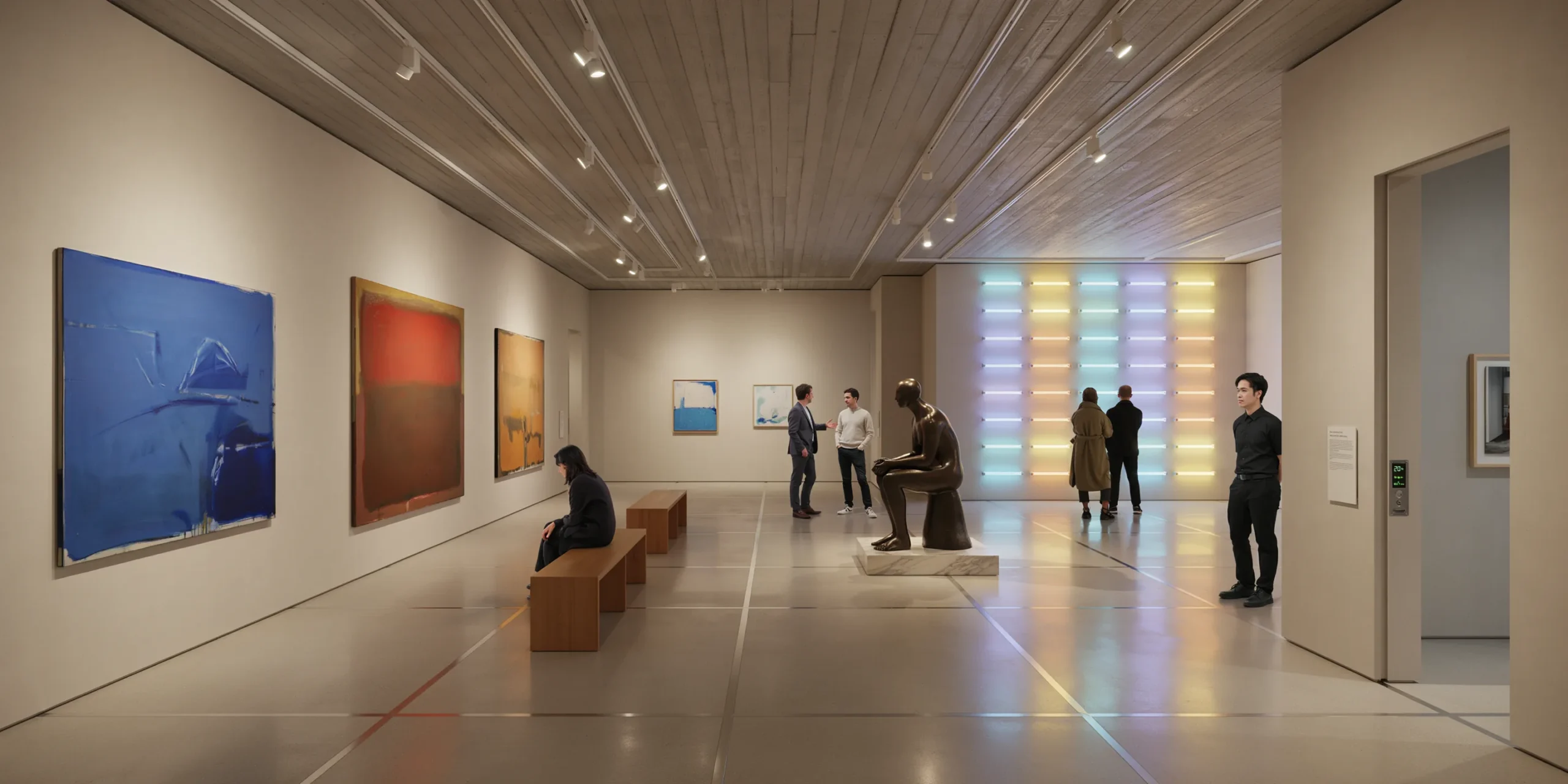
A modernist art gallery interior — a single monumental exhibition hall approximately 30m x 20m with a 7m ceiling height, designed as a purpose-built contemporary art space within a new museum building. The gallery is currently installed with a mixed-media exhibition featuring large-scale paintings, sculpture, and a site-specific light installation. Walls: Four walls in smooth museum-quality plaster (Level 5 finish, perfectly flat, no visible joints or imperfections) painted in museum white (a carefully calibrated warm white — not brilliant white but a tone with the faintest hint of warm gray, approximately NCS S 0502-Y50R, reducing visual fatigue during extended viewing). The walls are approximately 500mm thick (concrete backing with plaster finish and acoustic absorption layer) providing thermal mass and acoustic deadening. All electrical outlets, climate sensors, and security devices are concealed behind flush access panels matching the wall surface. Flooring: Polished concrete (white cement with crushed white marble aggregate, power-troweled and polished to a 400-grit matte sheen) creating a pale warm gray surface with subtle aggregate sparkle. The floor is divided into 6m x 6m panels with 3mm stainless steel expansion joint strips that create a barely visible grid. The floor has been treated with an anti-dust penetrating sealer. Small brass floor insets (12mm diameter, flush) at irregular intervals mark the positions of modular gallery partition walls (not currently installed). Ceiling: A flat exposed concrete ceiling (board-formed, smooth Douglas fir formwork with visible horizontal grain, painted matte white to match the walls) with a fully integrated track lighting system. The track system consists of parallel continuous tracks (slim white aluminum profile, 30mm x 30mm) running east-west at 2m centers. Each track holds adjustable LED spotlights (Erco Parscan or similar museum-grade, CRI 97+, tunable white 2700K-4000K, currently set to 3200K warm museum tone, individually focusable and lockable). The tracks also carry concealed emergency lighting, sprinkler heads (recessed, flush white cover plates), and climate monitoring sensors. Artwork — large paintings: Three large-scale abstract paintings are hung on the main (south) wall with generous spacing (approximately 2m between works). The largest (center position, approximately 3m x 2.5m) is a richly textured color field painting in deep cadmium red, transitioning through burnt orange to pale gold at the edges, with visible impasto brushwork and palette knife marks creating a physical surface texture. Flanking paintings are similar scale — one predominantly in deep ultramarine blue with white gestural strokes, another in earthy ochre and raw umber tones with dripped and splattered details. Each painting is hung on a concealed museum hanging system (steel cable with micro-adjust hooks from a picture rail hidden behind a slim pelmet at wall-ceiling junction) with the center of each work at 1.5m from the floor. Artwork — sculpture: A large-scale bronze sculpture (approximately 2m tall x 1.5m wide, abstract organic form — a biomorphic shape suggesting a seated figure but not literally figurative, dark patinated bronze with polished highlights where form peaks catch the light) stands on a low white marble plinth (1200mm x 800mm x 200mm high, honed Carrara) positioned off-center in the gallery, approximately one-third from the east wall and one-third from the south wall, with clear sightlines from the main entrance. Artwork — light installation: A site-specific light installation by a contemporary artist occupies the far (north) wall. It consists of a grid of 64 fluorescent tubes (each 1200mm long, T8 type) mounted directly to the wall in an 8x8 grid arrangement, alternating between warm white (2700K) and cool daylight (6500K) tubes, with individual dimming creating a slowly pulsing gradient pattern that shifts every 30 seconds. The installation fills the entire north wall (approximately 5m x 5m) and produces a significant ambient glow that influences the lighting of the nearby floor and adjacent walls. A small white label plaque (100mm x 60mm, vinyl on aluminum, museum typeface) is mounted at reading height beside the installation with the artist's name, title, date, and materials. Gallery furniture: Two gallery benches — minimal rectangular forms (2000mm x 400mm x 450mm high, solid oak with a clear satin finish, no visible fixings) positioned centrally in the gallery, oriented parallel to the south wall with the large paintings. The benches are spaced 3m apart. One bench is occupied by a visitor (a woman in a dark coat, seated centrally, leaning forward slightly studying the blue painting). Visitors: Five to six gallery visitors spaced naturally throughout the space — a couple standing before the bronze sculpture (one pointing, discussing), the seated woman on the bench, two people standing before the light installation (phones in pockets, arms crossed, absorbed), and a gallery attendant (young man, black clothing, standing discreetly near the entrance with hands clasped behind his back). Entrance: A tall rectangular doorway (2000mm x 3500mm, no door — an open portal with chamfered plaster reveals, 150mm chamfer) in the west wall provides the main entrance, with a glimpse of an adjacent gallery room visible through the opening (different colored walls — pale gray — and a partially visible photograph hanging in the next room). Climate and atmosphere: The air is perfectly still and climate-controlled (20 degrees C, 50% relative humidity — visible as a digital readout on a discreet wall-mounted sensor panel near the entrance, green LED indicating parameters within range). The space feels hushed and reverential — sounds are absorbed by the thick walls and the concrete mass. Lighting quality: The track spotlights are individually aimed — each painting has two spots creating overlapping pools of light that provide even illumination across the canvas surface without hot spots or frame shadows. The sculpture has a single spot from above and slightly forward, creating a defined shadow on the floor beneath. The light installation generates its own illumination. The overall ambient light level is carefully calibrated — bright enough for comfortable viewing but low enough to create a sense of focused intimacy with the artwork. Camera angle: Entering from the west doorway, paused at the threshold looking east along the gallery's long axis. The bronze sculpture is in the center-right of the frame, the three large paintings on the south wall extend to the left, the light installation on the far north wall glows in the background right. The polished concrete floor reflects the artwork and spotlights as soft blurred colors. Two gallery benches create perspective lines toward the far wall. Eye-level perspective (1.6m height). Focal length equivalent 24mm wide-angle with careful vertical and horizontal correction. Full depth of field. Aspect ratio 16:9. Time of day: mid-afternoon (artificial lighting only — no windows in the gallery, all illumination from the track system and the light installation).

Before & After

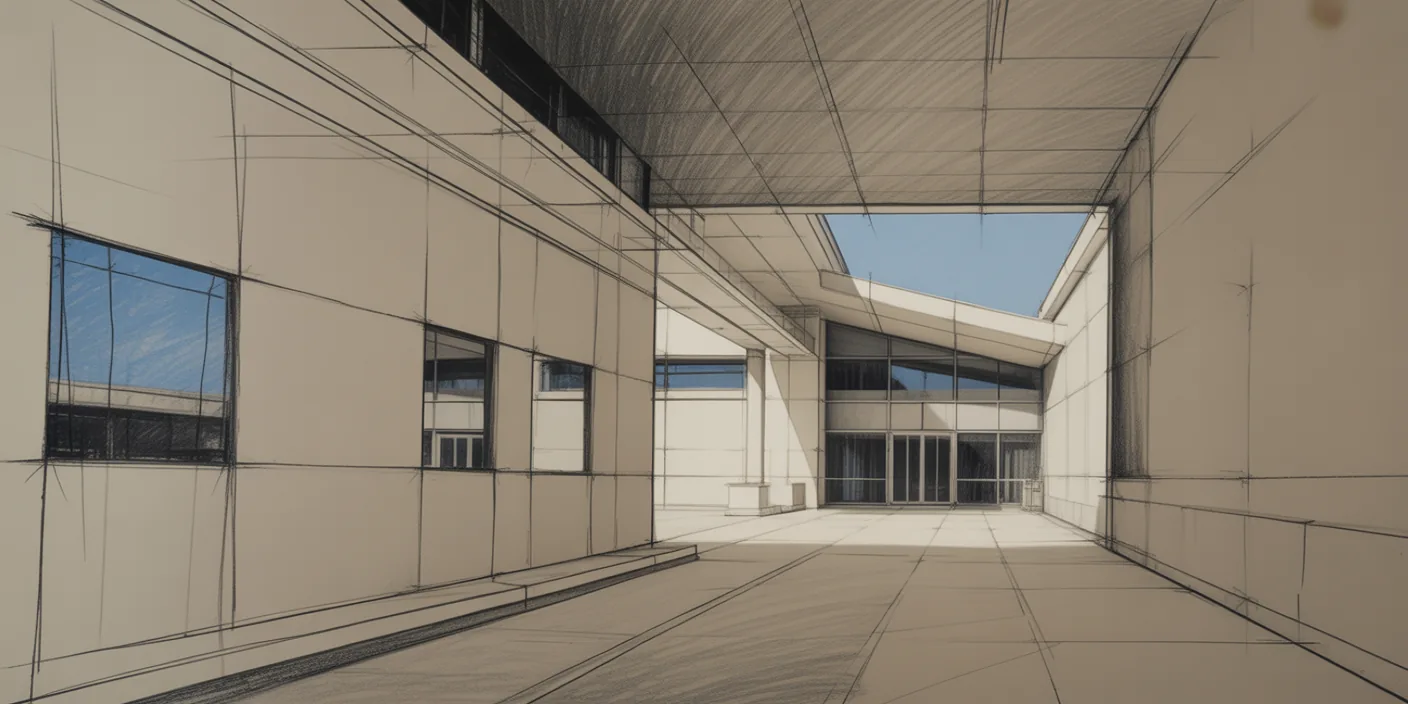
Before - original sketch
Before
Modernist Art Gallery
After

Modernist art gallery with museum-white walls, bronze sculpture, color field paintings, and fluorescent light installation. Bring your concept and ArchFine AI handles the photorealistic render for you.

Design contemporary art exhibition spaces. Upload gallery floor plans with artwork dimensions for accurate lighting studies.
Getting Started with This Prompt

1

Grab the Prompt

Tap the copy button above and the entire prompt will be saved to your clipboard, ready to use.

2

Launch Your Renderer

Head over to Archfine AI or any compatible visualization tool you prefer working with.

3

Add Your Design

Drop in your floor plan, elevation sketch, or any reference image - then paste the prompt.

4

Render & Refine

Run the generation and review the output. Swap out a few keywords to explore completely different aesthetics.

Want a faster workflow? Archfine AI lets you skip prompt editing entirely - just upload and render.

How to Get Stronger Renders

1

Describe the Scene

Mention specific materials, time of day, weather, and camera perspective. The more context the AI has, the more realistic the output becomes.

2

Run Multiple Passes

Each generation is unique. Changing even a single adjective can shift the entire mood - so experiment freely and compare outcomes.

3

Blend Prompts Together

Borrow phrases from other entries in our collection and merge them. Hybrid prompts often deliver the most original visuals.

4

Start with a Clean Drawing

Crisp linework and high-contrast sketches give the AI a clear foundation. Blurry or cluttered inputs lead to softer, less defined renders.

Common Questions About This Prompt

Am I allowed to edit or customize this prompt?

Of course. Think of it as a foundation you can build on. Adjust the style, swap materials, change the lighting setup, or rewrite entire sections to fit your specific project needs.

Which rendering platform does this prompt work with?

It has been fine-tuned for Archfine AI, but the descriptive structure translates well to other popular AI visualization engines. You may need minor adjustments depending on the tool.

Does using this prompt cost anything?

Every prompt in our library is completely free. You can copy, adapt, and use them across personal portfolios, client presentations, or commercial marketing materials without restrictions.

What kind of input image gives the best output?

Clean line drawings with strong contrast tend to perform best. The AI reads edges, proportions, and spatial relationships from your input - so a well-drawn elevation or section will consistently outperform a rough napkin sketch.

Can I use the rendered image commercially?

Yes. Renders generated through Archfine AI on any paid plan come with full commercial usage rights. Use them in proposals, publications, social media, or anywhere else your work needs to shine.

Try this prompt yourself

Upload your own sketch and use this prompt to generate a stunning render.

Try on Archfine