Wabi-Sabi Bathroom

Wabi-Sabi Bathroom

Wabi-Sabi 18 seconds ArchFine Pro 27 July 2026

Prompt Used

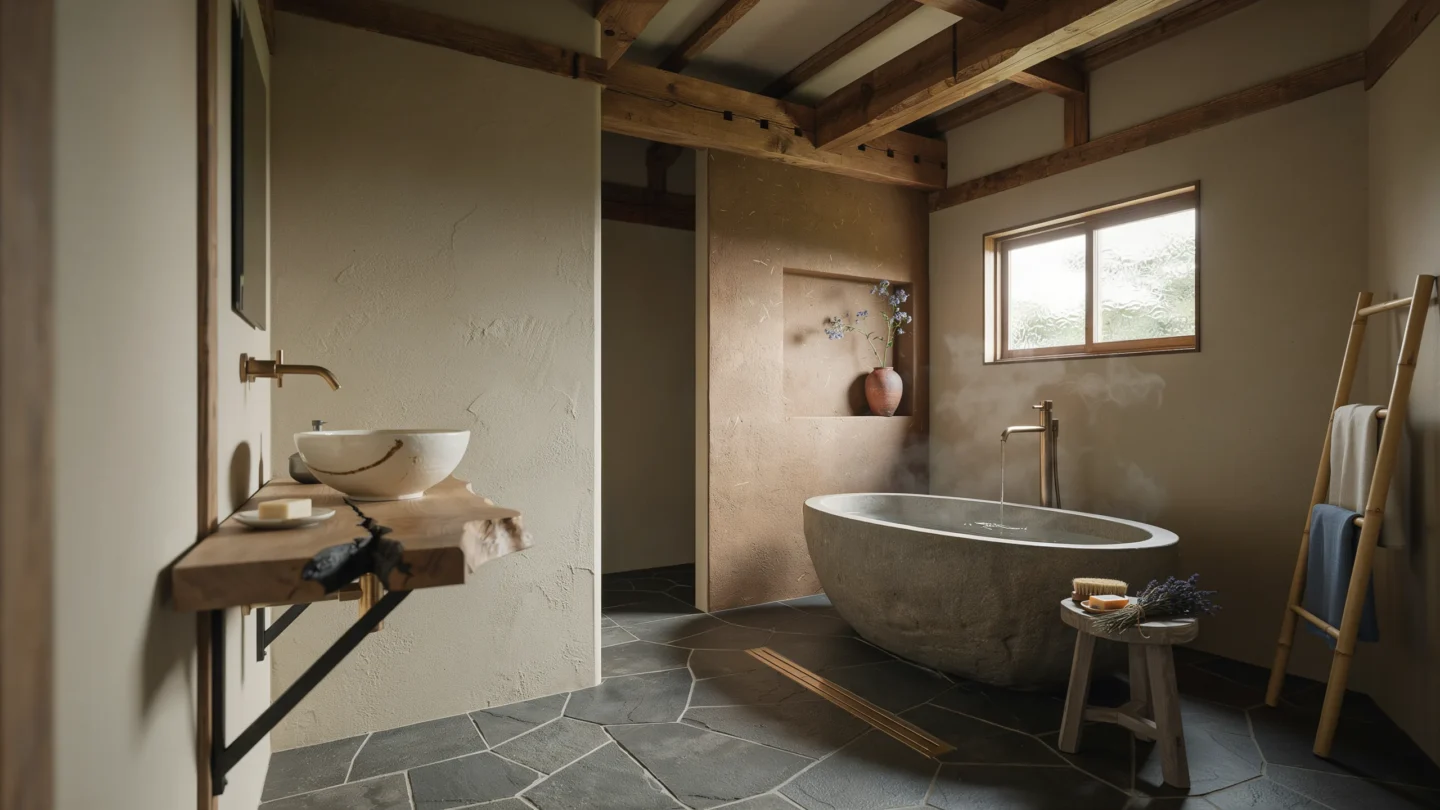
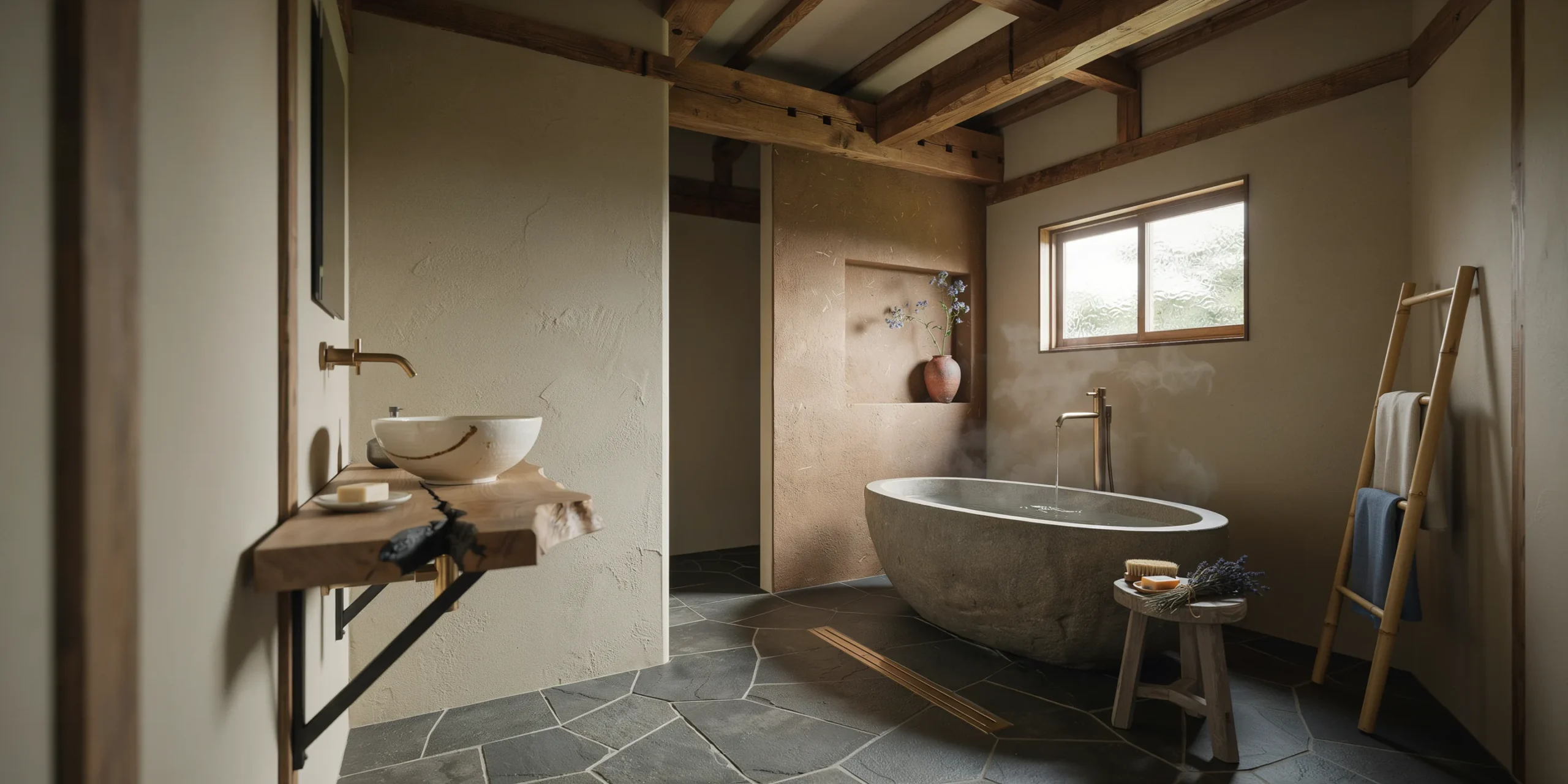
A serene wabi-sabi inspired bathroom in a renovated rural Japanese farmhouse (minka), approximately 14 square meters with an irregular slightly trapezoidal plan reflecting the original timber frame structure. The ceiling height is 2.6m with exposed aged chestnut roof beams (250mm x 250mm) darkened naturally over decades, running east-west with visible peg joinery at the connections. Walls: Hand-applied lime plaster (shikkui) in warm natural beige with intentional trowel marks and subtle undulations that catch the light differently across the surface. One accent wall behind the bathtub features raw clay plaster (juraku) in a deeper warm brown tone with visible straw fiber inclusions. A small recessed niche (350mm wide x 500mm tall x 150mm deep) in the clay wall holds a single stem of dried lunaria (honesty plant) in a small Bizen-ware ceramic vase with an unglazed rough surface. Flooring: Irregular hand-cut slate tiles in dark charcoal gray (approximately 300mm x 300mm with natural broken edges, no two identical), laid with wide 8mm joints filled with dark gray sanded grout. The floor has a gentle slope toward a linear brass drain (600mm long, patinated to a warm brown tone) positioned along the wall beneath the shower area. Underfloor radiant heating warms the stone surface. Bathtub: Freestanding oval soaking tub carved from a single block of Aji stone (Japanese granite, warm gray with subtle blue undertone), exterior left in a rough honed finish showing the natural tool marks, interior polished smooth. Dimensions approximately 1500mm long x 750mm wide x 600mm deep. A wall-mounted brushed brass spout (minimal cylindrical design, 200mm projection) fills the tub from above. Steam rises gently from the hot water surface. Vanity: A single slab of reclaimed zelkova wood (keyaki), approximately 1200mm x 500mm x 80mm thick, with live edges and natural cracks filled with black urushi lacquer (kintsugi-inspired detail). Mounted on two blackened steel L-brackets. A hand-thrown ceramic vessel sink in cream-white with slight asymmetry and a visible spiral throwing mark sits off-center on the slab. Wall-mounted brushed brass faucet with cross handles. Accessories: A wooden ladder rack (hinoki cypress, unfinished, natural blonde tone) leaning against the wall holds two folded linen towels in undyed natural cream and one in soft indigo. A small wooden stool (aged teak, weathered to silver-gray) beside the tub holds a natural bristle brush, a bar of handmade soap on a ceramic dish, and a small bundle of dried lavender. Window: A single small window (600mm x 800mm) with a deep timber reveal, positioned high on the wall opposite the tub. Antique handblown glass pane with subtle waviness and tiny bubbles, set in a simple wooden frame. Soft diffused natural light enters from the north, illuminating the steam and creating a gentle glow on the plaster walls without harsh shadows. Overall mood: Profound tranquility and the beauty of imperfection. Every material shows honest aging and the hand of its maker. The space smells of hinoki wood and wet stone. Render in photorealistic style with accurate handcrafted material textures, soft natural north light, visible steam atmosphere, and a painterly quality reminiscent of still-life photography. Camera angle: Standing in the doorway looking toward the bathtub and window, slightly off-center to the right to include the vanity in the left third of the frame. Eye-level perspective (1.5m height). Focal length equivalent 35mm. Shallow depth of field with the stone tub in sharp focus and the vanity area softly blurred. Aspect ratio 4:5 vertical/portrait orientation. Time of day: late morning with soft overcast north light.

Before & After

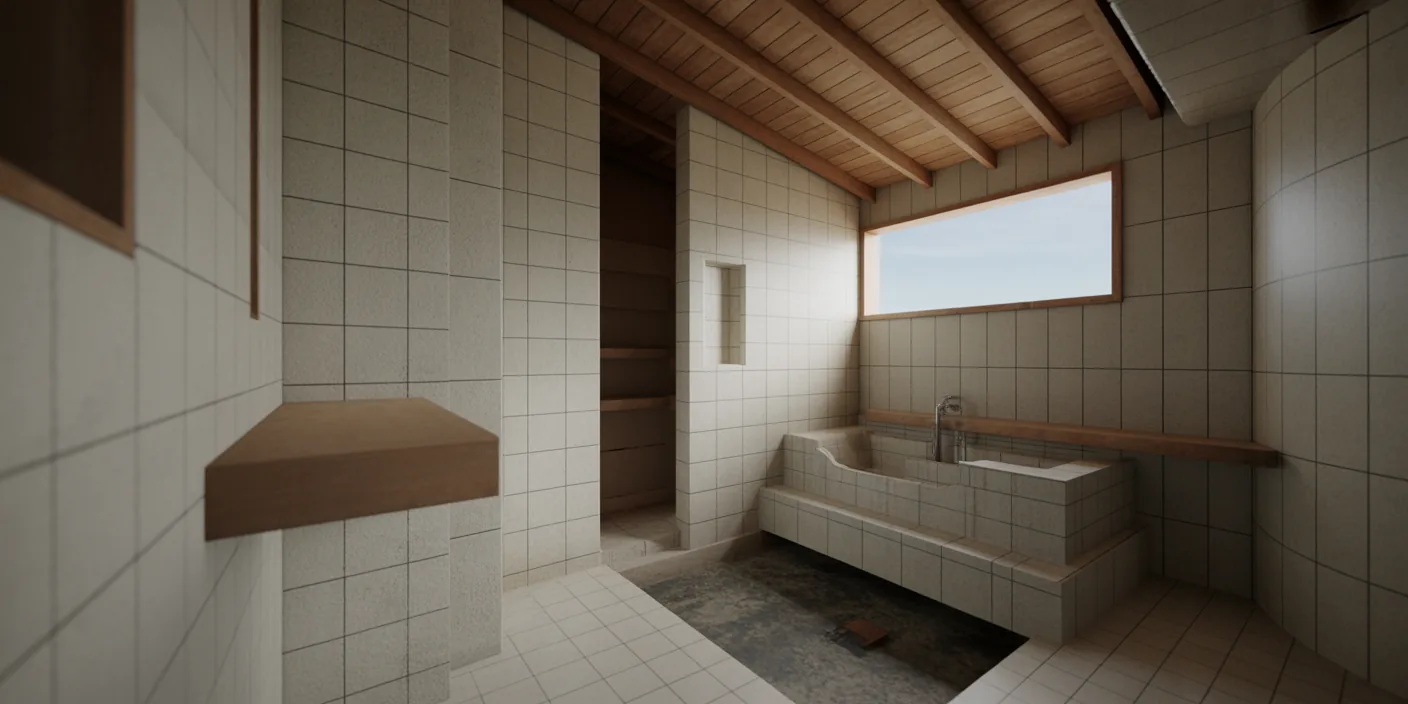
Before - original sketch
Before
After - AI render
After

Serene wabi-sabi bathroom with hand-carved stone bathtub, lime plaster walls, and handcrafted material textures. Bring your concept and ArchFine AI handles the photorealistic render for you.

Generate a warm organic bathroom design with imperfect handmade textures. Upload bathroom layouts or renovation photos.
Categories: Bathroom Interior
Tags: #japanese

Getting Started with This Prompt

1

Grab the Prompt

Tap the copy button above and the entire prompt will be saved to your clipboard, ready to use.

2

Launch Your Renderer

Head over to Archfine AI or any compatible visualization tool you prefer working with.

3

Add Your Design

Drop in your floor plan, elevation sketch, or any reference image - then paste the prompt.

4

Render & Refine

Run the generation and review the output. Swap out a few keywords to explore completely different aesthetics.

Want a faster workflow? Archfine AI lets you skip prompt editing entirely - just upload and render.

How to Get Stronger Renders

1

Describe the Scene

Mention specific materials, time of day, weather, and camera perspective. The more context the AI has, the more realistic the output becomes.

2

Run Multiple Passes

Each generation is unique. Changing even a single adjective can shift the entire mood - so experiment freely and compare outcomes.

3

Blend Prompts Together

Borrow phrases from other entries in our collection and merge them. Hybrid prompts often deliver the most original visuals.

4

Start with a Clean Drawing

Crisp linework and high-contrast sketches give the AI a clear foundation. Blurry or cluttered inputs lead to softer, less defined renders.

Common Questions About This Prompt

Am I allowed to edit or customize this prompt?

Of course. Think of it as a foundation you can build on. Adjust the style, swap materials, change the lighting setup, or rewrite entire sections to fit your specific project needs.

Which rendering platform does this prompt work with?

It has been fine-tuned for Archfine AI, but the descriptive structure translates well to other popular AI visualization engines. You may need minor adjustments depending on the tool.

Does using this prompt cost anything?

Every prompt in our library is completely free. You can copy, adapt, and use them across personal portfolios, client presentations, or commercial marketing materials without restrictions.

What kind of input image gives the best output?

Clean line drawings with strong contrast tend to perform best. The AI reads edges, proportions, and spatial relationships from your input - so a well-drawn elevation or section will consistently outperform a rough napkin sketch.

Can I use the rendered image commercially?

Yes. Renders generated through Archfine AI on any paid plan come with full commercial usage rights. Use them in proposals, publications, social media, or anywhere else your work needs to shine.

Try this prompt yourself

Upload your own sketch and use this prompt to generate a stunning render.

Try on Archfine