The architects who defined architectural eras did more than design individual buildings. They proposed entire systems of thinking about space, material, cities, and human habitation that spread far beyond their own offices. Their influence was not limited to what they built. It extended through manifestos, teaching positions, published writings, and the generations of practitioners who adopted, modified, and sometimes rejected their ideas. Understanding these figures is essential to understanding how the built environment arrived at its current state.
What Makes an Architect Define an Era?

Beyond Individual Buildings: The Power of Ideas
Many architects produce excellent buildings without changing the direction of the discipline. What separates the era-defining figures is that their work contained an argument. Le Corbusier did not simply design houses. He argued that the house should be a machine for living, and that argument restructured residential architecture across three continents. Mies van der Rohe did not simply build glass towers. He argued that architecture should be reduced to its structural and spatial essentials, and that argument produced the default commercial building type of the 20th century.
The power of an idea, when it is clearly stated and convincingly demonstrated, is that it can be adopted by thousands of architects who never met the person who first proposed it. That is what separates an architect who builds well from one who changes how an entire generation builds.
Schools, Manifestos, and the Spread of Influence
Several of the most influential architects in history held teaching positions at major schools. Walter Gropius founded the Bauhaus and later chaired the architecture department at Harvard. Mies directed the architecture program at the Illinois Institute of Technology. Louis Kahn taught at the University of Pennsylvania for decades. These positions gave them direct access to young architects at a formative stage, and the ideas transmitted in those studios shaped practice for generations after.
Manifestos played a similar role. Le Corbusier’s Vers une architecture (1923) and Robert Venturi’s Complexity and Contradiction in Architecture (1966) both reached audiences far larger than any single building could. The written word, distributed through bookstores, libraries, and lecture halls, was the primary technology of architectural influence for most of the 20th century.
💡 Pro Tip
If you want to understand an architect’s influence, read what they wrote before studying what they built. The most influential architects in history were also prolific writers. Their texts explain the reasoning that the buildings alone cannot always communicate.
Five Architects and the Eras They Shaped
Le Corbusier and the Machine-Age City
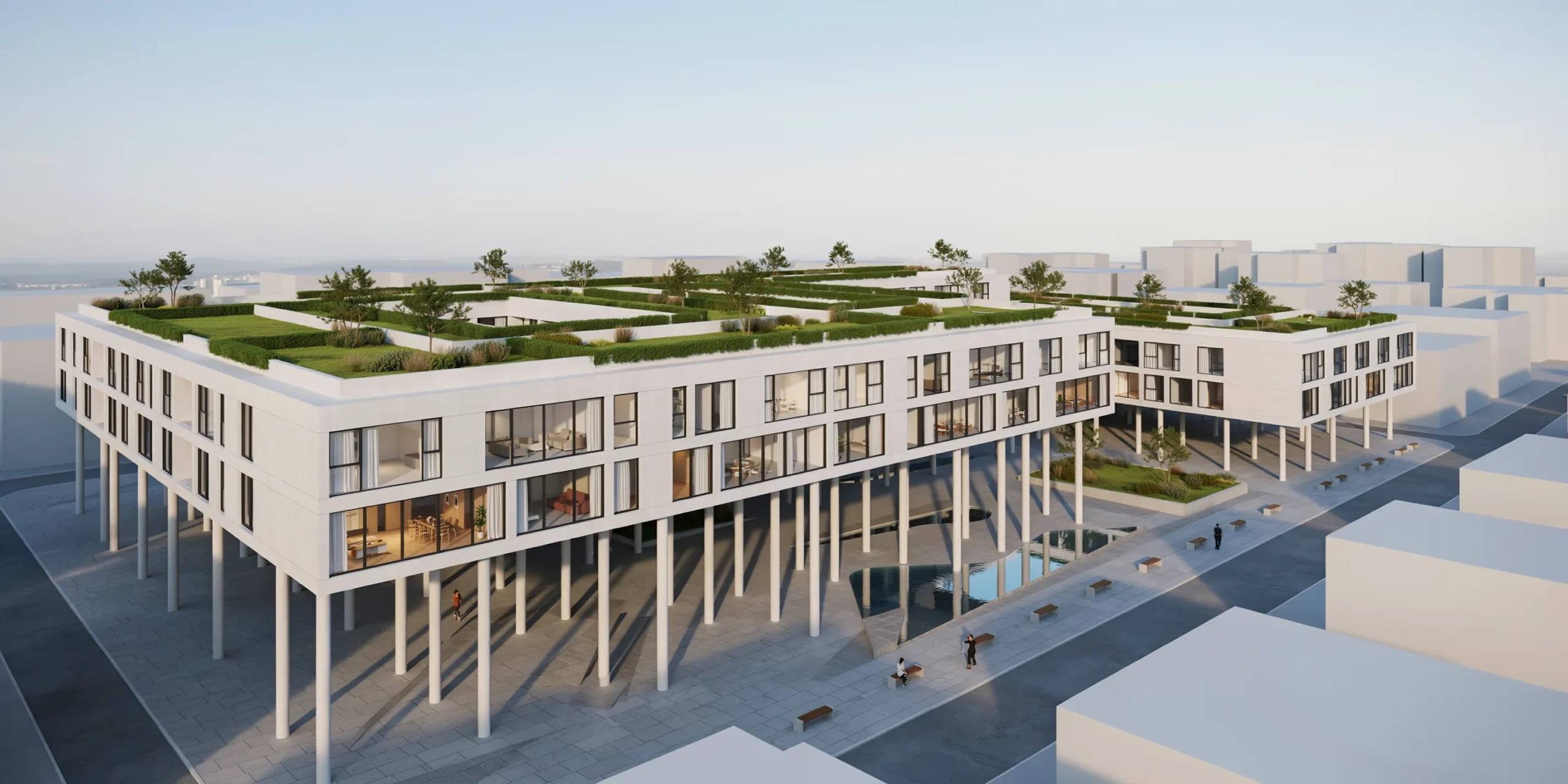

Le Corbusier (1887-1965) argued that architecture should follow the logic of industrial production. His Five Points of Architecture, published in 1926, proposed pilotis (columns lifting the building off the ground), free plans, free facades, ribbon windows, and roof gardens as the basis for a new architectural language. These five principles became the operating system for modernist architecture worldwide.
His urban proposals were equally influential and far more controversial. The Ville Radieuse and Plan Voisin imagined cities organized around automobile traffic, with residential towers surrounded by open parkland. These ideas were adopted with varying degrees of success by urban planners from Brasília to Chandigarh to the housing estates of postwar Europe. The legacy is mixed: some of the most celebrated and some of the most criticized urban environments of the 20th century trace their logic directly to Le Corbusier’s writings.
Mies van der Rohe and the Logic of Less

Mies (1886-1969) pursued a single idea with extraordinary consistency: that architecture should be reduced to its structural frame, its enclosing skin, and the space between them. His famous dictum “less is more” was not a slogan but a design method. By stripping buildings down to steel columns, glass walls, and open floor plates, Mies proposed that architecture’s power lay in proportion, material quality, and spatial clarity rather than ornament or symbolic gesture.
The Farnsworth House (1951) and the Seagram Building (1958) are the clearest expressions of this idea. The Seagram Building, in particular, became the prototype for every glass-and-steel office tower built in the second half of the 20th century. Mies’s influence on commercial architecture is so pervasive that most people who work in modern office buildings are inhabiting his ideas without knowing it.
🏗️ Real-World Example
The Seagram Building on Park Avenue in New York was one of the most expensive buildings per square foot ever constructed at the time. Mies specified bronze mullions and travertine-clad lobbies when cheaper alternatives were available. His argument was that the quality of materials and proportions was the architecture, not something applied to it. The building’s influence on corporate architecture has been global and lasting.
Frank Lloyd Wright and the Organic Tradition
Wright (1867-1959) worked for over seven decades and produced more than 500 built projects. His central idea was that buildings should grow from their sites, responding to landscape, climate, and the patterns of daily life rather than imposing a predetermined geometry. He called this approach “organic architecture,” and it stood in direct opposition to the European modernists’ preference for universal, repeatable solutions.
Wright’s Prairie Houses dissolved the boundary between interior and exterior through low horizontal rooflines, continuous window bands, and open floor plans organized around central hearths. Fallingwater (1935), cantilevered over a waterfall in rural Pennsylvania, remains one of the most photographed buildings in the world and the most vivid demonstration of his idea that architecture should be inseparable from its natural setting.
His Frank Lloyd Wright ideas about organic form, natural materials, and site-specific design continue to influence residential architecture, especially in regions where landscape and climate are central design considerations.
Louis Kahn and the Return to Materiality
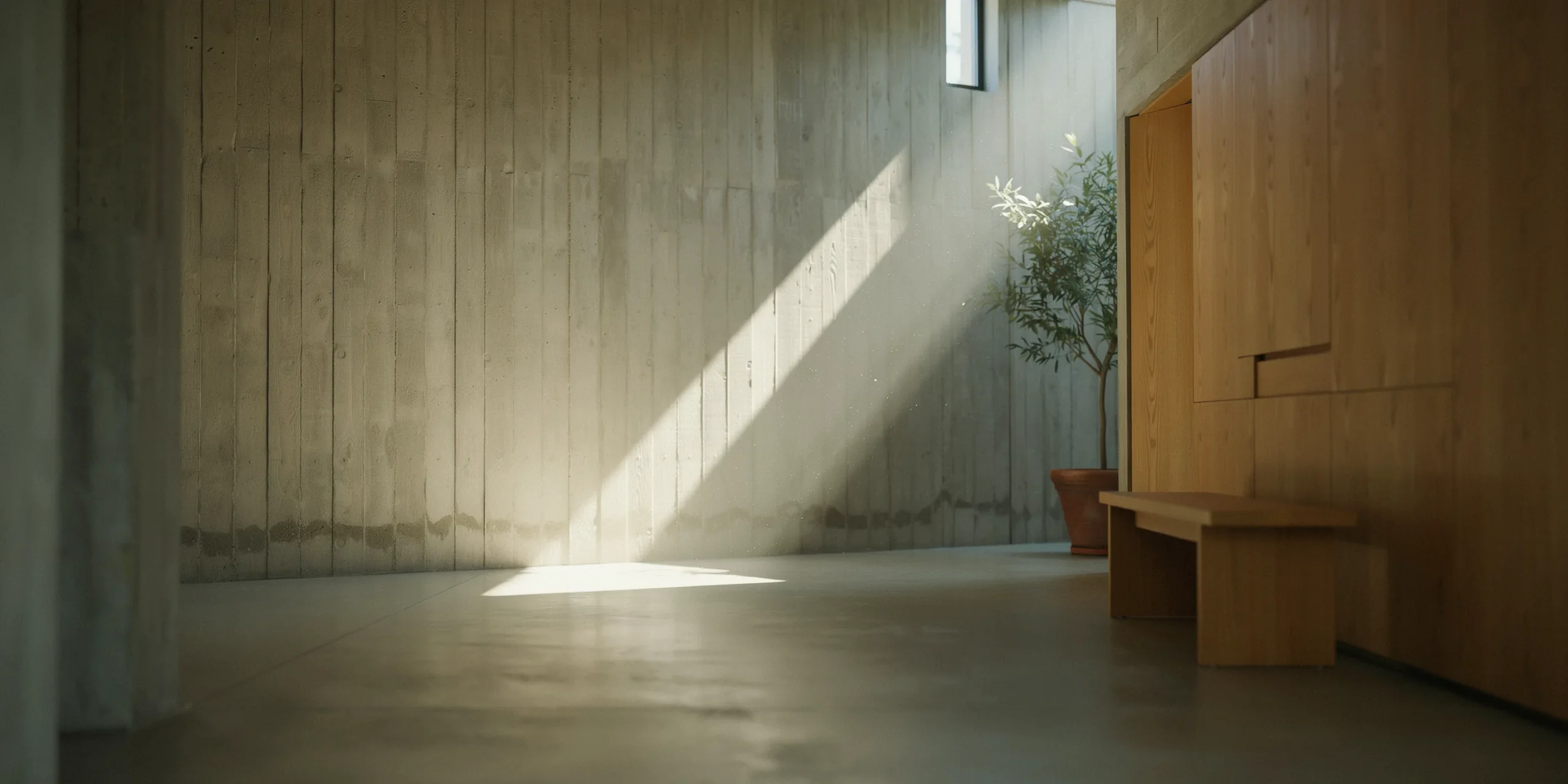
Kahn (1901-1974) arrived at his mature work relatively late, producing his most important buildings in the last two decades of his life. His contribution was to reintroduce weight, mass, and material presence into an architectural culture that had become dominated by lightness, transparency, and industrial repetition.
Kahn asked basic questions that his contemporaries had stopped asking: What does a building want to be? What is the difference between served and servant spaces? How does light enter a room? His answers, visible in the Salk Institute (1965), the Kimbell Art Museum (1972), and the National Assembly Building in Dhaka (completed posthumously in 1982), restored a sense of permanence and gravity to modern architecture that the glass-and-steel tradition had largely abandoned.
Robert Venturi and the Case for Complexity
Venturi (1925-2018) challenged the modernist orthodoxy from within. His book Complexity and Contradiction in Architecture (1966), published by the Museum of Modern Art, argued that Mies’s “less is more” had become a reductive formula that excluded the messiness, contradiction, and symbolic richness that had always been part of architecture. His counter-slogan, “less is a bore,” was deliberately provocative.
Venturi’s work, and the postmodern movement it helped launch, reintroduced ornament, historical reference, and popular culture into serious architectural discourse. His later book, Learning from Las Vegas (1972), co-authored with Denise Scott Brown and Steven Izenour, argued that architects could learn from commercial vernacular architecture rather than dismissing it. The impact on the history of architectural thought was significant: Venturi gave permission for an entire generation to reject the minimalist orthodoxy and engage with symbolism, context, and visual complexity.
📌 Did You Know?
Robert Venturi won the Pritzker Prize in 1991, but the award was given to him alone, excluding his partner and co-author Denise Scott Brown. The omission became one of the most debated injustices in the history of architectural awards, and a 2013 petition to retroactively include Scott Brown gathered thousands of signatures from architects worldwide.
What These Architects Actually Disagreed About
The Ornament Debate
The most persistent disagreement among these figures concerned ornament. Adolf Loos’s essay “Ornament and Crime” (1910) set the terms: decoration was wasteful, dishonest, and culturally retrograde. Le Corbusier and Mies broadly agreed, stripping their buildings to structural and spatial essentials. Wright took a middle position, rejecting applied ornament but integrating decorative patterns into the structure itself through custom-designed concrete blocks and art glass.
Venturi and the postmodernists broke the consensus entirely. They argued that ornament was a legitimate form of architectural communication and that its removal had impoverished the discipline. This debate has never been fully resolved, and contemporary practice includes architects on every point of the spectrum.
Function vs. Meaning
The modernists generally argued that a building’s form should follow from its function and structure. If a building worked well and expressed its construction honestly, it would be good architecture. Kahn complicated this by asking what a building “wanted to be,” introducing a quasi-philosophical dimension that went beyond function. Venturi went further, arguing that buildings communicate meaning through signs, symbols, and references, and that this communicative function is as important as the practical one.
This disagreement shaped the direction of the discipline for decades. The tension between architecture as problem-solving and architecture as cultural expression remains one of the defining fault lines in contemporary practice.
Which of Their Ideas Still Hold and Which Have Been Discarded?
Ideas That Aging Has Tested
Le Corbusier’s urban planning principles have been substantially discredited. The tower-in-the-park model produced social isolation, and car-centric city planning generated the environmental and public health problems that cities are now spending billions to reverse. His architectural principles, particularly the Five Points, remain widely taught and applied.
Mies’s aesthetic of reduction still dominates commercial architecture, but the energy performance of fully glazed facades is now recognized as a serious liability. The all-glass tower that Mies idealized consumes significantly more energy than a well-insulated building with a lower window-to-wall ratio.
Ideas That Have Grown More Relevant
Wright’s emphasis on site-specific, climate-responsive design has become more relevant as sustainability and passive design have moved to the center of practice. Kahn’s attention to natural light and material permanence resonates in a discipline increasingly concerned with embodied carbon and building longevity. Venturi’s argument for contextual design and cultural communication anticipated much of what contemporary architects now describe as placemaking.
💡 Pro Tip
When referencing these architects in your own work or presentations, engage with their ideas critically rather than reverentially. Understanding why Le Corbusier’s urban planning failed is as important as understanding why his architectural principles succeeded. The Architectural Review and RIBA Journal archives are good starting points for critical reassessments of these figures.
The Architects Currently Defining the Present Era
The current era is less likely to be defined by a single dominant figure. The profession is more global, more diverse, and more skeptical of grand narratives than it was in the mid-20th century. Practices like BIG (Bjarke Ingels Group), Lacaton & Vassal, Francis Kéré, and David Chipperfield are producing influential work, but none commands the kind of singular authority that Le Corbusier or Mies held in their time.
What may define the present era is not a person but a problem: the climate crisis. The architects who shaped modern cities did so in response to industrialization, urbanization, and postwar reconstruction. The architects shaping the next era will do so in response to carbon reduction, material scarcity, and the need to build for a fundamentally different set of environmental conditions. The defining ideas of this period are still forming, and the architects who articulate them most clearly will be the ones studied a century from now.
✅ Key Takeaways
- Era-defining architects are distinguished by the ideas they propose, not just the buildings they construct. Their influence spreads through teaching, writing, and imitation.
- Le Corbusier, Mies van der Rohe, Frank Lloyd Wright, Louis Kahn, and Robert Venturi each proposed a distinct argument about what architecture should prioritize.
- The ornament debate and the tension between function and meaning are the two most persistent disagreements among these figures.
- Some of their ideas have been discredited by time (Le Corbusier’s urbanism, Mies’s energy-intensive glass facades), while others have grown more relevant (Wright’s site-specificity, Kahn’s material permanence).
- The present era may be defined not by a single architect but by a shared problem: the climate crisis and the need to build differently in response to it.