Glass House in Bamboo Forest

Glass House in Bamboo Forest

Japanese Minimalist 19 seconds ArchFine Pro 22 May 2026

Prompt Used

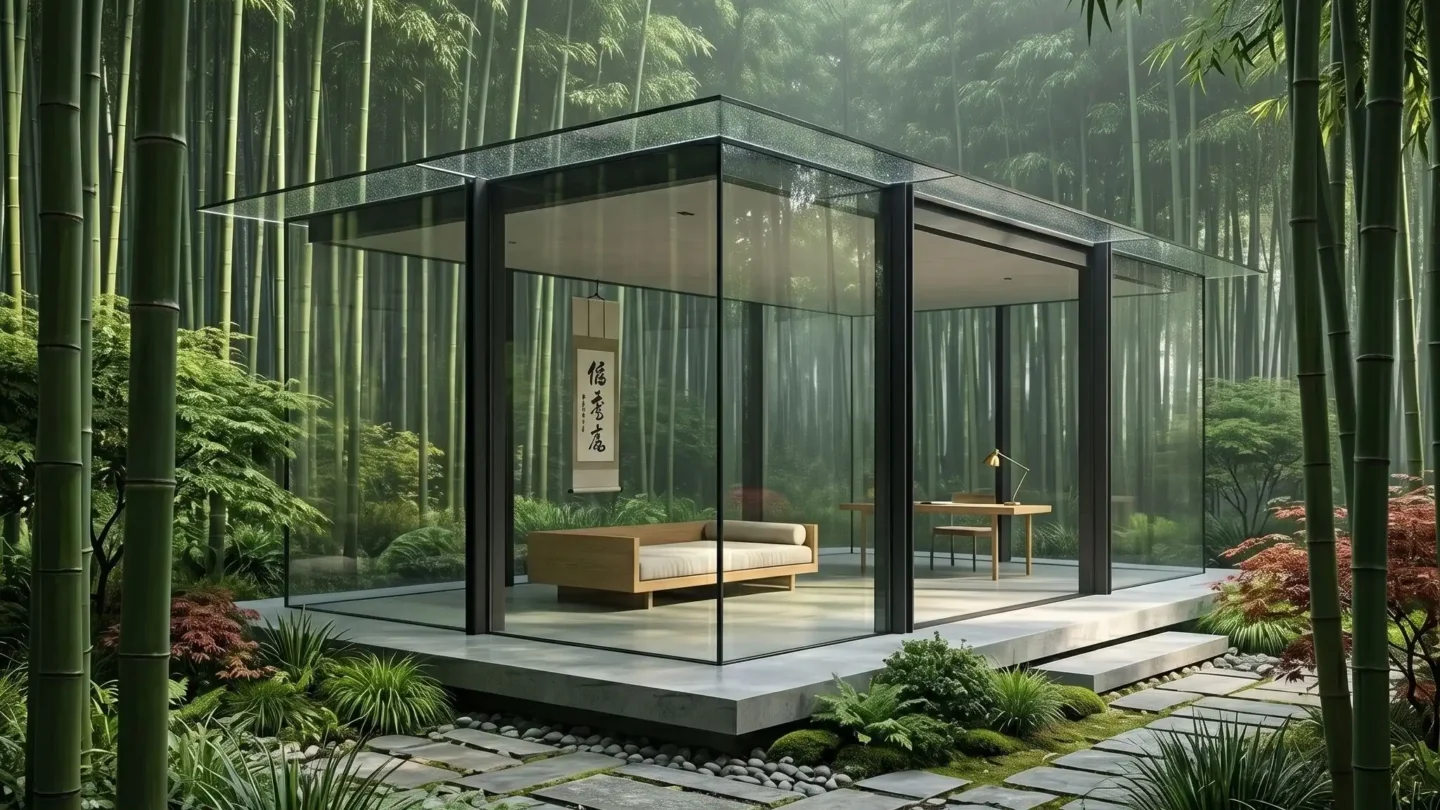
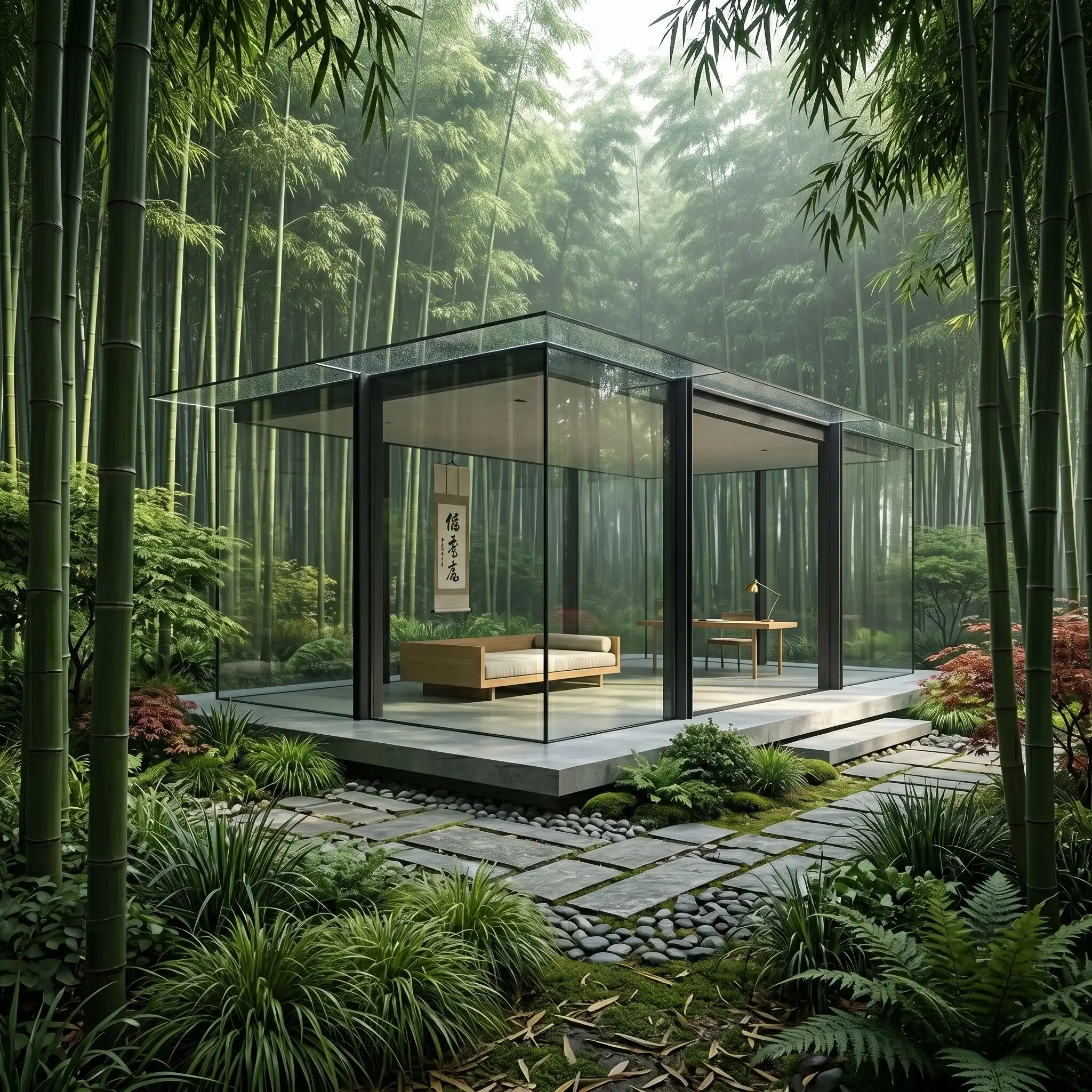
A photorealistic render of a minimalist glass pavilion house in a dense bamboo grove in Kyoto's outskirts, a single-story structure (14m x 8m) sitting on a raised concrete plinth (600mm above grade) in a clearing within a stand of Moso bamboo (Phyllostachys edulis, culms 80-100mm diameter, approximately 12m tall, spaced at 300-500mm centers creating a dense green screen on all sides). Structure: Four cruciform steel columns (150mm x 150mm, painted matte black) support a flat roof slab (200mm reinforced concrete, white painted soffit) with a 1200mm overhang on all four sides. The perimeter is entirely glazed — full-height sliding glass panels (each 1800mm wide x 2700mm tall, frameless, with a recessed stainless steel bottom track flush with the plinth surface) that retract fully into wall pockets, allowing the interior to open completely to the bamboo on all sides. Interior: A single undivided space. The floor is polished white micro-cement (2mm topping, matte satin finish) that visually continues through the open glass panels to meet the plinth edge. Two pieces of furniture only: a low rectangular daybed platform (2400mm x 1200mm x 300mm height, solid white oak, thin 50mm mattress in natural linen) positioned at the center of the room; and a single minimalist writing desk (1800mm x 600mm, 25mm white oak slab on a single thin steel trestle, matte black) in the corner with an Anglepoise-style brass lamp. A single calligraphy scroll hanging from a slim ceiling-mounted rail — black ink characters on cream washi paper, approximately 400mm x 1800mm. Nothing else. Bamboo: The bamboo grove creates a constantly moving green wall on all sides — the culms visible through the glass at extremely close range, their smooth green-yellow surface, the regular internodal rings, and the papery sheath scars at each node rendered in precise detail. The bamboo canopy overhead filters the light into a constantly shifting dappled pattern across the white micro-cement floor and the roof overhang soffit. Some culms are close enough to touch the glass. Light and atmosphere: A summer morning, approximately 8:00 AM, soft diffuse light filtered through the bamboo canopy creating a green-tinted ambient light inside the pavilion. The bamboo creates a subtle rustling movement — individual culms swaying slightly in a light breeze, their shadows animate on the floor. Dew on the glass panels in fine droplets. Camera angle: Exterior perspective from within the bamboo grove looking toward the open glass pavilion from 8m distance, the glass panels fully open so the interior is visible through the structure. The bamboo culms frame the composition in the foreground, middle ground, and background simultaneously. Focal length equivalent 35mm. Aspect ratio 3:2. Time of day: 8:00 AM, mid-July, soft summer morning light.

Before & After

Before - original sketch
Before
After - AI render
After

Ideal for pavilion and forest retreat residential concepts. Upload site surveys or bamboo grove plans.
Getting Started with This Prompt

1

Grab the Prompt

Tap the copy button above and the entire prompt will be saved to your clipboard, ready to use.

2

Launch Your Renderer

Head over to Archfine AI or any compatible visualization tool you prefer working with.

3

Add Your Design

Drop in your floor plan, elevation sketch, or any reference image - then paste the prompt.

4

Render & Refine

Run the generation and review the output. Swap out a few keywords to explore completely different aesthetics.

Want a faster workflow? Archfine AI lets you skip prompt editing entirely - just upload and render.

How to Get Stronger Renders

1

Describe the Scene

Mention specific materials, time of day, weather, and camera perspective. The more context the AI has, the more realistic the output becomes.

2

Run Multiple Passes

Each generation is unique. Changing even a single adjective can shift the entire mood - so experiment freely and compare outcomes.

3

Blend Prompts Together

Borrow phrases from other entries in our collection and merge them. Hybrid prompts often deliver the most original visuals.

4

Start with a Clean Drawing

Crisp linework and high-contrast sketches give the AI a clear foundation. Blurry or cluttered inputs lead to softer, less defined renders.

Common Questions About This Prompt

Am I allowed to edit or customize this prompt?

Of course. Think of it as a foundation you can build on. Adjust the style, swap materials, change the lighting setup, or rewrite entire sections to fit your specific project needs.

Which rendering platform does this prompt work with?

It has been fine-tuned for Archfine AI, but the descriptive structure translates well to other popular AI visualization engines. You may need minor adjustments depending on the tool.

Does using this prompt cost anything?

Every prompt in our library is completely free. You can copy, adapt, and use them across personal portfolios, client presentations, or commercial marketing materials without restrictions.

What kind of input image gives the best output?

Clean line drawings with strong contrast tend to perform best. The AI reads edges, proportions, and spatial relationships from your input - so a well-drawn elevation or section will consistently outperform a rough napkin sketch.

Can I use the rendered image commercially?

Yes. Renders generated through Archfine AI on any paid plan come with full commercial usage rights. Use them in proposals, publications, social media, or anywhere else your work needs to shine.

Try this prompt yourself

Upload your own sketch and use this prompt to generate a stunning render.

Try on Archfine