Industrial Forge Distillery

Industrial Forge Distillery

Heritage Industrial 23 seconds ArchFine Pro 9 May 2026

Prompt Used

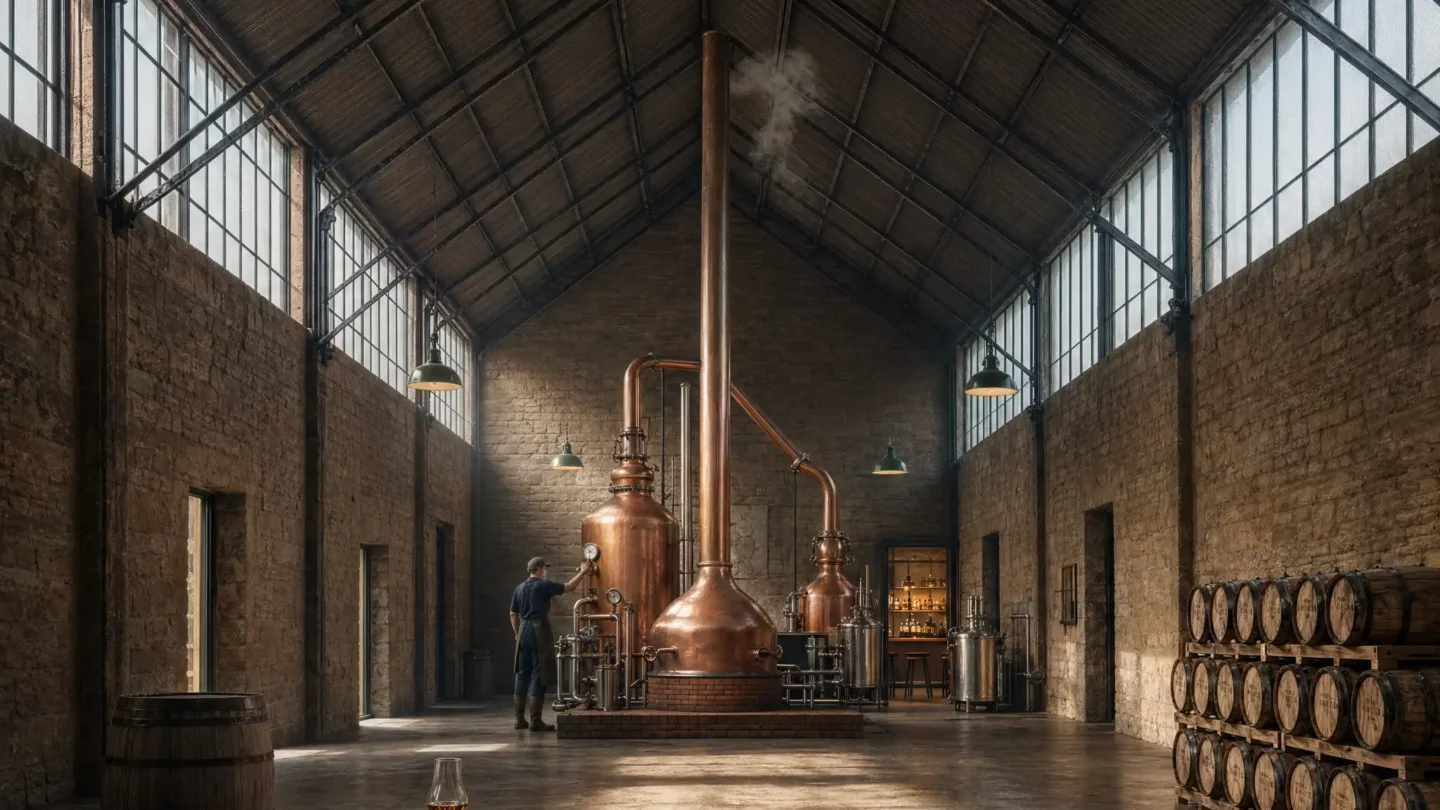
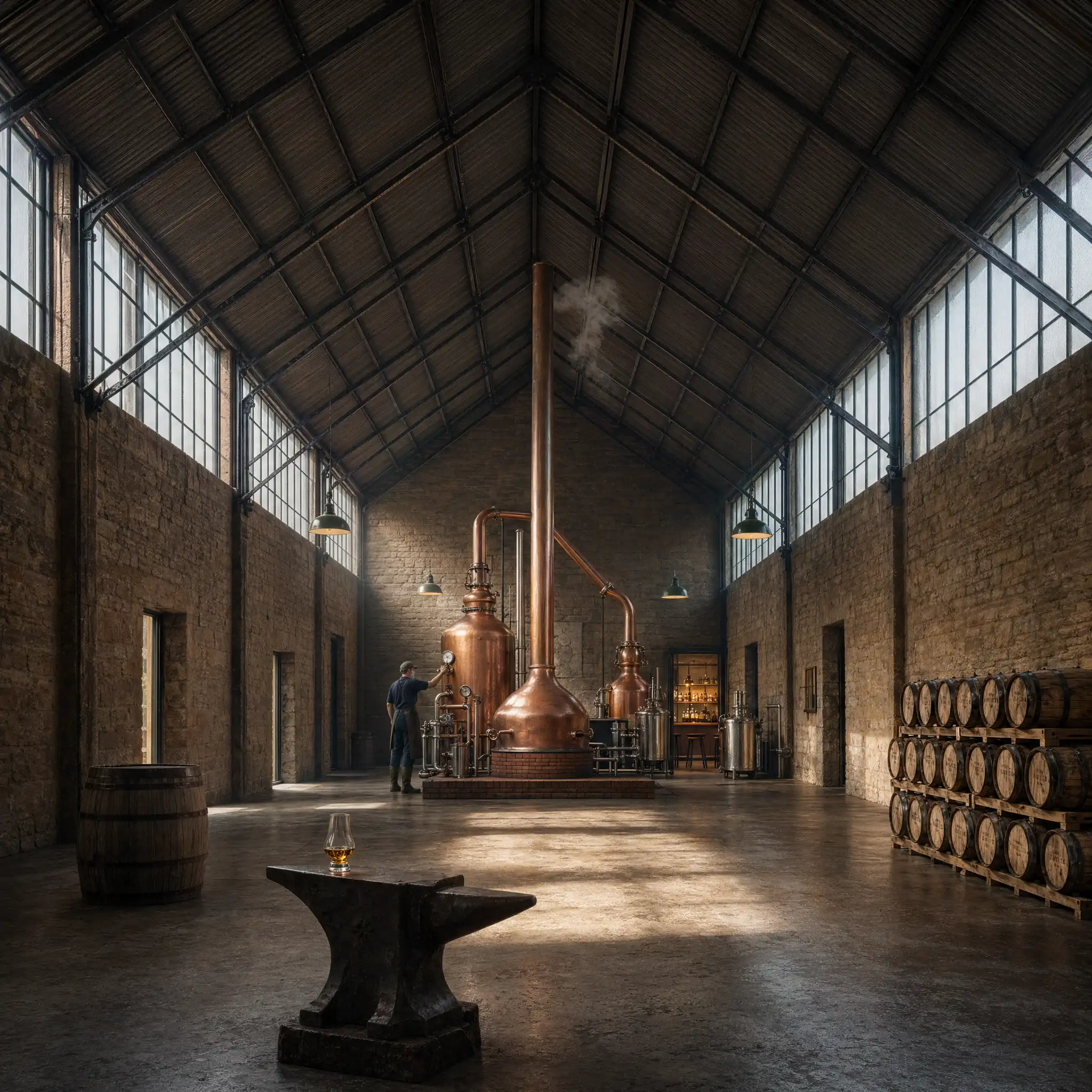
A photorealistic render of a craft whisky distillery converted from a 19th-century iron forge building in the Scottish Borders, the original stone and cast-iron industrial structure repurposed while retaining the complete working atmosphere of the historic forge. Building: The original forge building (approximately 30m x 15m, single story with a 12m-height brick chimney stack at the east end) is constructed in rough-coursed sandstone (warm buff-orange local Dumfriesshire sandstone, 500mm-thick walls), with a sawtooth north-light roof of cast-iron trusses and original glazing (wired glass in black-painted cast-iron frames, some panes replaced with clear float glass). The chimney stack retains its original iron-banded form, now repurposed to exhaust the still vapors — a thin wisp of steam rather than coal smoke. Distillery equipment: The centerpiece is a pair of traditional copper pot stills (wash still approximately 4,000 liters capacity, spirit still approximately 2,500 liters) — their classic onion and pear forms in heavy-gauge copper (a rich warm amber, the copper surface aged in patches to green-brown oxidation), the swan necks rising to the ceiling height and connecting via copper lyne arms to the worm tub condensers (large wooden tubs, approximately 1.5m diameter, with coiled copper worm tubes descending into cold water, the condensation visible as water vapor). The stills sit on brick plinths, surrounded by a maze of copper pipes, valves, and gauges. Adjacent to the stills: The original forge anvil (cast iron, approximately 500kg, still in its original floor-mounted position) has been retained as a historic object — a whisky tasting glass balanced on its surface with a small amber measure inside. A row of new American white oak barrels (200-liter ex-bourbon casks, their charred interiors faintly visible through the bung holes, the staves already beginning to stain amber from the new-make spirit) are stacked three-high along the stone wall in a warehouse section. Interior atmosphere: The space is steamy, warm, and fragrant. The smell of warm copper and fermenting barley implied. The cast-iron roof trusses above are original — painted black, slightly rusty at the connections, the north-light glazing admitting cool diffuse light from above that illuminates the copper surfaces and the stone walls. Fluorescent tube lights (original industrial fittings, green enamel shade, suspended from the truss bottom chords) supplement the north light. A distillery worker in practical clothing (rubber apron, safety boots) is checking a gauge on the wash still, providing human scale. Through a glazed internal window, a small visitor tasting room is visible — simple wooden bar, whisky bottles on backlit shelving. Camera angle: From the entrance end of the forge building looking east toward the pair of copper stills, the chimney stack beyond, the original anvil in the foreground. The sawtooth roof and cast-iron trusses frame the composition above. Focal length equivalent 28mm. Aspect ratio 16:9. Time of day: 2:30 PM, overcast Scottish afternoon, diffuse north light through the roof glazing.

Before & After

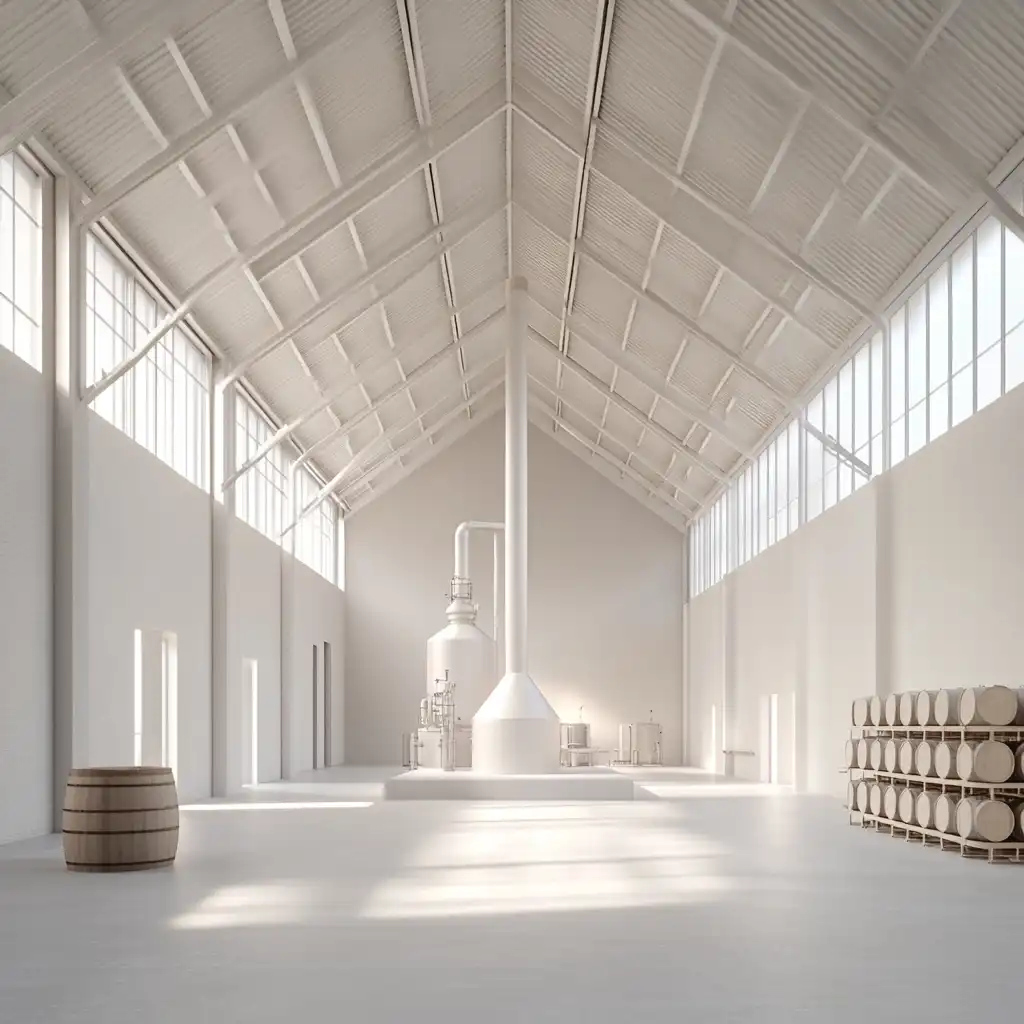
Before - original sketch
Before
After - AI render
After

Ideal for distillery and heritage industrial conversion hospitality projects. Upload building survey drawings or forge plans.
Getting Started with This Prompt

1

Grab the Prompt

Tap the copy button above and the entire prompt will be saved to your clipboard, ready to use.

2

Launch Your Renderer

Head over to Archfine AI or any compatible visualization tool you prefer working with.

3

Add Your Design

Drop in your floor plan, elevation sketch, or any reference image - then paste the prompt.

4

Render & Refine

Run the generation and review the output. Swap out a few keywords to explore completely different aesthetics.

Want a faster workflow? Archfine AI lets you skip prompt editing entirely - just upload and render.

How to Get Stronger Renders

1

Describe the Scene

Mention specific materials, time of day, weather, and camera perspective. The more context the AI has, the more realistic the output becomes.

2

Run Multiple Passes

Each generation is unique. Changing even a single adjective can shift the entire mood - so experiment freely and compare outcomes.

3

Blend Prompts Together

Borrow phrases from other entries in our collection and merge them. Hybrid prompts often deliver the most original visuals.

4

Start with a Clean Drawing

Crisp linework and high-contrast sketches give the AI a clear foundation. Blurry or cluttered inputs lead to softer, less defined renders.

Common Questions About This Prompt

Am I allowed to edit or customize this prompt?

Of course. Think of it as a foundation you can build on. Adjust the style, swap materials, change the lighting setup, or rewrite entire sections to fit your specific project needs.

Which rendering platform does this prompt work with?

It has been fine-tuned for Archfine AI, but the descriptive structure translates well to other popular AI visualization engines. You may need minor adjustments depending on the tool.

Does using this prompt cost anything?

Every prompt in our library is completely free. You can copy, adapt, and use them across personal portfolios, client presentations, or commercial marketing materials without restrictions.

What kind of input image gives the best output?

Clean line drawings with strong contrast tend to perform best. The AI reads edges, proportions, and spatial relationships from your input - so a well-drawn elevation or section will consistently outperform a rough napkin sketch.

Can I use the rendered image commercially?

Yes. Renders generated through Archfine AI on any paid plan come with full commercial usage rights. Use them in proposals, publications, social media, or anywhere else your work needs to shine.

Try this prompt yourself

Upload your own sketch and use this prompt to generate a stunning render.

Try on Archfine