Minimalist Tokyo Tea House

Minimalist Tokyo Tea House

Japanese Traditional 18 seconds ArchFine Pro 4 May 2026

Prompt Used

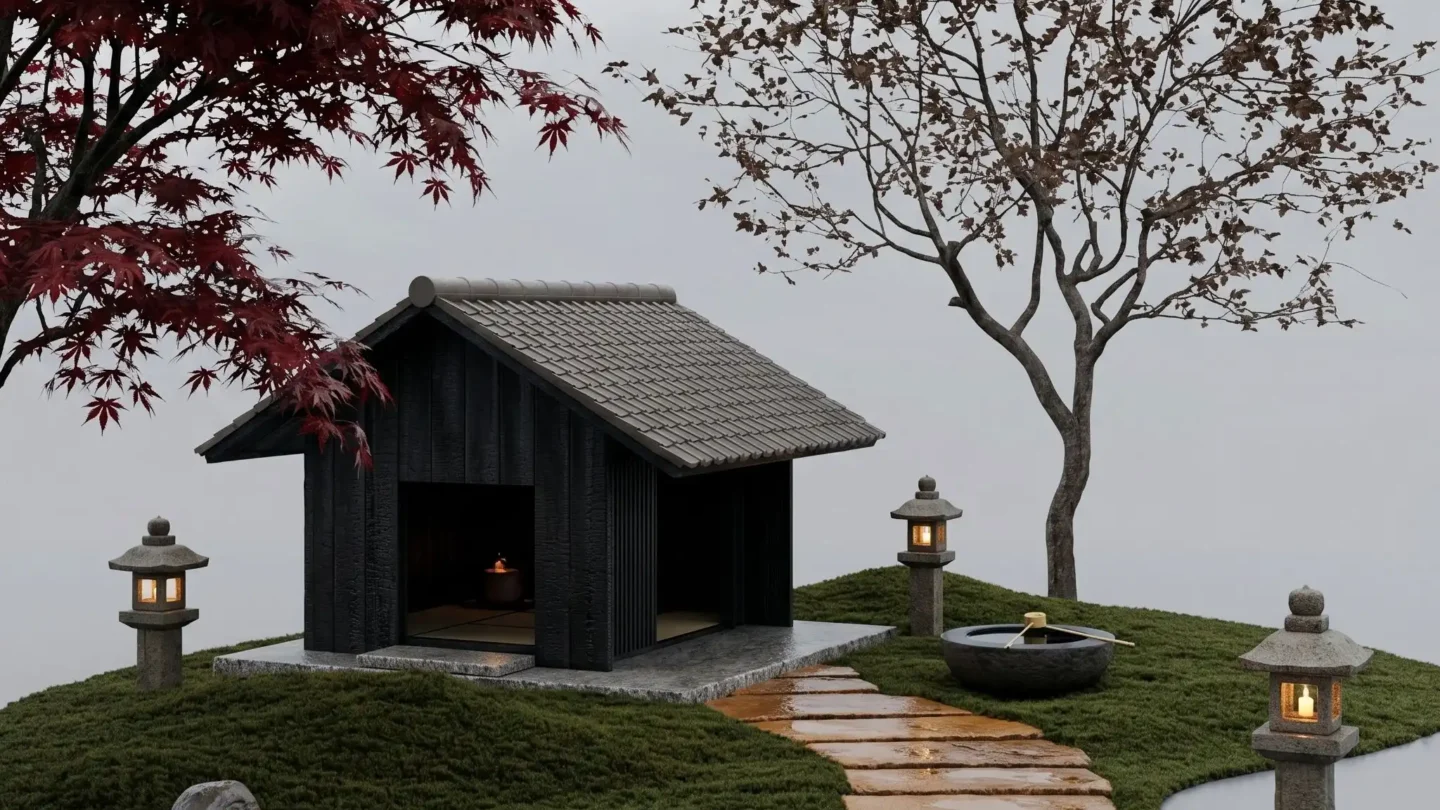
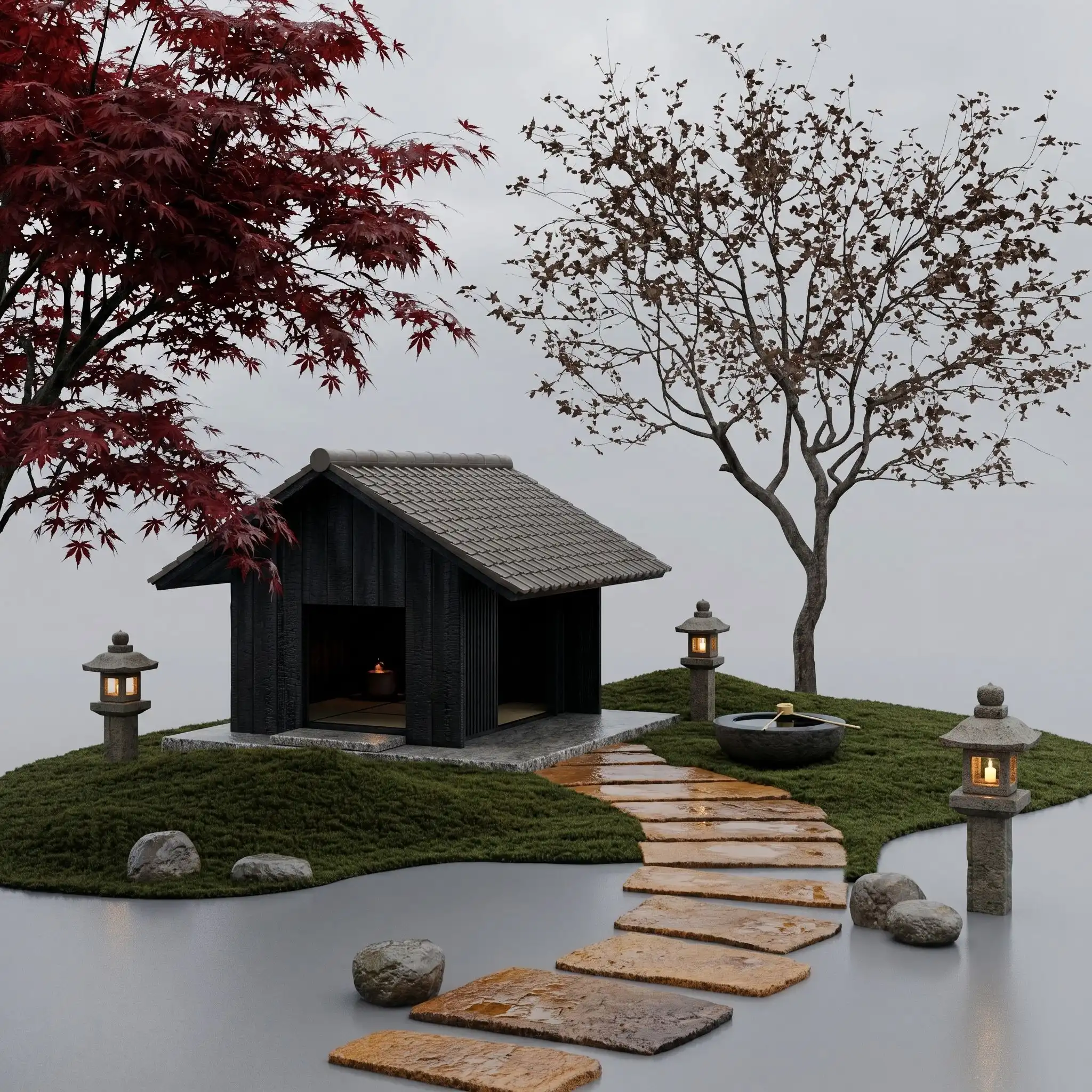
A photorealistic render of a private contemporary tea house (chashitsu) in a Tokyo residential garden, a small freestanding building (approximately 5m x 4m exterior) built as a rigorous contemporary interpretation of the traditional wabi-style tea house, designed by a Japanese architect working within the Sen no Rikyu tradition. Exterior: The building exterior is entirely clad in charcoal-black carbonized cedar (shou sugi ban / yakisugi), the surface deeply textured from the charring process — the grain raised and the surface cracked in a fine alligator-skin pattern, the color an intense near-black with traces of deep brown and occasional glint of residual carbon crystal. The roof is a simple asymmetric gable (steeply pitched, 45 degrees on the front slope, 30 degrees on the rear) in traditional Japanese clay tile (kawara) in a warm charcoal gray-brown, the ridge finished with a cylindrical ridge tile (noshi-gawara). The building sits on a low plinth (300mm height) of rough-hewn Aji granite, the same stone as the stepping stones of the garden path. Nijiriguchi: The entrance is the traditional crawl-through opening (nijiriguchi) — a square opening (700mm x 700mm) in the west wall, without a door, the opening revealing the interior darkness within. The threshold is a single polished flat stone. Garden approach: A traditional roji (dewy path) of irregular stepping stones (Kurama stone, warm orange-brown, irregular natural form, 400-700mm diameter) leads from the garden gate through a composition of moss (deep green Polytrichum moss covering the entire garden floor), two stone lanterns (yukimi-doro form, Kurama stone, the lanterns lit with a warm candle glow), and a stone tsukubai (water basin, approximately 600mm diameter, carved from a single Kurama stone, full of still dark water reflecting the overcast sky, a ladle of split bamboo resting across the rim). A mature momiji maple (Acer palmatum dissectum, approximately 2.5m spread, deeply red-crimson autumn foliage) overhanging the path from the east. Interior glimpsed: Through the nijiriguchi entrance, the interior is in deep shadow with the warm glow of a small charcoal brazier (furo) visible — a faint amber light source in the near-total darkness of the interior. The tatami floor surface just discernible. Light and atmosphere: Late afternoon in mid-November — overcast, cool diffuse gray light, the moss surfaces glistening with recent light rain, the stepping stones darkened with moisture. The yakisugi exterior surface appears to absorb the gray light, the building almost dematerializing against the garden. Camera angle: From 6m along the roji path looking toward the tea house, the stepping stones receding toward the nijiriguchi entrance, the tsukubai to the right, the momiji maple overhanging from the left. Low perspective (900mm height — as if approaching in a contemplative stooped posture). Focal length equivalent 35mm. Aspect ratio 3:2. Time of day: 4:00 PM, November, overcast.

Before & After

Before - original sketch
Before
After - AI render
After

Ideal for traditional Japanese garden and tea architecture projects. Upload garden plans or site survey drawings.
Getting Started with This Prompt

1

Grab the Prompt

Tap the copy button above and the entire prompt will be saved to your clipboard, ready to use.

2

Launch Your Renderer

Head over to Archfine AI or any compatible visualization tool you prefer working with.

3

Add Your Design

Drop in your floor plan, elevation sketch, or any reference image - then paste the prompt.

4

Render & Refine

Run the generation and review the output. Swap out a few keywords to explore completely different aesthetics.

Want a faster workflow? Archfine AI lets you skip prompt editing entirely - just upload and render.

How to Get Stronger Renders

1

Describe the Scene

Mention specific materials, time of day, weather, and camera perspective. The more context the AI has, the more realistic the output becomes.

2

Run Multiple Passes

Each generation is unique. Changing even a single adjective can shift the entire mood - so experiment freely and compare outcomes.

3

Blend Prompts Together

Borrow phrases from other entries in our collection and merge them. Hybrid prompts often deliver the most original visuals.

4

Start with a Clean Drawing

Crisp linework and high-contrast sketches give the AI a clear foundation. Blurry or cluttered inputs lead to softer, less defined renders.

Common Questions About This Prompt

Am I allowed to edit or customize this prompt?

Of course. Think of it as a foundation you can build on. Adjust the style, swap materials, change the lighting setup, or rewrite entire sections to fit your specific project needs.

Which rendering platform does this prompt work with?

It has been fine-tuned for Archfine AI, but the descriptive structure translates well to other popular AI visualization engines. You may need minor adjustments depending on the tool.

Does using this prompt cost anything?

Every prompt in our library is completely free. You can copy, adapt, and use them across personal portfolios, client presentations, or commercial marketing materials without restrictions.

What kind of input image gives the best output?

Clean line drawings with strong contrast tend to perform best. The AI reads edges, proportions, and spatial relationships from your input - so a well-drawn elevation or section will consistently outperform a rough napkin sketch.

Can I use the rendered image commercially?

Yes. Renders generated through Archfine AI on any paid plan come with full commercial usage rights. Use them in proposals, publications, social media, or anywhere else your work needs to shine.

Try this prompt yourself

Upload your own sketch and use this prompt to generate a stunning render.

Try on Archfine